ToolMage
Sign in

Best 4 Grant Writing AI tools for Finance

Popular Grant Writing AI tools in Finance include Granter, Pilea, Subvention.app, and GrantGPT, helping you work more efficiently.

Subvention.app
Paid

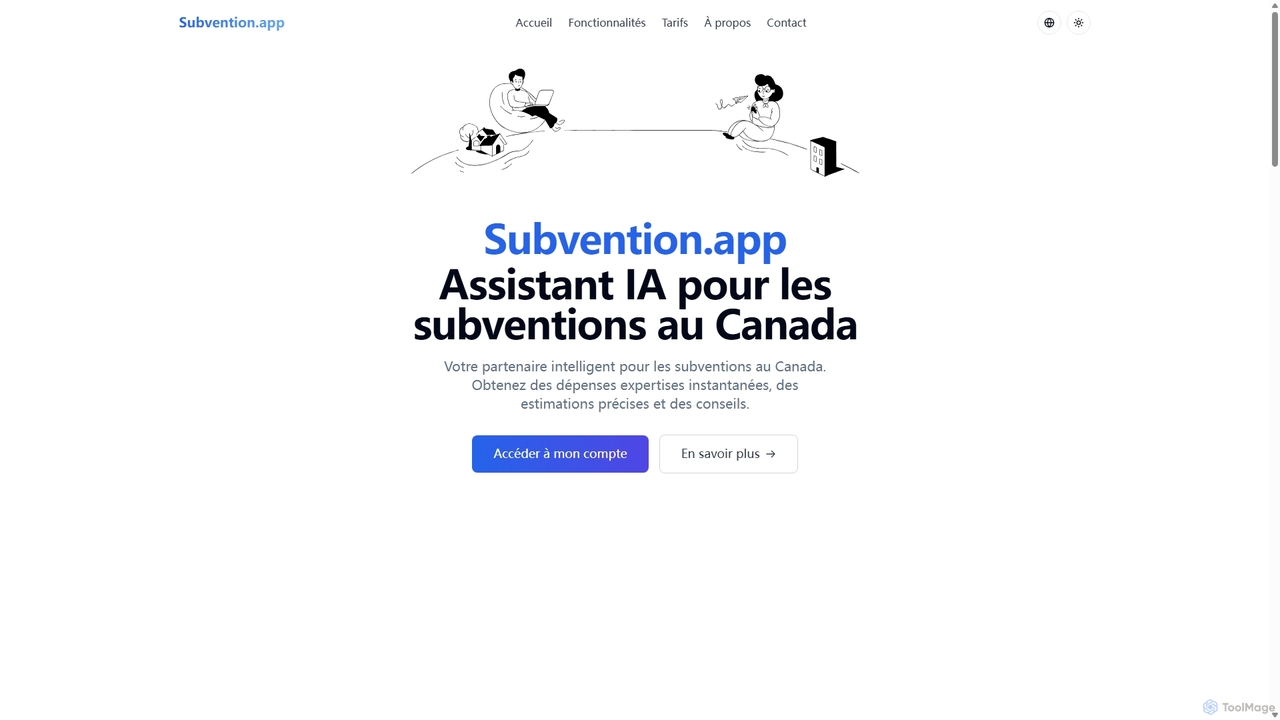
Subvention.app

Subvention.app is an AI-powered assistant designed for Canadian businesses to discover, analyze, and apply for government grants. It simplifies the complex funding landscape by providing intelligent search, personalized guidance, and AI-assisted application writing to maximize funding opportunities.

Startup Tools
Visits 5.4KFavorites 98Likes 95
Pilea
Freemium

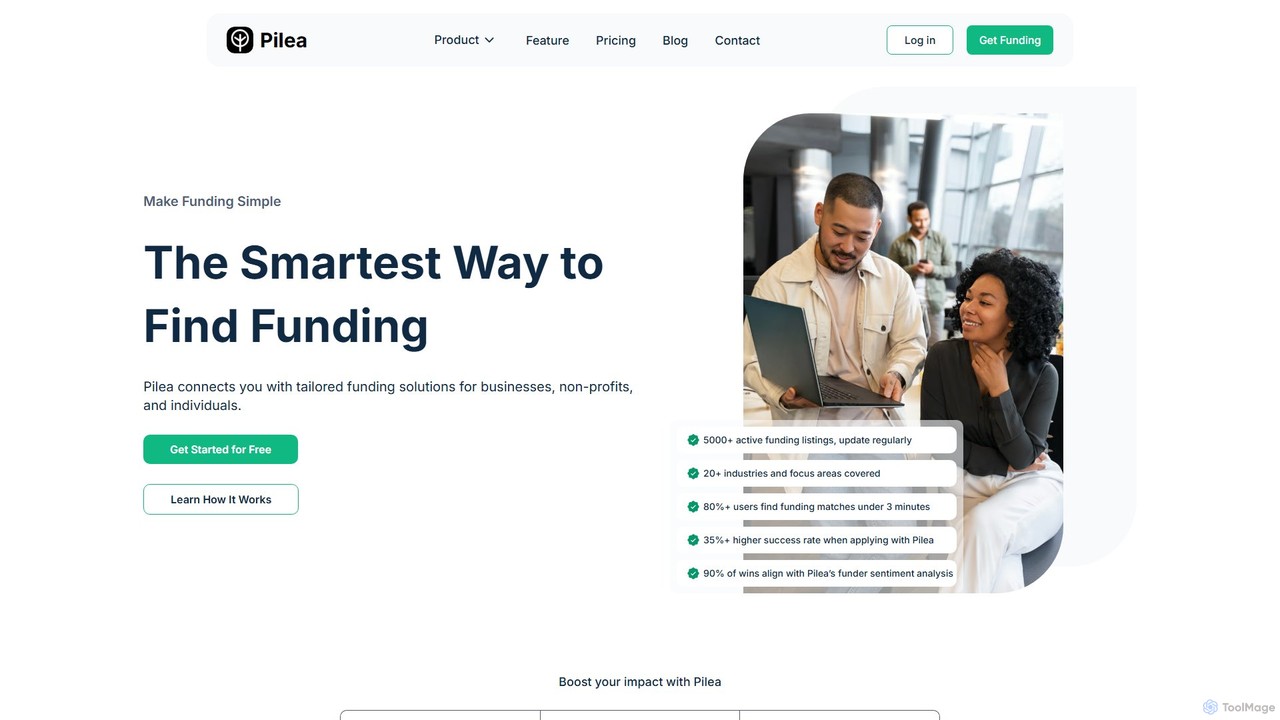
Pilea

Pilea is an AI-powered platform that simplifies the funding process for businesses, non-profits, and individuals. It features an extensive database of grants and investments, AI-driven funder sentiment analysis to improve application success, and an AI writing assistant, Pilea Pen, to draft compelling proposals. Users can search, track, and manage all their funding applications in one centralized, collaborative workspace, aiming to find funding 3x faster and with a higher success rate.

Fundraising
Visits 6KFavorites 115Likes 121
GrantGPT

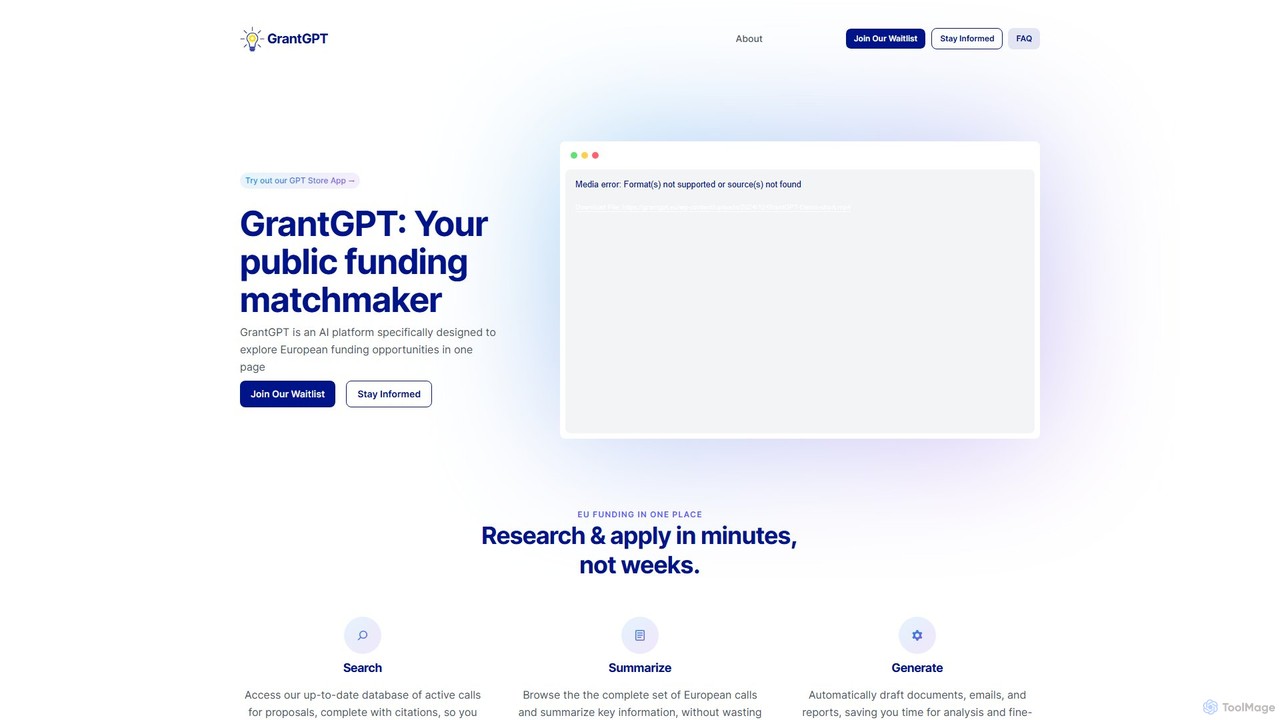
GrantGPT

GrantGPT is an AI-powered platform specifically designed to simplify the search and application process for European Union (EU) funding. It helps users discover relevant grant opportunities, summarize complex call documents, and automatically draft application materials, saving significant time and resources for researchers, startups, and innovators.

Startups
Visits 5.3KFavorites 137Likes 152
Granter

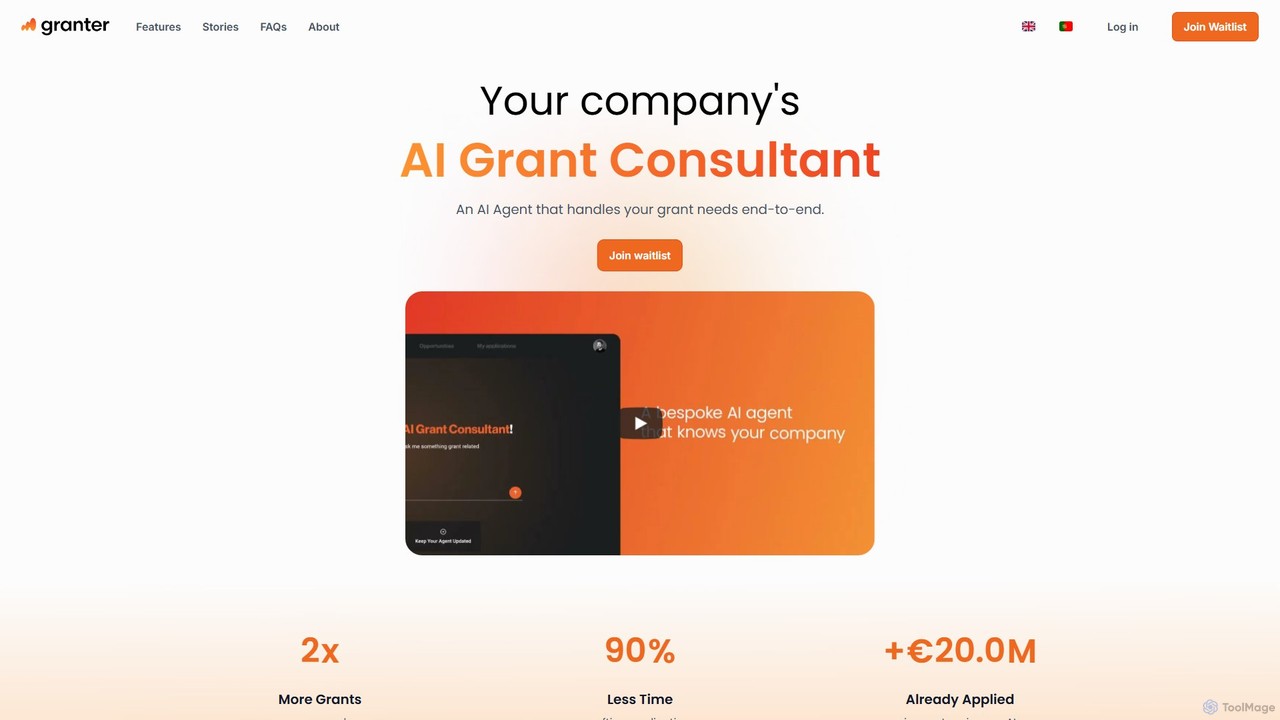
Granter

Granter is an AI-powered grant consultant that automates the entire grant funding process for businesses. From discovering relevant national and international grants to writing compelling applications and managing post-approval paperwork, Granter acts as an autonomous agent to save time, double success rates, and ensure you never miss a funding opportunity. It's designed for startups and SMEs seeking to fuel growth and innovation.

Funding
Visits 15.9KFavorites 138Likes 139

About Grant Writing

AI Grant Writing tools are specialized platforms designed to streamline and enhance the creation of compelling grant proposals. These tools leverage natural language processing (NLP) to analyze funding requirements, generate drafts of key narrative sections, and ensure compliance with specific guidelines. They serve as a critical financial tool for non-profits, researchers, and organizations by significantly increasing the efficiency and quality of applications, ultimately improving the chances of securing funding. The core value lies in automating tedious research and writing tasks, allowing teams to focus on project strategy and impact.

Core Features

  • Funder Discovery & Matching: Analyzes your project's goals to identify and recommend the most relevant funding opportunities from extensive databases.
  • AI-Powered Narrative Generation: Drafts coherent and persuasive sections such as project summaries, statements of need, and impact assessments based on user inputs.
  • Budget Planning Assistance: Helps create detailed budgets, provides templates, and assists in writing justifications for each line item.
  • Compliance & Guideline Checking: Automatically scans proposals against funder-specific requirements to flag errors, omissions, or formatting issues before submission.
  • Collaborative Editing & Review: Offers a centralized platform for team members to co-write, comment on, and revise proposals in real-time.

Applicable Scenarios

These tools are indispensable for non-profit organizations, academic institutions, research labs, and startups. For example, a university's research department can use them to manage multiple grant applications simultaneously, while a small non-profit can produce a high-quality proposal without a dedicated grant writer. They are also valuable for businesses applying for government grants like SBIR/STTR.

Selection Criteria

When choosing an AI Grant Writing tool, consider the quality and size of its funder database, the level of customization available for the generated text, and its integration capabilities with other software like CRM or project management systems. Also, evaluate the platform's collaboration features if you work in a team, and check the pricing model to ensure it aligns with your organization's budget.

Grant Writing use cases

1

Drafting a Community Health Program Grant

A program manager at a small non-profit organization needs to secure funding for a new community health initiative. Lacking a dedicated grant writer, they use an AI Grant Writing tool. The manager inputs key project details: target population, proposed activities, and expected outcomes. The AI then generates a complete first draft of the proposal narrative, including a compelling statement of need and a detailed project description. It also helps structure a compliant budget, saving the manager over 40 hours of writing and research time and producing a professional-grade application.

2

Accelerating Academic Research Grant Applications

A university research team is applying for a major federal grant (e.g., from the NIH). The process is complex, with stringent formatting and content requirements. They use an AI Grant Writing tool to streamline the process. The principal investigator inputs their research hypothesis and methodology. The AI assists in structuring the application according to the funder's template, drafts sections like the abstract and background, and cross-references the proposal to ensure all guidelines are met. This allows the researchers to focus on the scientific merit of their work, reducing administrative burden by 30%.

3

Securing SBIR/STTR Grants for Tech Startups

A tech startup is seeking a Small Business Innovation Research (SBIR) grant to fund its R&D for a new software product. The application requires detailed technical specifications and a clear commercialization plan. The startup's founder uses an AI tool specialized in government grants. The tool provides templates specific to SBIR applications and helps generate technical narratives that align with the agency's priorities. It also assists in creating financial projections and a market analysis, ensuring the proposal is not only technically sound but also commercially viable, increasing their chance of being selected for funding.

4

Streamlining Foundation Reporting for Grantees

An arts organization that has received a multi-year grant is required to submit annual progress reports. The development coordinator uses an AI Grant Writing tool to manage this process. They upload the original grant proposal and input current project data, such as attendance figures and program milestones. The AI tool then generates a draft report that is consistent with the language and goals of the original application. It helps articulate progress clearly and ensures all reporting requirements are met, simplifying a time-consuming compliance task and maintaining a positive relationship with the funder.

5

Finding Niche Funding for an Arts & Culture Project

A local museum plans a new historical exhibition and needs to find funding from foundations that specifically support cultural heritage projects. The museum director uses the 'Funder Discovery' feature of an AI Grant Writing tool. By inputting keywords like 'historical preservation,' 'museum exhibition,' and their geographic location, the AI scans its database and returns a curated list of 15 niche foundations that are a strong match. This targeted approach saves weeks of manual research and allows the director to focus on crafting tailored proposals for funders who are already interested in their type of work.

6

Collaborative Proposal Writing for an International NGO

An international NGO with teams in different time zones is preparing a large-scale proposal for USAID. They use a cloud-based AI Grant Writing platform for collaboration. The project lead in Washington D.C. sets up the proposal structure. Team members in Kenya and Vietnam then contribute to their respective sections directly on the platform. The AI provides real-time suggestions for clarity and ensures consistent terminology across the document. The platform's version control and comment features prevent confusion, enabling the global team to work efficiently and submit a unified, high-quality proposal on a tight deadline.

Grant Writing FAQ

What are AI Grant Writing tools?

AI Grant Writing tools are software platforms that use artificial intelligence, particularly natural language processing (NLP), to assist in the grant application process. They go beyond simple text editors by offering specialized features like finding relevant funding opportunities, generating drafts of proposal sections, checking for compliance with funder guidelines, and assisting with budget creation. These tools are designed to increase efficiency, improve the quality of proposals, and raise the chances of securing funding for non-profits, researchers, and other organizations.

How do AI Grant Writing tools differ from general AI writers like ChatGPT?

While both use AI for text generation, AI Grant Writing tools are highly specialized. The key differences are:

  • Domain-Specific Knowledge: They are trained on successful grant proposals and understand the specific language, structure, and tone required.
  • Funder Databases: Many integrate databases of funding opportunities, allowing you to research and match grants within the same platform.
  • Structured Templates: They provide templates and workflows tailored to common grant application formats (e.g., NIH, NSF, foundation grants).
  • Compliance Features: They often include tools to check your proposal against a funder's specific guidelines, character limits, and required sections.

General AI writers lack this contextual understanding and specialized feature set, making them less effective for the nuanced task of grant writing.

Can an AI tool guarantee my grant proposal will be funded?

No, an AI tool cannot guarantee funding. Grant funding decisions are complex and depend on many factors, including the merit of the project, competition from other applicants, and the funder's specific priorities. However, an AI tool can significantly improve your chances of success. It does this by helping you produce a well-written, highly polished, and fully compliant proposal that clearly communicates your project's value. By automating tedious tasks, it also frees up your time to focus on strengthening the core ideas of your project, which is a critical factor in any successful application.

How do I choose the right AI Grant Writing tool for my organization?

Choosing the right tool depends on your specific needs. Consider these key factors:

  • Funder Focus: Does the tool specialize in the types of funders you target (e.g., federal government, private foundations, corporate)? Check the quality and relevance of its funder database.
  • Team Size and Collaboration: If multiple people will work on proposals, look for strong collaboration features like real-time editing, commenting, and user roles.
  • Feature Set: Do you need just writing assistance, or a full suite of tools including funder discovery, budget planning, and project management?
  • Budget: Pricing models vary from monthly subscriptions to per-proposal fees. Choose a plan that aligns with your organization's budget and grant application frequency.
Who benefits most from using AI Grant Writing tools?

While many can benefit, these tools are particularly valuable for:

  • Small to Medium-Sized Non-Profits: Organizations without a dedicated grant writer or with limited resources can produce professional-quality proposals efficiently.
  • Academic Researchers: Scientists and academics can save significant time on the administrative aspects of grant applications, allowing more focus on their research.
  • Freelance Grant Writers and Consultants: Professionals can increase their productivity, manage more clients, and improve the quality of their deliverables.
  • Startups and Small Businesses: Companies seeking government grants (like SBIR/STTR) or foundation funding can navigate the complex application processes more easily.