ToolMage
Sign in

Best 31 Investment Analysis AI tools for Finance

Popular Investment Analysis AI tools in Finance include OpenBB, Blueflame AI, Model ML, Reflexivity, ScalarField, Hudson Labs, Fintool, Hebbia, Beanvest, and Cambio, helping you work more efficiently.

Hudson Labs
Freemium

Hudson Labs

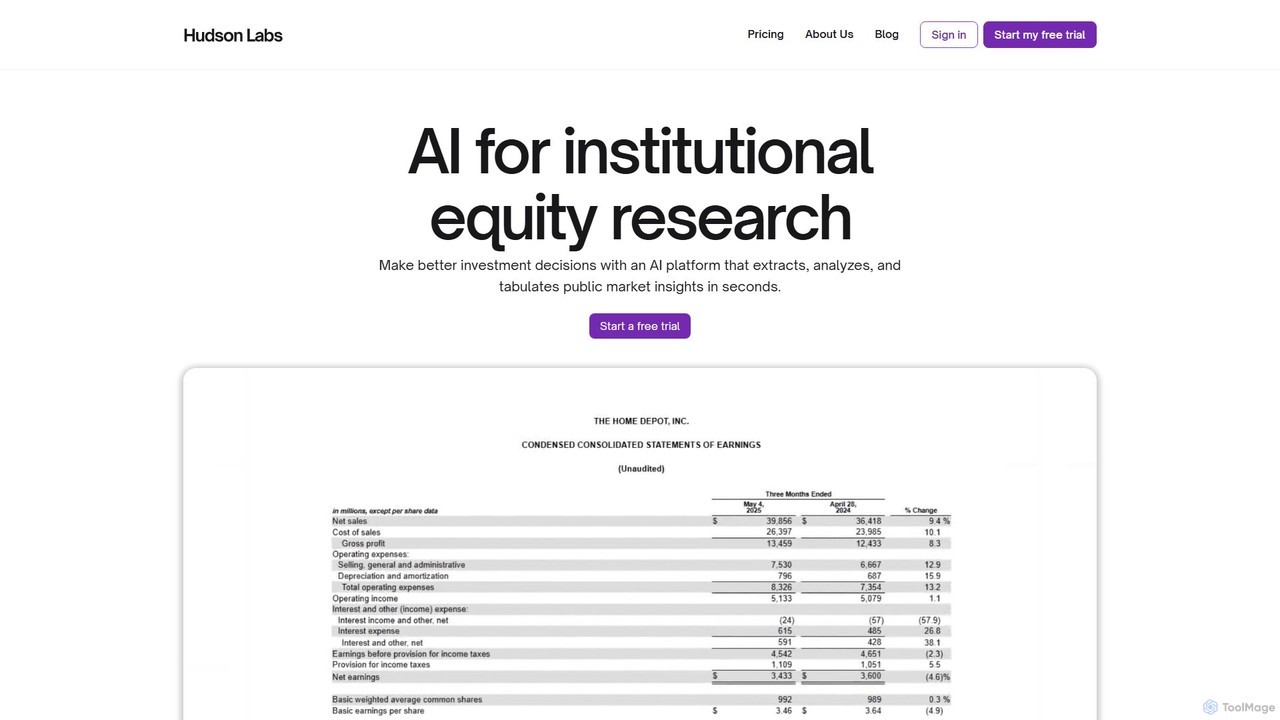
Hudson Labs is an AI platform for institutional equity research, designed to help investors make better decisions. It extracts, analyzes, and tabulates insights from public market documents like SEC filings and earnings calls in seconds, providing actionable intelligence with full data integrity.

Business Intelligence
Visits 21.4KFavorites 138Likes 133
Quist AI
Paid

Quist AI

Quist AI is an advanced AI-powered research assistant designed for researchers, analysts, and consultants. It automates time-consuming desk research, synthesizes data, and generates personalized reports, acting as a digital teammate to boost productivity and strategic thinking.

Consulting
Visits 6KFavorites 146Likes 148
Reflexivity
Paid

Reflexivity

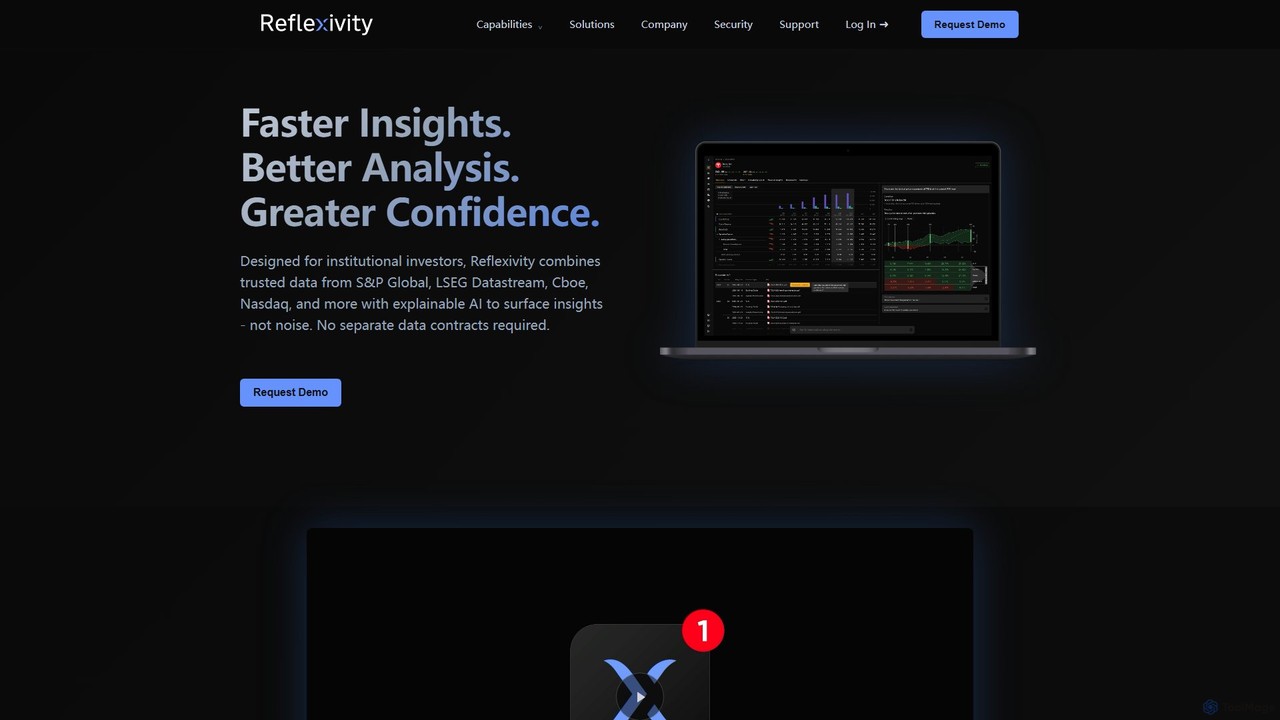
Reflexivity is an institutional-grade AI platform for finance professionals. It integrates high-quality data from sources like S&P Global and LSEG to deliver faster insights and better analysis. The platform offers autonomous research, document intelligence, real-time portfolio analysis, advanced market simulations, and smart screening to uncover investment opportunities and build greater confidence in decisions.

Business Intelligence
Visits 29.5KFavorites 139Likes 144
Lorna
Freemium

Lorna

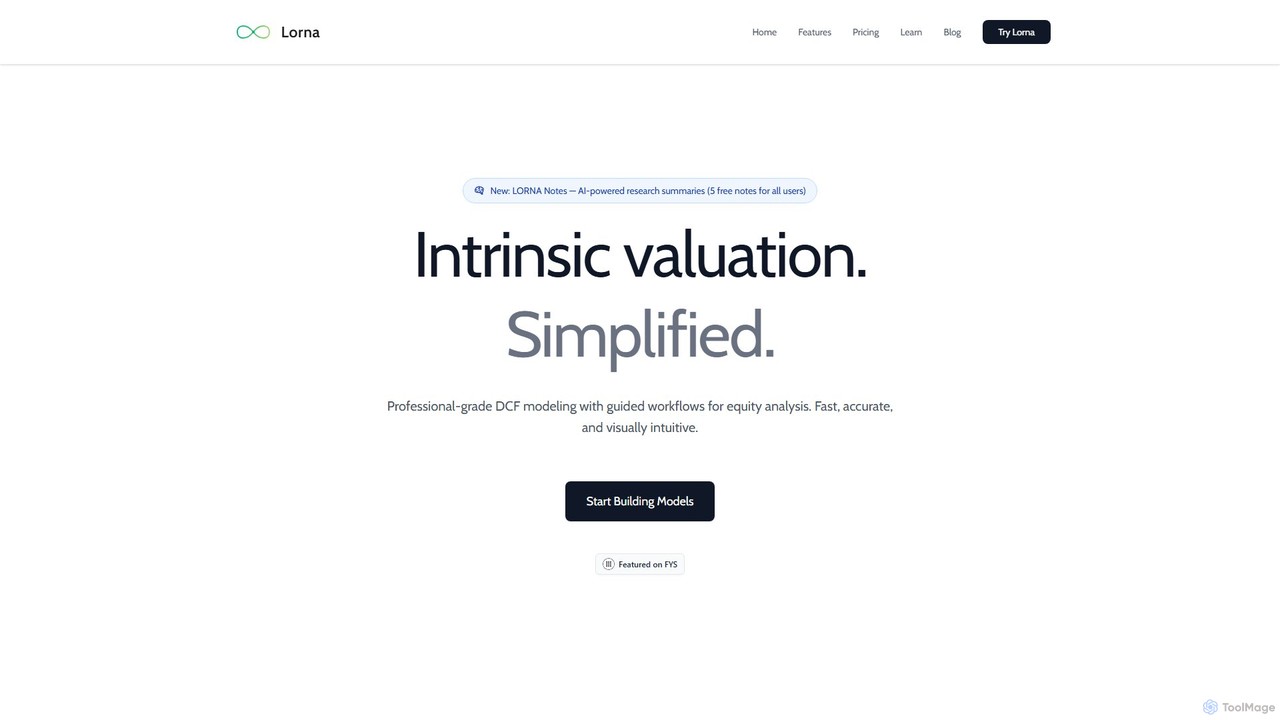
Lorna is an AI-powered intelligent valuation engine that simplifies professional-grade Discounted Cash Flow (DCF) modeling. Designed for investors and financial analysts, it offers guided workflows, flexible forecasting, and professional report exports to make equity analysis fast, accurate, and visually intuitive.

Finance
Visits 6KFavorites 120Likes 107
Top Themes
Freemium

Top Themes

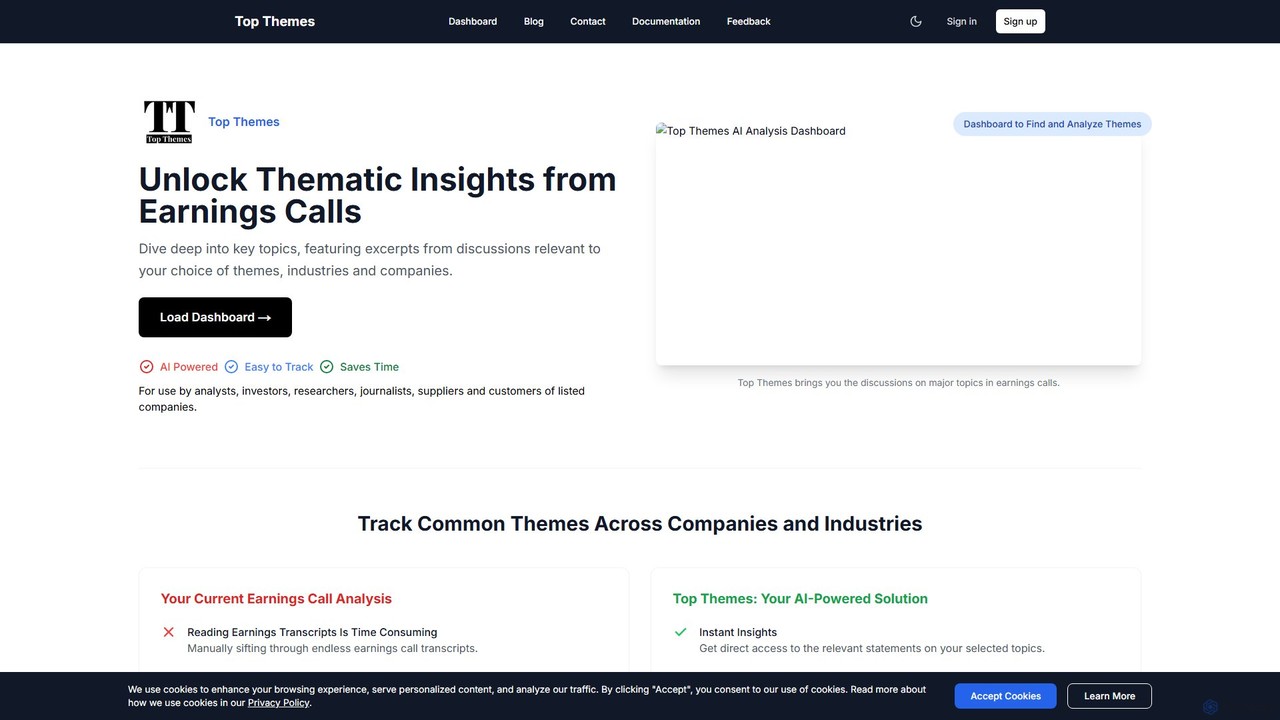
Top Themes is an AI-powered platform that accelerates thematic research by analyzing earnings call transcripts. It provides analysts, investors, and researchers with instant insights, AI-generated summaries, and direct excerpts on key topics, helping them track market trends and make faster, data-driven decisions.

Text Analysis
Visits 5.9KFavorites 143Likes 144
BeeBee.AI
Freemium

BeeBee.AI

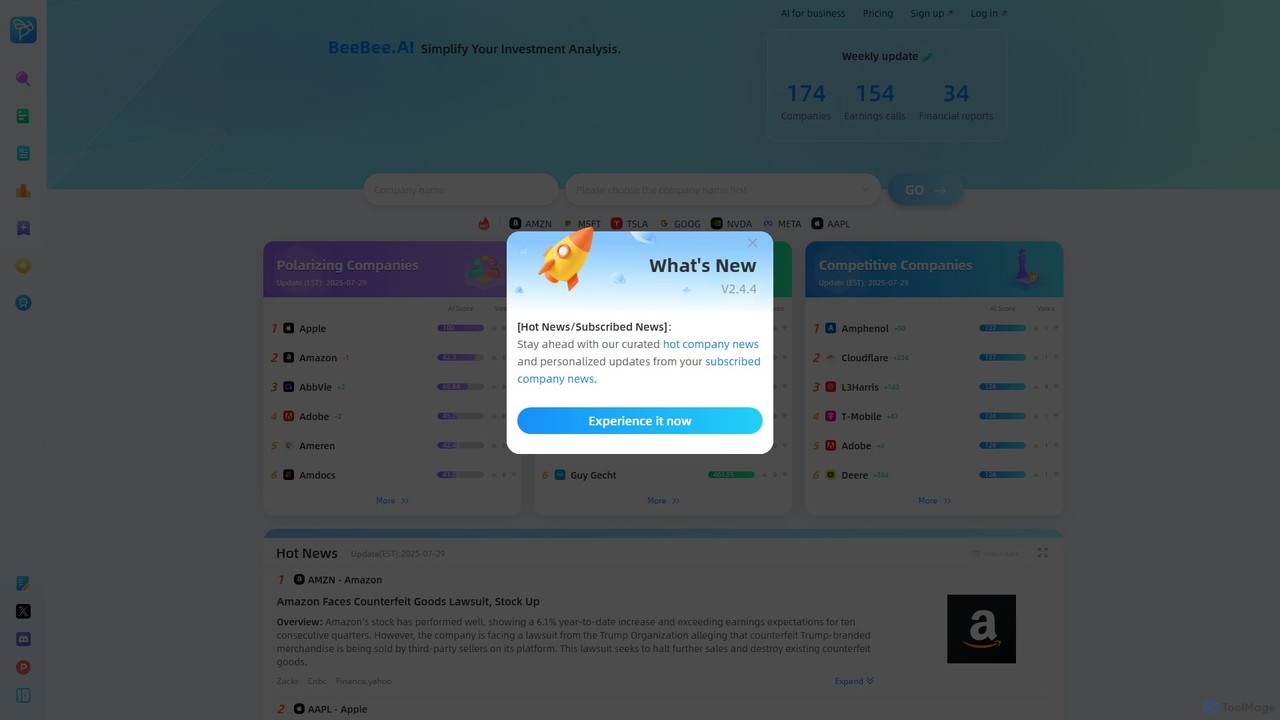
BeeBee.AI is an AI-powered investment analysis tool for the US stock market. It simplifies complex financial data by providing AI-driven summaries and in-depth analysis of earnings calls, 10-K/10-Q reports, and other financial documents. The platform tracks over 3000 companies, offering structured insights, sentiment analysis, and interactive Q&A to help investors make informed decisions quickly and efficiently.

Financial Data
Visits 6.6KFavorites 106Likes 112
Quantera.ai

Quantera.ai

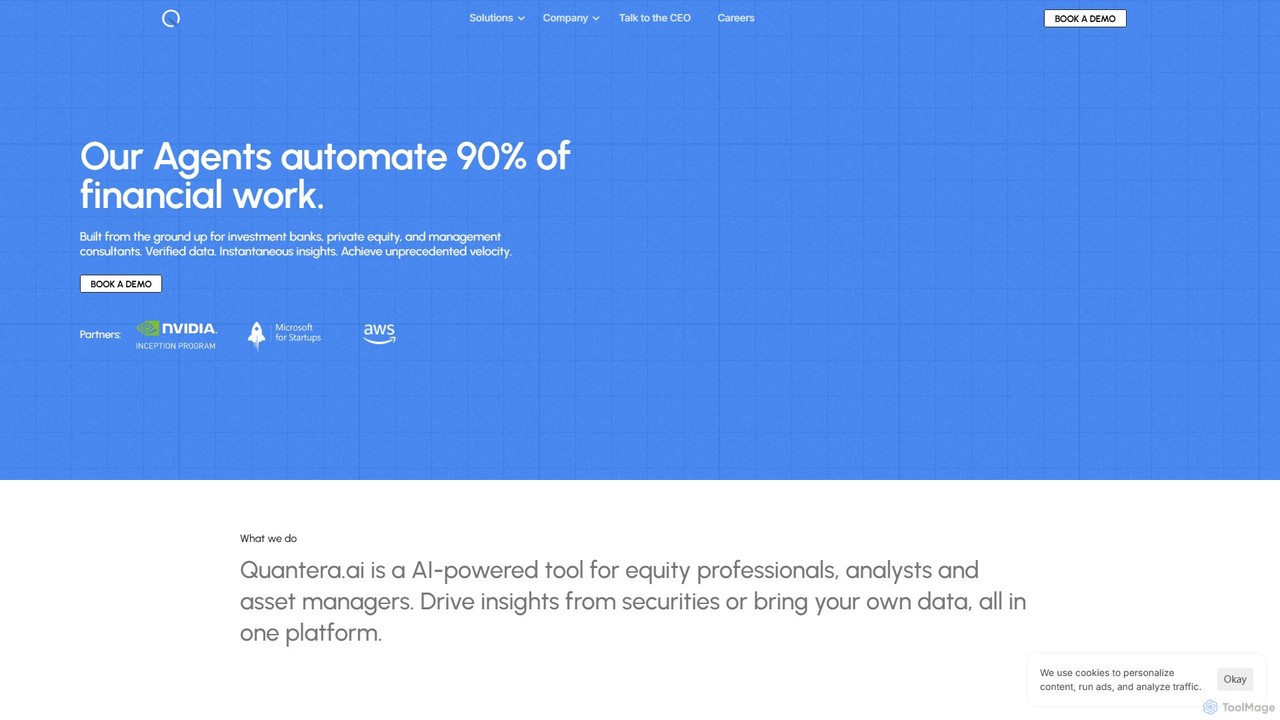
Quantera.ai is an AI-powered platform designed for equity professionals, analysts, and asset managers. It utilizes advanced AI agents to transform vast amounts of unstructured financial data into actionable, verifiable insights, significantly accelerating research, analysis, and decision-making processes.

Market Research
Visits 5.9KFavorites 147Likes 153

About Investment Analysis

AI Investment Analysis tools are specialized platforms that leverage machine learning and large language models to evaluate financial assets and market trends. These tools process vast datasets, including market data, financial reports, and news sentiment, to identify patterns, forecast performance, and assess risk. They empower investors and analysts to make more informed, data-driven decisions by automating complex research and providing actionable insights. This technology moves beyond traditional spreadsheets, offering dynamic modeling and predictive analytics for portfolio optimization.

Core Features

  • Quantitative Analysis: Automatically screens thousands of assets using complex financial metrics and custom criteria.
  • Sentiment Analysis: Gauges market mood by analyzing news articles, social media, and financial reports.
  • Risk Modeling: Simulates various market scenarios to predict potential portfolio volatility and downside risk.
  • Performance Forecasting: Utilizes predictive models to estimate future price movements and asset returns.
  • Automated Reporting: Generates comprehensive investment reports and summaries based on specified parameters.

Use Cases

Primarily used by individual retail investors, financial analysts, portfolio managers, and hedge funds. These tools are essential for tasks like identifying undervalued stocks, optimizing asset allocation in a portfolio, backtesting trading strategies, and monitoring market-wide sentiment shifts to anticipate price movements.

How to Choose

When selecting an AI Investment Analysis tool, consider the scope of data sources (e.g., global markets, alternative data), the sophistication of its analytical models, integration capabilities with your brokerage accounts, the user-friendliness of the interface, and the pricing structure, which can range from subscription models for individuals to enterprise-level licenses.

Featured tool rankings

Investment Analysis use cases

1

Screening for Undervalued Stocks

A retail investor wants to find growth stocks that are currently undervalued by the market. Using an AI Investment Analysis tool, they set up a screen with specific criteria like P/E ratio below 20, revenue growth above 15% YoY, and positive news sentiment over the past quarter. The AI processes thousands of stocks in minutes, providing a shortlist of 10-15 potential candidates. It also generates a summary report for each, highlighting key financial health indicators and recent sentiment trends, saving the investor days of manual research.

2

Portfolio Risk Assessment and Optimization

A portfolio manager needs to rebalance a client's portfolio to reduce exposure to market volatility. They input the current holdings into an AI analysis tool. The tool runs thousands of simulations based on historical data and predictive models to calculate the portfolio's Value at Risk (VaR) and stress-test it against various economic scenarios (e.g., interest rate hikes). Based on the results, the AI suggests specific adjustments, such as increasing allocation to defensive sectors or adding assets with low correlation, to achieve a more optimal risk-return profile.

3

Analyzing Market Sentiment for Trading Decisions

A day trader specializing in tech stocks uses an AI tool to monitor real-time market sentiment. The tool continuously scans news outlets, financial blogs, and social media for mentions of specific stocks. It aggregates this data and assigns a sentiment score (e.g., from -1 to +1). When the tool detects a sudden, significant positive shift in sentiment for a particular company ahead of an earnings call, it alerts the trader. This insight allows the trader to enter a long position before the sentiment becomes widespread public knowledge, potentially capitalizing on the subsequent price increase.

4

Backtesting Algorithmic Trading Strategies

A quantitative analyst (quant) develops a new trading algorithm based on moving average crossovers and trading volume spikes. Before deploying it with real capital, they use an AI analysis platform to backtest the strategy against decades of historical market data. The platform simulates the execution of trades based on the algorithm's rules and provides a detailed performance report, including total return, Sharpe ratio, and maximum drawdown. This process allows the quant to identify flaws and refine the algorithm's parameters without risking actual money, significantly improving the strategy's viability.

5

Generating Investment Thesis from Financial Reports

A financial analyst is tasked with covering a new company. Instead of spending hours reading through dense 10-K and 10-Q reports, they upload the documents to an AI tool. The AI uses natural language processing to extract key information, such as revenue drivers, management's outlook, competitive risks, and financial ratios. It then synthesizes this information into a concise investment thesis, complete with bullet points summarizing the bull and bear cases. This accelerates the initial research phase from a full day's work to under an hour, allowing the analyst to focus on higher-level strategic analysis.

6

Forecasting Macroeconomic Impact on a Sector

An investment firm wants to understand how potential inflation changes might affect the consumer discretionary sector. They use an AI platform that models macroeconomic scenarios. The analysts input variables like projected inflation rates and consumer spending data. The AI analyzes historical correlations and runs predictive models to forecast the sector's potential performance under these conditions. The output includes projected revenue growth for key companies in the sector and identifies which stocks are most or least resilient to inflationary pressures, guiding the firm's sector allocation strategy.

Investment Analysis FAQ

What are AI Investment Analysis tools?

AI Investment Analysis tools are software applications that use artificial intelligence, particularly machine learning and natural language processing, to analyze financial data. They go beyond traditional methods by identifying complex patterns, analyzing unstructured data like news sentiment, and making predictive forecasts about market trends and asset performance. Their primary goal is to provide investors with deeper, data-driven insights to support more informed decision-making.

How to choose the right AI Investment Analysis tool?

Choosing the right tool depends on your specific needs. Consider the following factors:

  • Your Investing Style: Are you a long-term value investor or a short-term trader? Some tools excel at fundamental analysis, while others are better for technical signals and sentiment analysis.
  • Data Coverage: Ensure the tool covers the markets, asset classes (stocks, crypto, forex), and data types (e.g., alternative data) you need.
  • Technical Skill Level: Some platforms are user-friendly for beginners, while others offer complex modeling capabilities for quantitative analysts.
  • Integration: Check if it can connect with your existing brokerage accounts for seamless portfolio tracking and trade execution.
  • Cost: Evaluate the pricing model (subscription, pay-per-use) against the features offered and your budget.
Can AI tools predict stock prices with 100% accuracy?

No, AI tools cannot predict stock prices with 100% accuracy. Financial markets are influenced by countless unpredictable factors, including human behavior and unforeseen global events. AI tools are powerful for identifying probabilities, trends, and correlations that humans might miss, significantly improving the analytical process. However, they provide probabilistic forecasts, not certainties. They should be used as a sophisticated aid to augment human judgment and analysis, not as an infallible crystal ball.

What's the difference between AI analysis tools and traditional stock screeners?

The key difference lies in their analytical approach. Traditional stock screeners operate on fixed, rule-based criteria (e.g., 'show me stocks with P/E < 15'). They are static and only filter based on what you explicitly tell them. AI Investment Analysis tools are dynamic. They use machine learning to identify complex, non-linear relationships in data that are not obvious. They can also incorporate alternative data sources like news sentiment and adapt their models as market conditions change, offering a more nuanced and forward-looking perspective.

Who can benefit from using AI Investment Analysis tools?

A wide range of users can benefit:

  • Retail Investors: Gain access to institutional-grade analysis to level the playing field and make more sophisticated investment choices.
  • Financial Analysts: Automate tedious data collection and analysis, freeing up time to focus on strategic insights and client relationships.
  • Portfolio Managers: Enhance risk management, optimize asset allocation, and identify new opportunities more efficiently.
  • Quantitative Traders (Quants): Use them as a platform to build, backtest, and deploy complex algorithmic trading strategies.