Zip
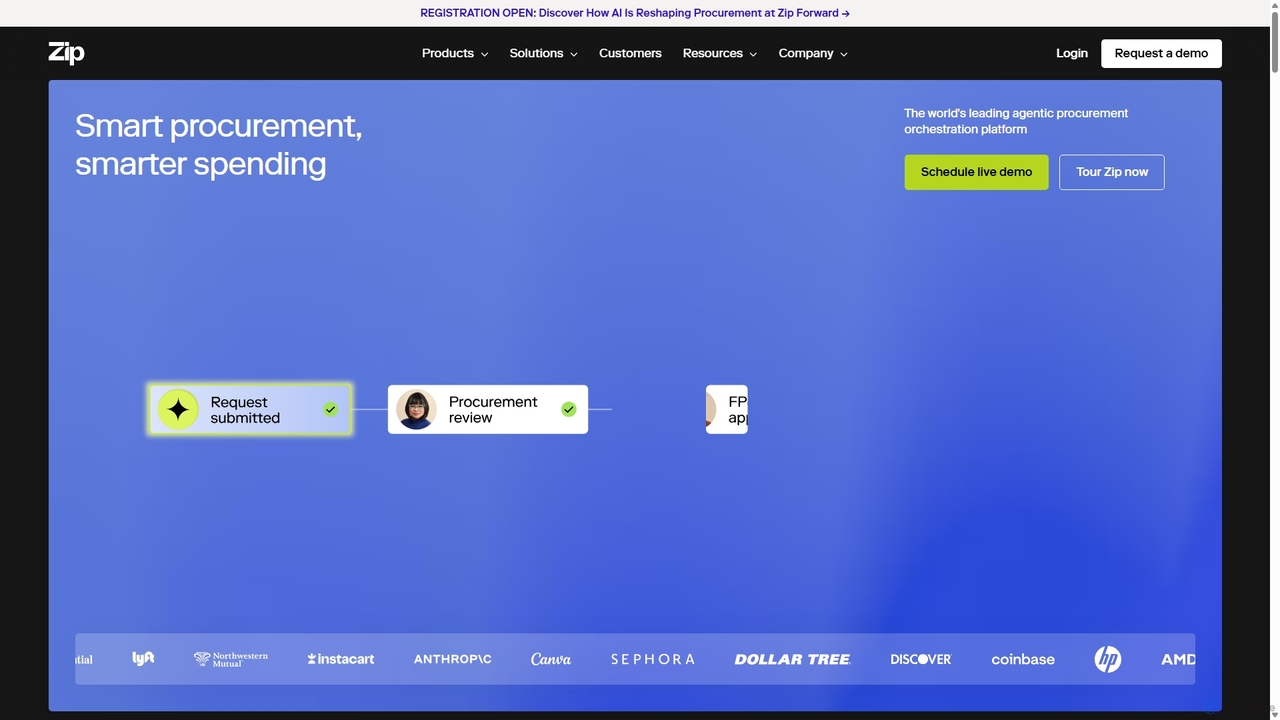
Zip is the world's leading agentic procurement orchestration platform, powered by AI. It provides a unified solution for …
Zip is the world's leading agentic procurement orchestration platform, powered by AI. It provides a unified solution for businesses to streamline the entire purchasing process, from employee intake and approvals to vendor management, PO creation, and global payments. Zip helps companies of all sizes gain early spend visibility, improve compliance, and drive significant cost savings.
tryomi
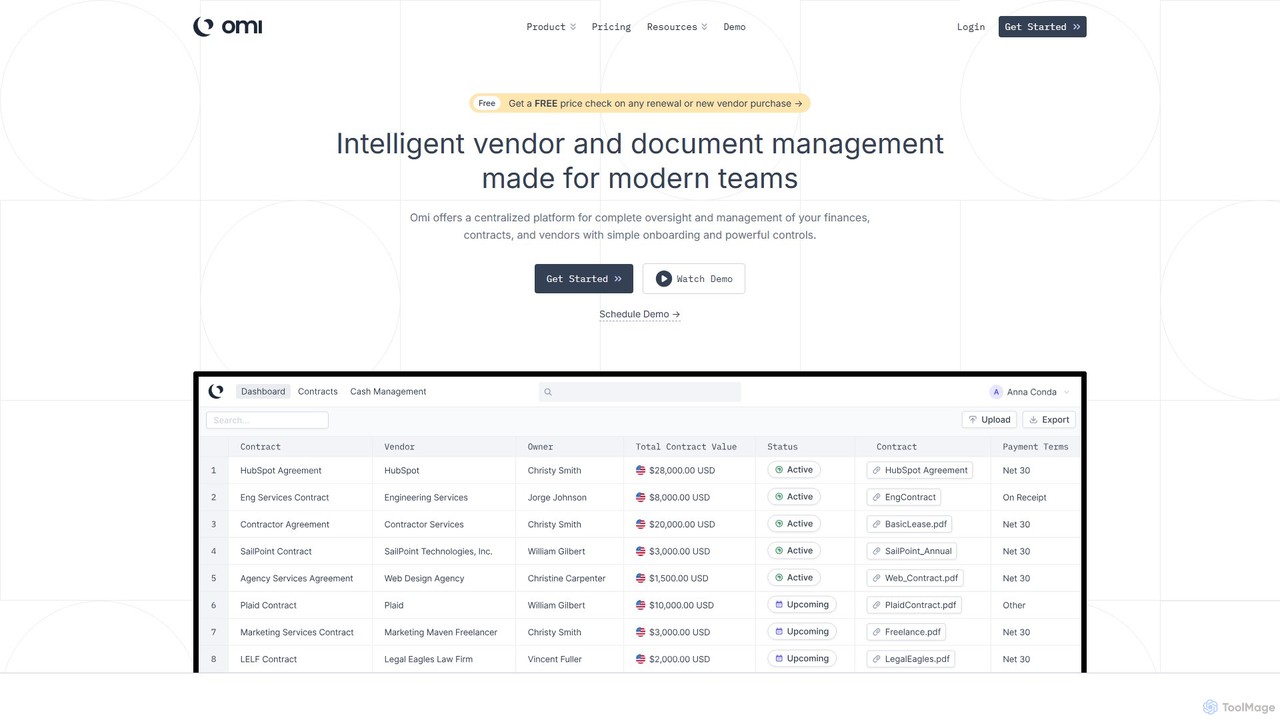
Omi is an intelligent vendor and document management platform for modern teams. It centralizes finances, contracts, and vendor …
Omi is an intelligent vendor and document management platform for modern teams. It centralizes finances, contracts, and vendor information, providing complete oversight and control. Key features include automated contract tracking, streamlined procurement workflows, powerful financial controls, and insightful spend analysis. Omi helps businesses eliminate scattered data, reduce wasteful spending, and improve collaboration across finance, procurement, and operations teams from a single, integrated platform.
Tonkean
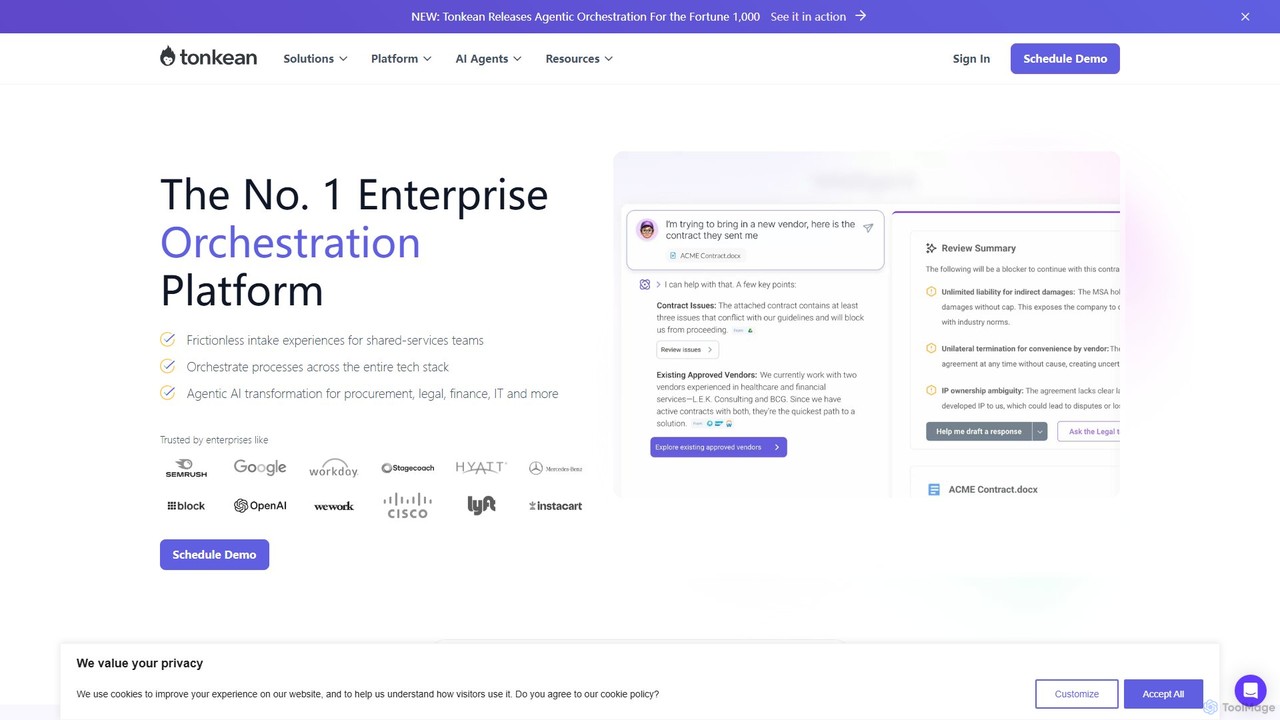
Tonkean is an AI-powered, no-code platform for enterprise process orchestration and intake management. It empowers operations teams to …
Tonkean is an AI-powered, no-code platform for enterprise process orchestration and intake management. It empowers operations teams to automate complex workflows, such as procurement and legal, by connecting existing systems and guiding employees through processes. Tonkean combines autonomous AI with rules-based logic to increase efficiency, ensure compliance, and accelerate business operations without writing a single line of code.
About Procurement
AI Procurement tools are specialized software that leverage artificial intelligence to automate and optimize the process of acquiring goods and services. They utilize machine learning, natural language processing (NLP), and predictive analytics to analyze spending, manage supplier relationships, and streamline complex workflows. This results in significant cost savings, reduced supply chain risk, and improved operational efficiency. Unlike traditional procurement systems, these tools can proactively identify savings opportunities and predict potential disruptions before they impact the business.
Core Features
- Automated Spend Analysis: Automatically categorizes and analyzes enterprise-wide spending data to reveal savings opportunities and enforce budget compliance.
- Supplier Risk Management: Continuously monitors supplier performance, financial health, and external risk factors to provide early warnings of potential issues.
- Intelligent Sourcing: Recommends qualified suppliers, automates the request for proposal (RFP) process, and uses data to support negotiation strategies.
- Automated Contract Management: Employs NLP to extract key terms, track obligations, and manage contract lifecycles, ensuring compliance and preventing missed renewals.
- Predictive Demand Forecasting: Analyzes historical data and market trends to forecast future needs, optimizing inventory levels and reducing carrying costs.
Use Cases
These tools are widely used in industries with complex supply chains, such as manufacturing, retail, and healthcare. Procurement managers use them to automate tactical tasks and focus on strategic sourcing. Finance departments leverage them for enhanced budget control and spend visibility, while legal teams utilize the contract analysis features to mitigate contractual risks.
How to Choose
When selecting an AI Procurement tool, first evaluate its integration capabilities with your existing ERP and financial systems. Consider the depth of its analytical features—does it offer basic spend visibility or advanced predictive modeling? Also, assess the user interface's ease of use for your team and the vendor's level of support for implementation and ongoing training.
ProcurementUse Cases
Automate Supplier Discovery and Vetting
A procurement specialist in a growing tech company needs to find and onboard new suppliers for critical components. Using an AI Procurement tool, they can automate the discovery process by setting criteria for performance, location, and diversity. The AI scans a vast database of suppliers, providing a shortlist of qualified candidates. It then automatically gathers risk data, such as financial stability reports and compliance certifications, reducing the manual vetting time from weeks to days and ensuring a more resilient supply chain.
Proactively Mitigate Supply Chain Risks
A supply chain manager for a global manufacturing firm is concerned about geopolitical instability affecting key suppliers. The AI Procurement platform continuously monitors thousands of sources, including news, financial markets, and weather data. It flags a potential disruption due to a strike at a supplier's port city. The manager receives an alert weeks in advance, allowing them to proactively arrange alternative shipping routes or increase orders from a secondary supplier, thus avoiding a costly production halt.
Streamline Invoice and Purchase Order Processing
An accounts payable department handles thousands of invoices monthly, leading to manual data entry errors and delayed payments. By implementing an AI Procurement tool with OCR and NLP capabilities, the process is automated. The system extracts data from invoices, matches them against purchase orders and delivery receipts, and flags any discrepancies for human review. This reduces invoice processing time by over 80%, minimizes late payment fees, and frees up the AP team to focus on more strategic financial tasks.
Enhance Contract Lifecycle Management (CLM)
A corporate legal team struggles to manage thousands of active supplier contracts, risking missed renewals and non-compliance. An AI Procurement tool's CLM module digitizes all contracts and uses NLP to automatically extract key data like renewal dates, liability clauses, and payment terms. The system sends automated alerts for upcoming deadlines and can flag non-standard or high-risk clauses for legal review. This provides complete visibility into the contract portfolio and reduces administrative overhead by 50%.
Conduct Advanced Spend Analytics for Savings
A Chief Procurement Officer (CPO) needs a consolidated view of enterprise-wide spending to identify savings. The AI tool aggregates data from various systems (ERP, P-cards, expenses) into a single dashboard. It automatically classifies spend into categories, identifies maverick spending outside of approved contracts, and benchmarks prices against the market. The CPO can now easily spot opportunities for supplier consolidation and contract renegotiation, leading to a projected 10-15% reduction in addressable spend.
Optimize Strategic Sourcing Events
A sourcing manager is running a complex RFP for logistics services. Instead of manually comparing dozens of complex bids in spreadsheets, they use an AI sourcing tool. The tool automates bid analysis, comparing not just price but also factors like service levels, delivery times, and supplier risk scores. The AI can run simulations to model the total cost of ownership (TCO) for different award scenarios. This data-driven approach helps the manager select the optimal supplier mix, saving an estimated 8% on logistics costs and reducing award time by 40%.