ToolMage
Sign in

Best 2 Subscription Management AI tools for Finance

Popular Subscription Management AI tools in Finance include SubscriptionPro and Tellio, helping you work more efficiently.

Tellio
Freemium

Tellio

Tellio is an intuitive subscription management platform designed to help users track, organize, and optimize all their recurring expenses in one centralized place. It offers smart reminders, detailed analytics, and automatic detection of subscriptions from bank statements to simplify financial oversight.

Subscription Management
Visits 4.4KFavorites 142Likes 152
SubscriptionPro
Paid

SubscriptionPro

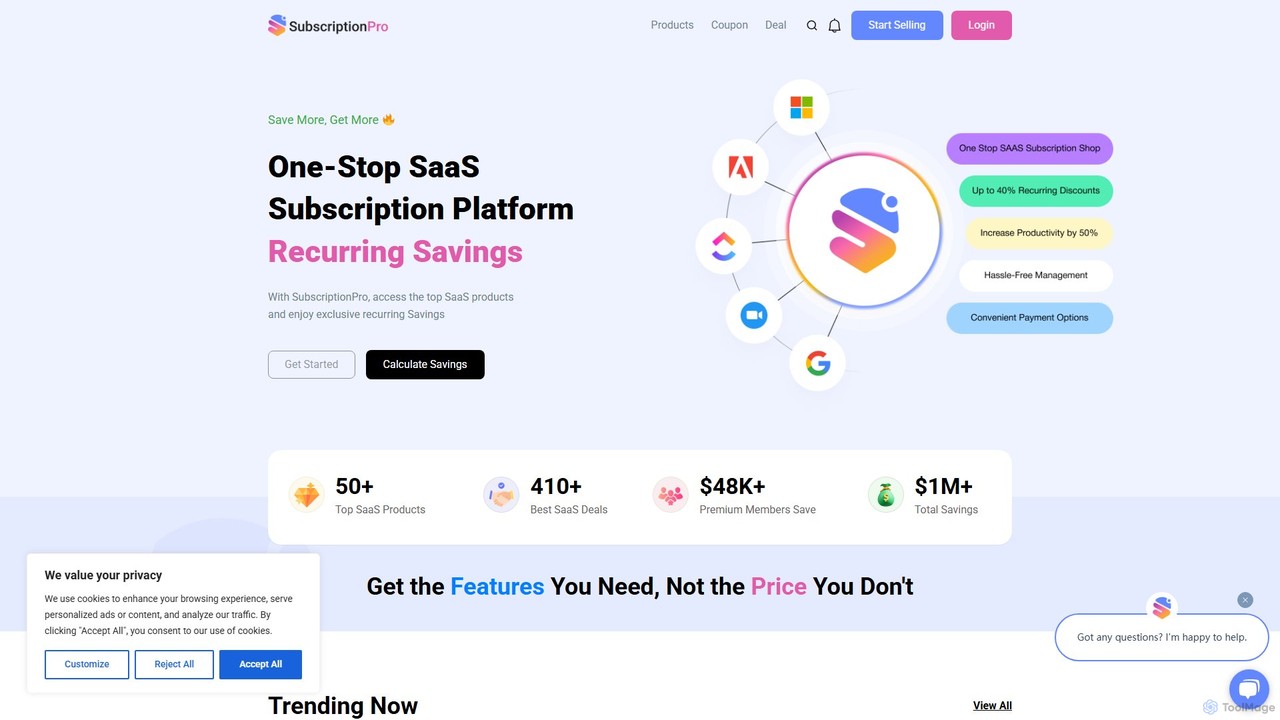
SubscriptionPro is a centralized platform designed for businesses to manage all their software and service subscriptions. It simplifies operations by consolidating billing, offering expert support, and providing AI-powered analytics to optimize spending on services like Google Workspace, Zoom, and ClickUp. It streamlines procurement and offers flexible payment solutions, making it a comprehensive tool for managing SaaS sprawl.

Saas Management
Visits 7.5KFavorites 106Likes 102

About Subscription Management

AI Subscription Management tools are specialized financial platforms for automating the entire lifecycle of recurring billing and revenue. They leverage AI to analyze customer data, predict behavior, and optimize revenue streams from subscription-based models. These tools go beyond simple payment processing by providing deep insights into key metrics like Monthly Recurring Revenue (MRR), customer churn, and Lifetime Value (LTV). This enables businesses to proactively reduce churn, personalize offers, and ensure compliance with complex revenue recognition standards.

Core Features

  • Automated Recurring Billing: Automatically handles complex billing cycles, prorations, usage-based fees, and tax calculations.
  • AI-Powered Churn Prediction: Analyzes user engagement and payment history to identify at-risk customers before they cancel.
  • Intelligent Dunning Management: Uses automated, personalized communication to recover failed payments and reduce involuntary churn.
  • Revenue Recognition Automation: Ensures compliance with accounting standards like ASC 606 and IFRS 15 by automating revenue deferral and recognition.
  • Subscription Analytics & Reporting: Provides real-time dashboards for critical metrics such as MRR, ARR, LTV, and churn rates.

Use Cases

These tools are essential for any business with a recurring revenue model. This includes SaaS companies managing software subscriptions, digital media publishers handling paywalls, e-commerce businesses offering subscription boxes, and membership organizations like gyms or online communities. They help finance and operations teams automate manual tasks, gain accurate financial forecasts, and make data-driven decisions to grow their subscriber base.

How to Choose

When selecting a tool, consider its integration capabilities with your existing CRM, accounting software, and payment gateways. Evaluate the sophistication of its AI features, particularly for churn prediction and dunning. Assess the scalability of the platform to handle future growth in subscribers and billing complexity. Finally, review the pricing model—whether it's based on revenue percentage, number of subscribers, or feature tiers—to ensure it aligns with your business scale.


Featured tool rankings

Subscription Management use cases

1

Automating Billing for a SaaS Company

A B2B SaaS company with thousands of customers on various monthly and annual plans uses an AI subscription management tool to automate its entire billing process. The platform automatically calculates prorated charges for upgrades, applies discounts, and sends customized invoices. Its AI-powered dunning feature identifies failed payments, then initiates a sequence of personalized emails to customers, successfully recovering over 80% of potentially lost revenue without manual intervention from the finance team.

2

Reducing Churn for a Digital Publisher

A digital news publisher uses an AI subscription tool to analyze reader behavior on their platform. The AI model identifies subscribers who show decreased engagement—such as lower login frequency or reduced article views—and flags them as high-risk for churn. The system then automatically triggers targeted re-engagement campaigns, like offering a temporary discount or highlighting content relevant to their past reading history. This proactive approach helps reduce the monthly churn rate by 15%.

3

Managing an E-commerce Subscription Box

An e-commerce store selling monthly coffee subscription boxes uses a management platform to handle recurring orders. The system allows customers to easily pause, skip a month, or change their coffee preference through a self-service portal. It integrates with their inventory management software, automatically adjusting stock levels based on upcoming shipments. The analytics dashboard provides the owner with clear insights into which coffee blends are most popular and the average customer lifetime value, helping inform purchasing and marketing decisions.

4

Optimizing Personal Subscription Spending

An individual uses a personal finance app with an AI subscription management feature to track all their recurring expenses, from streaming services to software licenses. The app automatically identifies all subscriptions by scanning bank statements. The AI component analyzes usage patterns (where data is available) and flags services that are rarely used, suggesting they be cancelled. It also alerts the user to upcoming price increases and finds alternative, cheaper plans for similar services, helping the user save an average of $30 per month.

5

Streamlining Membership for a Fitness Club

A fitness club chain implements a subscription management system to handle thousands of member accounts across multiple locations. The platform automates monthly billing, processes membership freezes and cancellations, and manages different pricing tiers (e.g., basic, premium, family). The system's reporting tools provide management with a clear overview of revenue per location, member retention rates, and the popularity of different membership plans, enabling data-driven decisions for promotions and service improvements.

6

Ensuring Revenue Recognition Compliance

A rapidly growing enterprise software company uses a subscription management platform to automate its revenue recognition process. As they sign multi-year contracts with complex payment schedules, the tool automatically calculates deferred revenue and recognizes it over the contract term according to ASC 606 standards. This eliminates countless hours of manual spreadsheet work for the accounting team, reduces the risk of human error, and ensures the company is always audit-ready with accurate, compliant financial statements.

Subscription Management FAQ

What is an AI Subscription Management tool?

An AI Subscription Management tool is a software platform that automates and optimizes the entire lifecycle of a subscription-based business. It handles recurring billing, payment processing, and customer communications. The 'AI' component adds intelligent capabilities, such as predicting which customers are likely to cancel (churn prediction), automating the recovery of failed payments (smart dunning), and providing deep analytics on key business metrics like MRR and customer lifetime value.

How to choose the right AI Subscription Management tool?

When selecting a tool, consider these four key factors:

  • Integrations: Ensure it connects seamlessly with your existing stack, including your CRM (e.g., Salesforce), accounting software (e.g., QuickBooks, Xero), and payment gateways (e.g., Stripe, PayPal).
  • Scalability: Choose a platform that can grow with you. It should handle increasing numbers of subscribers, complex pricing models, and multiple currencies without performance issues.
  • Feature Set: Evaluate the specific features you need. Do you require advanced revenue recognition, sophisticated churn prediction models, or flexible dunning capabilities?
  • Pricing Model: Understand how the tool is priced. Common models include a percentage of revenue, a flat fee per subscriber, or tiered pricing based on features. Select one that aligns with your business's financial structure.
What's the difference between Subscription Management and standard accounting software?

Standard accounting software (like QuickBooks or Xero) is designed to track overall business finances, manage expenses, and generate general financial reports. Subscription Management software is a specialized layer that sits on top of or integrates with accounting systems. Its primary focus is automating the unique complexities of recurring revenue, such as prorations, upgrades/downgrades, usage-based billing, churn analysis, and compliance with revenue recognition rules specific to subscriptions (like ASC 606). While accounting software records what happened, subscription management actively manages the entire customer billing lifecycle.

What key metrics can AI Subscription Management tools track?

These tools provide real-time dashboards for crucial subscription metrics, including:

  • Monthly Recurring Revenue (MRR): The predictable revenue a company can expect to receive every month.
  • Annual Recurring Revenue (ARR): The MRR multiplied by 12, showing the revenue for a full year.
  • Customer Churn Rate: The percentage of subscribers who cancel their subscriptions in a given period.
  • Customer Lifetime Value (LTV): The total revenue a business can reasonably expect from a single customer account throughout their relationship.
  • Average Revenue Per User (ARPU): The average revenue generated from each active subscriber.
Who benefits most from using Subscription Management tools?

Any business or organization with a recurring revenue model benefits significantly. This primarily includes:

  • SaaS Companies: For managing complex software subscriptions, tiers, and billing cycles.
  • Media and Publishing: For handling digital subscriptions, paywalls, and subscriber engagement.
  • E-commerce Businesses: For managing 'subscribe and save' models or monthly subscription boxes.
  • Membership Organizations: Such as gyms, clubs, and online communities that rely on recurring membership fees.
  • Finance and Operations Teams: Within these businesses, these teams benefit from automation, reduced manual errors, and accurate financial reporting.