ToolMage
Sign in

Best 8 Games AI tools for Fun Tools

Popular Games AI tools in Fun Tools include GeoGuess, TriviaMaker.ai, SuperQuiz, realorai, Unprompted, SmartBracket, MythicMyth, and betweenquiz, helping you work more efficiently.

SmartBracket
Paid

SmartBracket

SmartBracket is an AI-powered tool that helps you create winning college basketball tournament brackets. Using patented Decision Intelligence technology, it analyzes data to identify undervalued teams, consistently outperforming expert picks, fan favorites, and even other AI models in major bracket challenges.

Games
Visits 8.4KFavorites 140Likes 129

SuperQuiz
Freemium

SuperQuiz

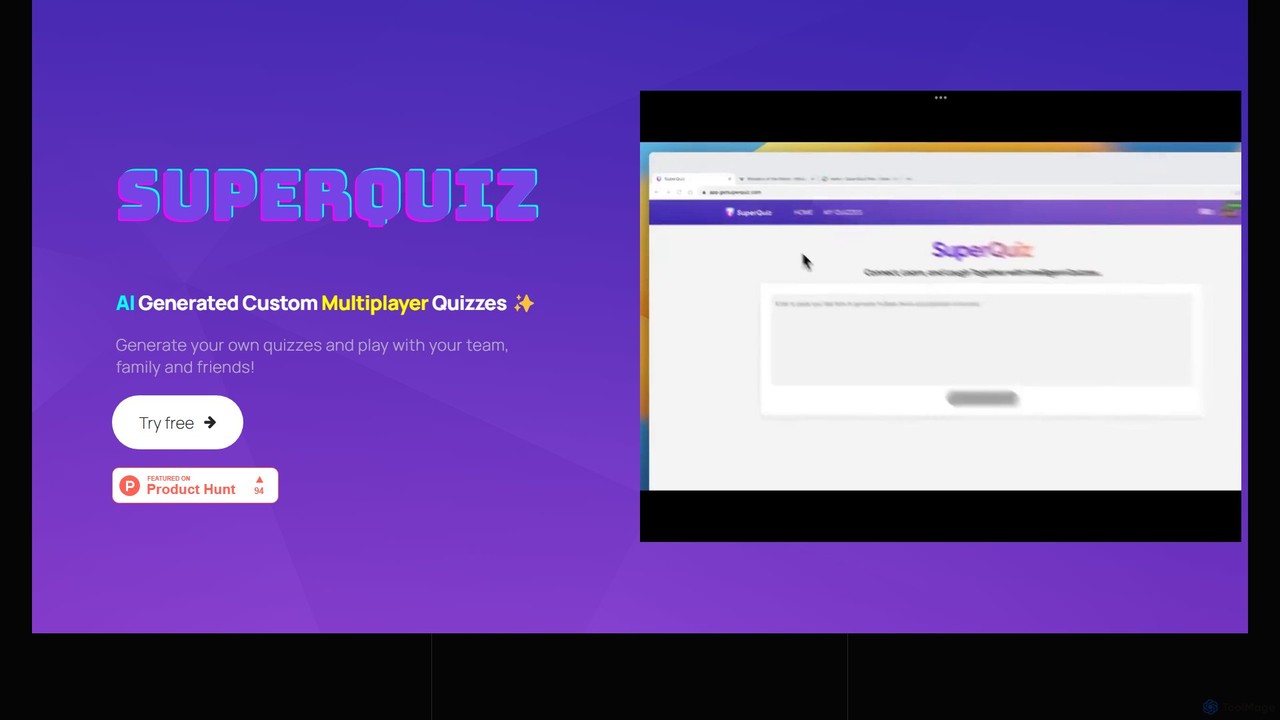
SuperQuiz is an AI-powered platform for creating custom multiplayer quizzes in seconds. Simply paste any text to generate engaging questions. It's perfect for team-building activities, educational assessments, and family fun, featuring real-time play via QR code access on any device, with no app download required.

Assessment
Visits 9.5KFavorites 125Likes 161
GeoGuess
Freemium

GeoGuess

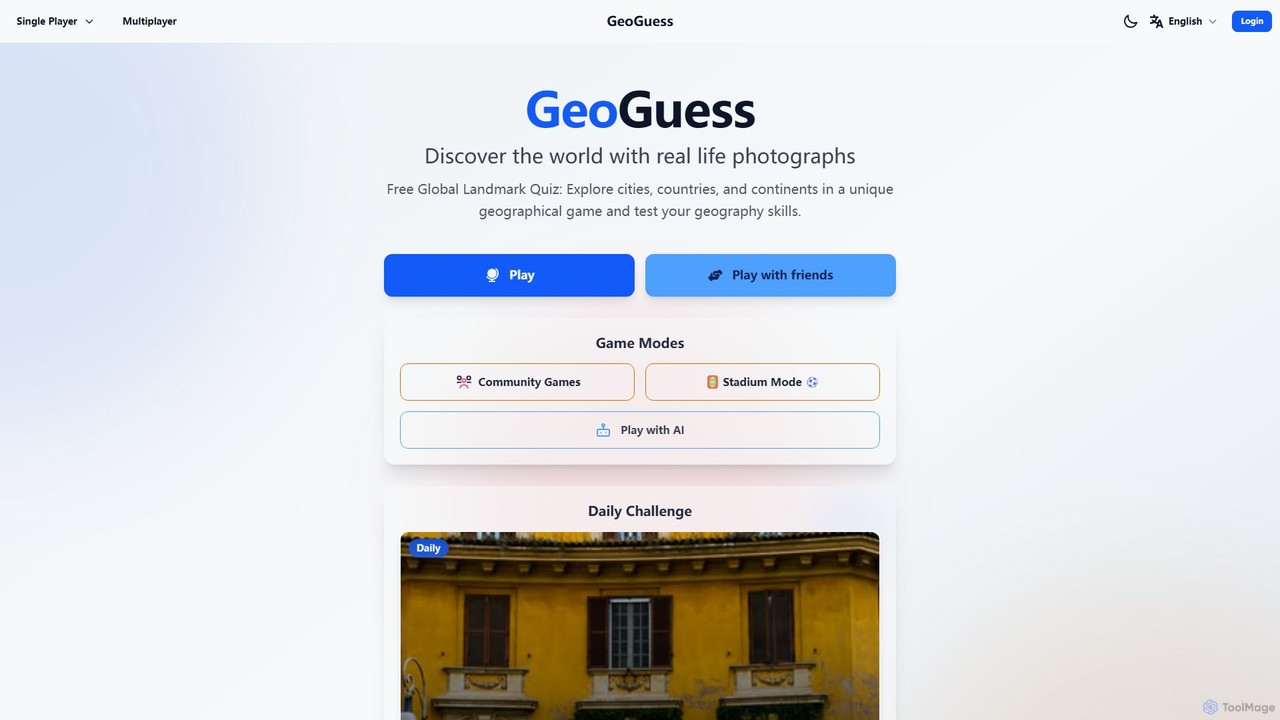
GeoGuess is a free, AI-powered online geography game that challenges you to guess locations from real-life photos and AI-generated images. Compete in single-player or multiplayer modes, climb leaderboards, and explore the world. A great alternative to GeoGuessr with unique community and AI features.

Geography
Visits 33.3KFavorites 130Likes 144
Unprompted
Freemium

Unprompted

Unprompted is a daily AI image guessing game. Players are shown three AI-generated images and must guess the text prompts used to create them. It's a fun way to test your prompt engineering intuition and explore the creative capabilities of AI image generators.

Prompting
Visits 8.6KFavorites 121Likes 116
MythicMyth
Freemium

MythicMyth

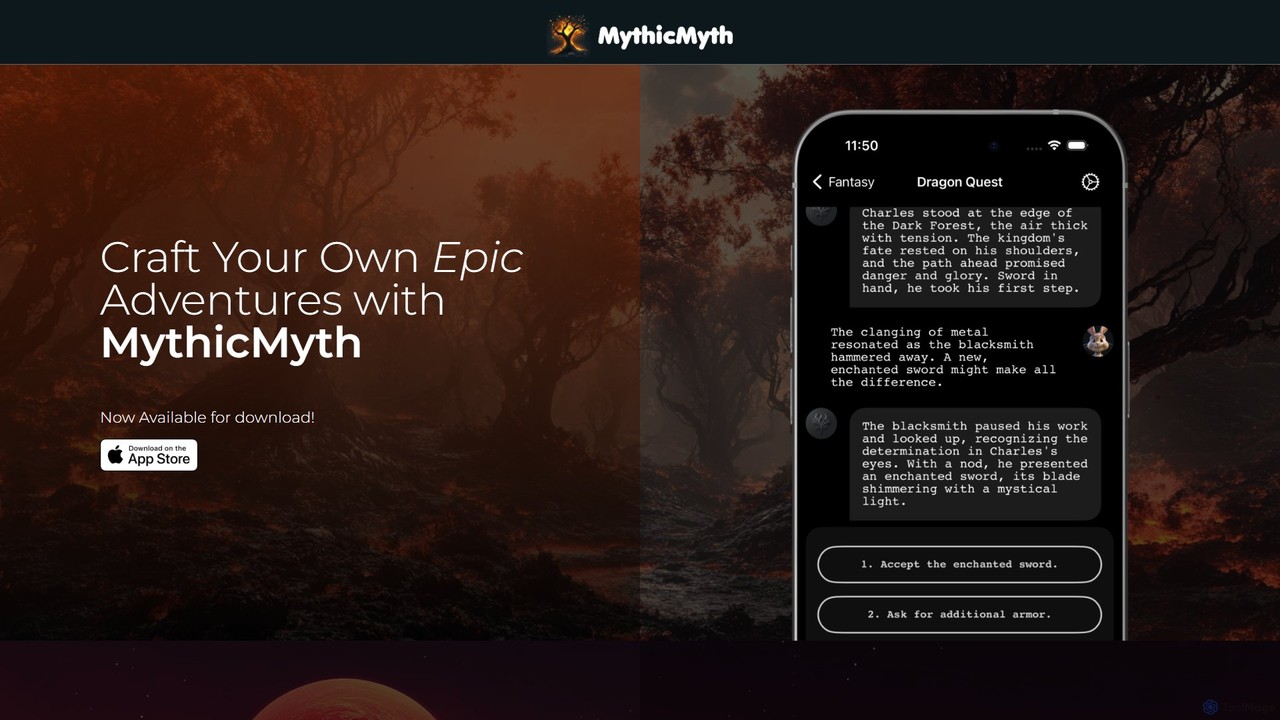
MythicMyth is an AI-powered interactive storytelling platform that generates unique, captivating adventures based on your choices. Explore diverse scenarios, from romance to entrepreneurship, and shape your own epic saga with extensive personalization options.

Writing
Visits 7.1KFavorites 158Likes 165
betweenquiz
Free

betweenquiz

betweenquiz is an AI-powered platform that instantly generates quizzes on any topic you provide. Simply enter a subject, and the AI creates a set of questions, making it an ideal tool for educators, students, and anyone looking to create engaging knowledge tests for learning or entertainment.

Assessment
Visits 7KFavorites 127Likes 132
TriviaMaker.ai
Free

TriviaMaker.ai

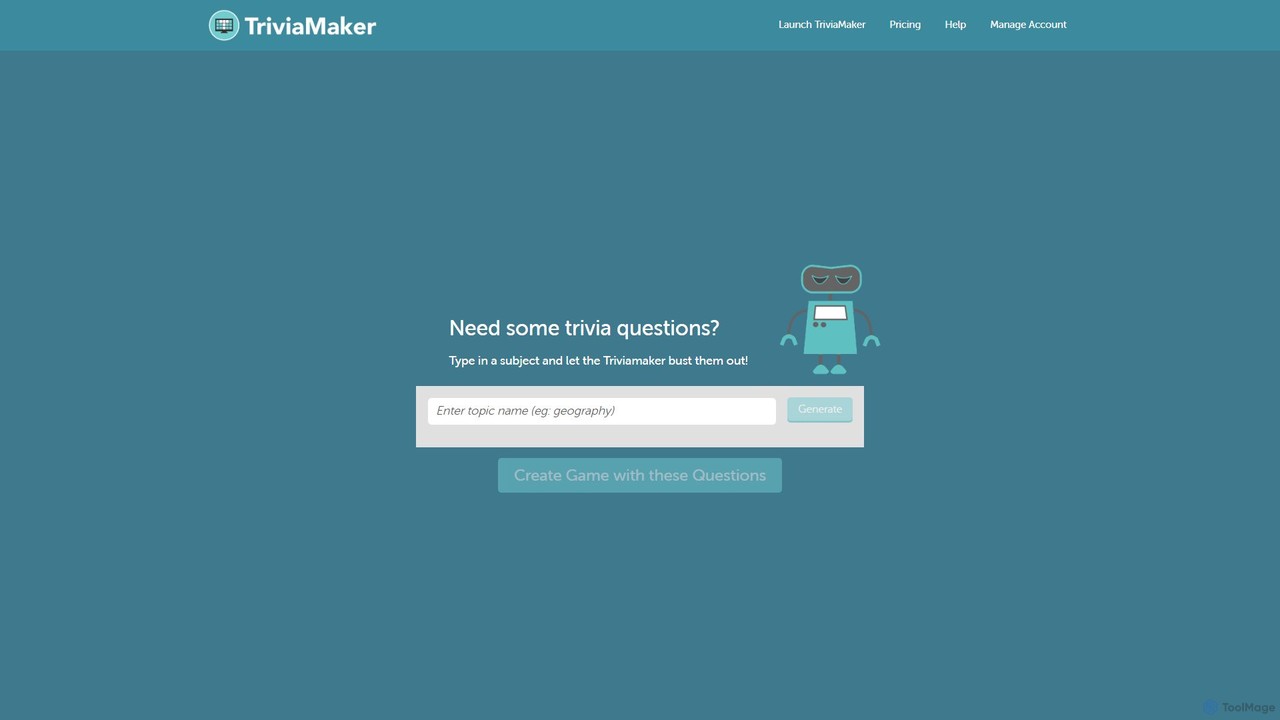
TriviaMaker.ai is a free, AI-powered tool that instantly generates engaging trivia questions on any subject. Simply type in your topic, and the AI creates a set of questions and answers, perfect for educators, event hosts, and content creators. Streamline your quiz creation process for classrooms, parties, or social media, and easily turn your questions into a playable game.

Quiz Generation
Visits 9.8KFavorites 161Likes 148
realorai
Free

realorai

realorai is an engaging online game that tests your ability to distinguish between real photos and AI-generated images. Sharpen your visual literacy skills by analyzing a series of pictures and guessing their origin. It's a fun, educational, and timely tool for anyone looking to understand the nuances of synthetic media in today's digital world.

Media Literacy
Visits 8.6KFavorites 119Likes 138

About Games

AI Games are a category of interactive entertainment that utilize artificial intelligence as a core mechanic for gameplay. These tools leverage advanced algorithms for creating adaptive opponents, procedurally generating content, or driving dynamic narratives. They offer unique and highly replayable experiences where the game world evolves in response to player actions. Unlike traditional games with scripted behaviors, AI Games can provide emergent situations and personalized challenges, making each playthrough distinct.

Core Features

  • Adaptive Opponents: AI characters that learn from player strategies and adjust their tactics accordingly.
  • Procedural Content Generation (PCG): Algorithms that create unique game levels, characters, stories, or assets on the fly.
  • Dynamic Narrative Systems: AI-driven storytellers that modify the plot and character interactions based on player choices.
  • Natural Language Interaction: The ability to communicate with non-player characters (NPCs) using conversational language for deeper immersion.

Use Cases

AI Games are primarily for players seeking novel and unpredictable challenges. They are also used by developers for prototyping game mechanics and by educators as interactive tools to teach AI concepts. Scenarios range from strategy games with evolving enemy intelligence to role-playing games with AI-generated quests and dialogues, offering nearly infinite content.

How to Choose

When selecting an AI Game, consider the genre that interests you, such as strategy, RPG, or puzzle. Evaluate the depth of the AI integration—is it for opponent behavior, world generation, or storytelling? Also, check platform compatibility (PC, web, mobile) and whether the focus is on single-player emergent experiences or multiplayer competition against intelligent bots.

Games use cases

1

Training Against an Adaptive AI Opponent

A competitive esports player uses an AI-powered strategy game to prepare for a tournament. The AI opponent doesn't follow fixed patterns; instead, it analyzes the player's tactics from previous matches. It identifies weaknesses, such as a predictable opening move or a vulnerability to flanking maneuvers. The AI then adjusts its own strategy to exploit these weaknesses, forcing the player to innovate and develop more robust and versatile game plans. This provides a highly effective training environment that simulates facing unpredictable human opponents.

2

Exploring Procedurally Generated Worlds

A player looking for endless exploration starts a space simulation game that uses procedural content generation (PCG). Instead of a single, handcrafted map, the AI generates a vast galaxy with billions of unique planets. Each planet has its own distinct ecosystem, creatures, and resources, all created by algorithms. This ensures that no two players have the same experience. The player can spend hundreds of hours discovering new star systems and alien life forms, with the AI constantly creating new, unexplored content just beyond the horizon.

3

Co-creating a Story with an AI Dungeon Master

A group of friends plays a text-based role-playing game where an AI acts as the Dungeon Master (DM). Instead of following a pre-written script, the AI DM dynamically generates the story, characters, and challenges based on the players' text inputs. If the players decide to ignore the main quest and explore a random cave, the AI creates a unique dungeon with its own lore and monsters on the fly. This allows for true freedom and collaborative storytelling, where the narrative is shaped jointly by the players and the AI, resulting in a completely unique adventure every time.

4

Educational Gaming for AI Concepts

A computer science student uses an educational AI game to understand machine learning principles. The game presents a series of puzzles where the student must 'teach' an AI agent to navigate complex mazes. They don't write code directly, but instead adjust parameters like 'learning rate' and 'reward functions'. Through trial and error, they observe how their choices affect the agent's ability to learn and succeed. This provides an intuitive, hands-on understanding of abstract AI concepts that is more engaging than reading a textbook.

5

Immersive Role-Playing with Smart NPCs

A player engages with an open-world RPG where the non-player characters (NPCs) are powered by large language models. Instead of selecting from a list of pre-written dialogue options, the player can type or speak any question to an NPC. The AI-powered character responds dynamically, remembering past conversations and events. An innkeeper might comment on a quest the player completed yesterday, or a guard might become suspicious if the player asks too many questions about the castle vault. This creates a level of immersion and realism previously unattainable in gaming.

6

AI-Assisted Game Concept Prototyping

An indie game developer uses an AI tool to rapidly prototype ideas for a new game. They input a simple prompt like 'a fantasy puzzle game based on alchemy'. The AI generates several core game mechanics, character concepts, and even a basic storyline. It might suggest a mechanic where players combine procedurally generated ingredients to discover new potions with surprising effects. This allows the developer to quickly explore multiple creative directions and build a playable prototype in days instead of weeks, significantly accelerating the initial phase of game development.

Games FAQ

What are AI Games?

AI Games are interactive experiences that use artificial intelligence as a fundamental part of their design, not just for simple enemy behaviors. They leverage AI for core features like creating adaptive opponents that learn from you, procedurally generating endless worlds and quests, or powering dynamic narratives that change based on your decisions. Unlike traditional games with predictable scripts, AI games offer emergent, unique, and often unpredictable gameplay.

How do AI Games differ from regular games?

The main difference lies in predictability and dynamism. Regular games often rely on scripted events and AI with predictable patterns. In contrast, AI Games use more advanced AI to create dynamic systems. This results in:

  • Unpredictable Opponents: AI learns and adapts, rather than repeating the same tactics.
  • Endless Replayability: Procedural generation means you get a new world or story every time you play.
  • Player-Driven Narratives: The story genuinely changes based on your actions, not just a few branching paths.
In essence, regular games are like watching a movie you can interact with, while AI games are more like improvisational theater where you are a key actor.

What is Procedural Content Generation (PCG) in games?

Procedural Content Generation (PCG) is a method where game content, such as levels, maps, items, or even stories, is created by algorithms instead of being manually designed by a developer. In AI games, PCG is used to create vast, unique, and unpredictable game worlds. For example, an algorithm can generate an entire galaxy of distinct planets or an infinite dungeon with new layouts every time you enter. The primary benefits are massive replayability and the ability to create game worlds on a scale that would be impossible for human designers to build by hand.

What types of AI are used in modern games?

Modern games use a wide spectrum of AI technologies. Simpler forms include pathfinding algorithms (like A*) that help characters navigate environments and Finite State Machines (FSMs) that define basic behaviors (e.g., patrol, attack, flee). More advanced AI games incorporate machine learning, where opponents can learn from player behavior to become more challenging. The latest trend involves generative AI and Large Language Models (LLMs), which can create dynamic dialogue with NPCs, generate unique quests, and even compose in-game music, leading to truly emergent and personalized experiences.

Are AI Games suitable for casual players?

Yes, absolutely. While some AI games are designed for complex strategic challenges, many others are focused on creativity, exploration, and storytelling, making them very accessible. For example, games that use AI to generate stories or conversations don't require fast reflexes or complex controls. Furthermore, adaptive AI can often adjust the game's difficulty in real-time to match a player's skill level, ensuring the experience is challenging but not frustrating. This makes many AI games a great fit for casual players looking for unique and personalized entertainment.