Seed3D
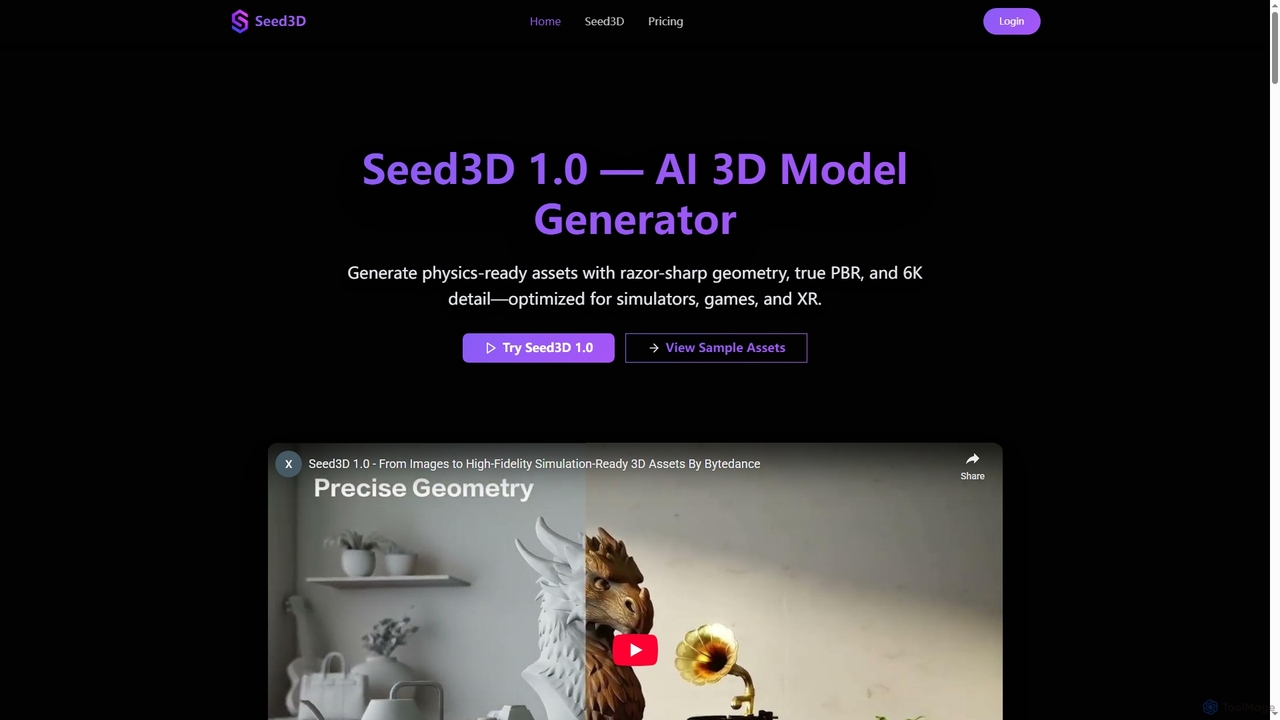
Seed3D is an AI-powered 3D model generator that creates high-fidelity, physics-ready 3D assets from a single image. It …
Seed3D is an AI-powered 3D model generator that creates high-fidelity, physics-ready 3D assets from a single image. It delivers razor-sharp geometry, true PBR materials, and 6K textures, optimized for simulators, games, and XR applications.
TRELLIS 3D AI
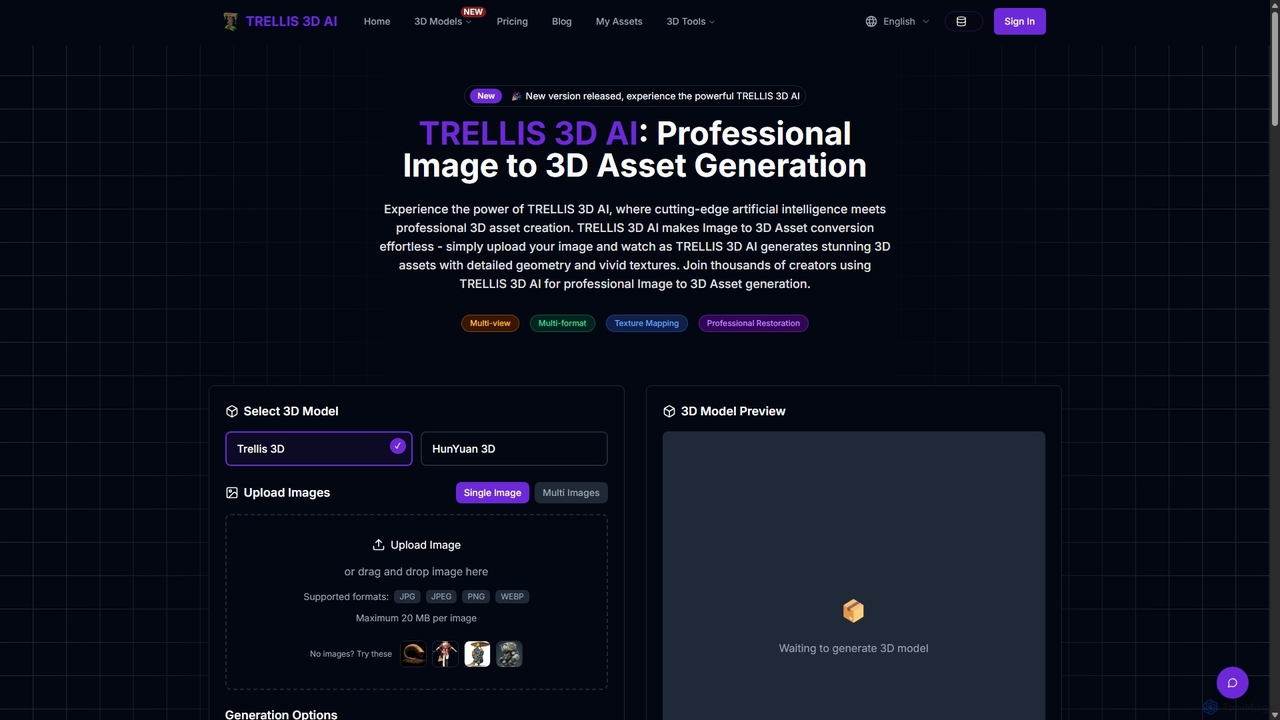
TRELLIS 3D AI is a cutting-edge tool that transforms 2D images into high-quality 3D assets in seconds. Using …
TRELLIS 3D AI is a cutting-edge tool that transforms 2D images into high-quality 3D assets in seconds. Using advanced AI technology, it generates detailed geometry and vivid textures from single or multiple images. It supports various export formats, making it ideal for game developers, 3D artists, and designers looking to accelerate their workflow and create professional-grade 3D models effortlessly.
Kaedim3D
Kaedim3D is an AI-powered platform that accelerates 3D asset creation by transforming 2D images or text descriptions into …
Kaedim3D is an AI-powered platform that accelerates 3D asset creation by transforming 2D images or text descriptions into production-ready 3D models. It combines machine learning with a team of in-house artists to deliver high-quality, optimized assets 10x faster for game development, e-commerce, and product design.
Tripo3D
Tripo3D is a powerful AI 3D model generator that creates high-quality 3D models from text, images, or doodles …
Tripo3D is a powerful AI 3D model generator that creates high-quality 3D models from text, images, or doodles in seconds. It supports various export formats for gaming, AR/VR, 3D printing, and design, featuring professional-grade geometry, PBR materials, and auto-rigging capabilities.
Meshy
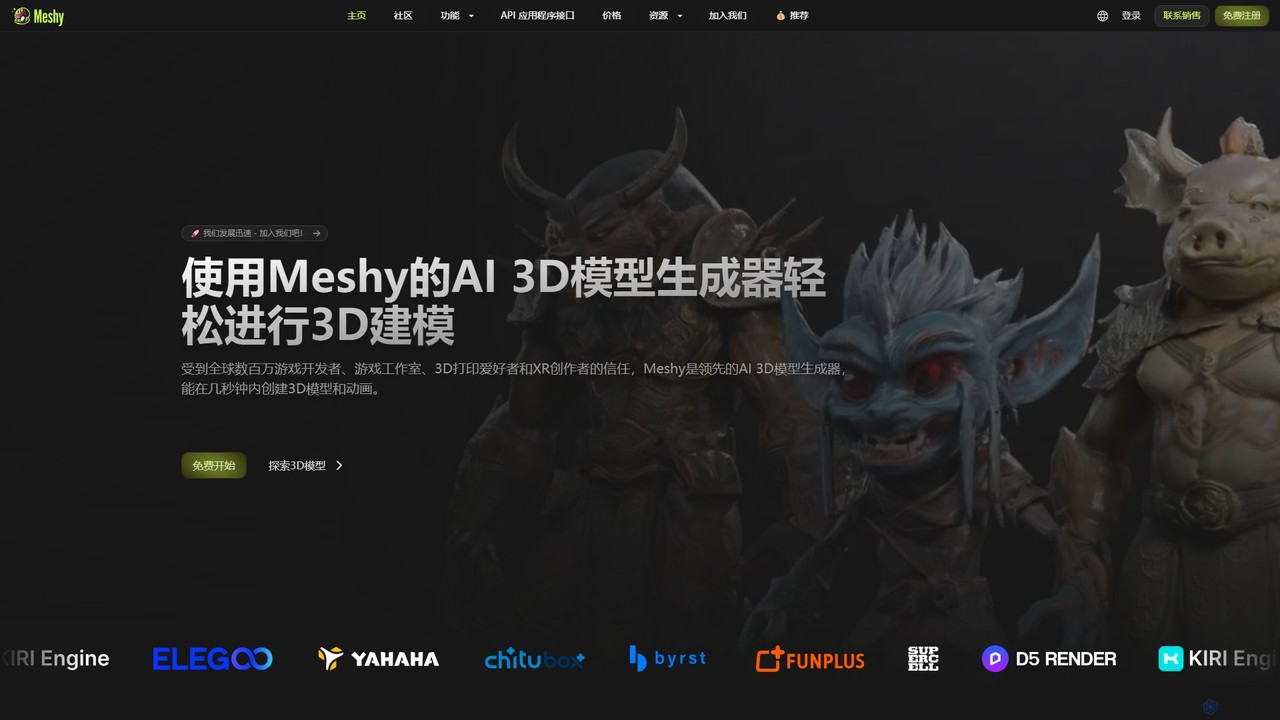
Meshy is an all-in-one AI 3D content creation suite. Generate stunning 3D models, textures, and animations from text …
Meshy is an all-in-one AI 3D content creation suite. Generate stunning 3D models, textures, and animations from text or images in minutes. It's the ultimate toolkit for game developers, artists, and creators, simplifying the entire 3D workflow from concept to a fully animated asset.
Sound Effect Generator
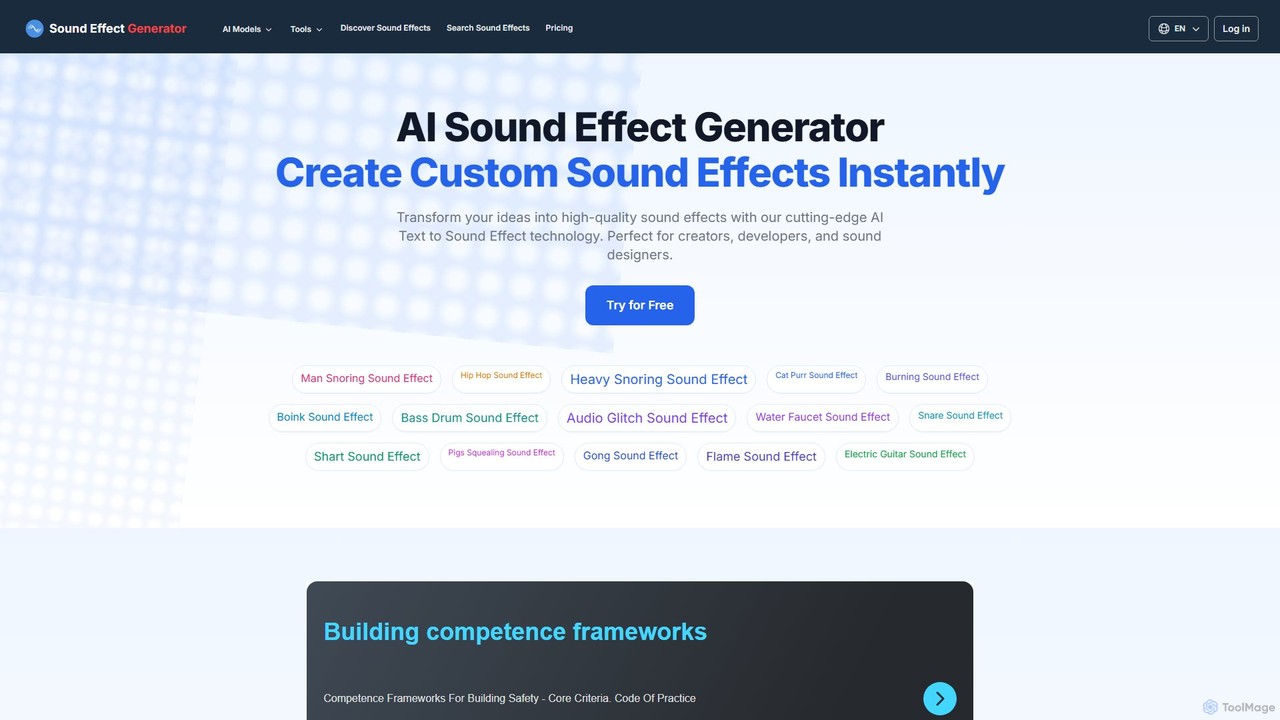
An AI-powered platform that instantly transforms text descriptions into high-quality, custom sound effects. Ideal for content creators, game …
An AI-powered platform that instantly transforms text descriptions into high-quality, custom sound effects. Ideal for content creators, game developers, filmmakers, and sound designers, it offers a vast library of free sounds and advanced features like video-to-sound generation, negative prompts, and commercial usage rights with paid plans.
Polyhive
Polyhive is an AI-powered platform for generating high-quality, game-ready 3D models and textures. It enables creators to produce …
Polyhive is an AI-powered platform for generating high-quality, game-ready 3D models and textures. It enables creators to produce 3D assets from text prompts or 2D images and apply AI-driven textures to existing models, drastically accelerating the creative workflow for game developers and 3D artists.
nak3d
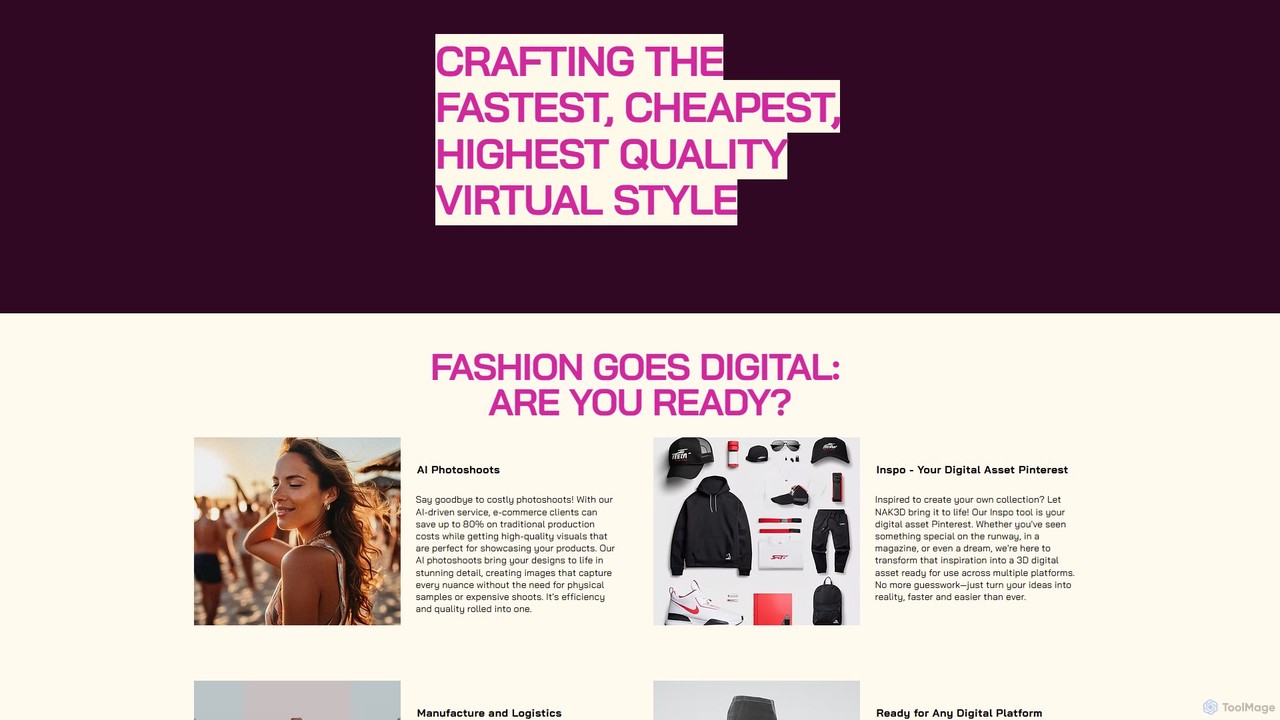
nak3d is an AI-powered digital fashion factory that transforms the industry by creating high-quality virtual styles. It offers …
nak3d is an AI-powered digital fashion factory that transforms the industry by creating high-quality virtual styles. It offers AI photoshoots that save up to 80% on costs, turns inspiration into 3D assets, and provides end-to-end manufacturing and logistics solutions. Its digital garments are compatible with any platform, from e-commerce to gaming and the metaverse.
Spellbrush
Spellbrush is a pioneering AI studio specializing in anime and illustration generation. Through its flagship products, niji・journey (a …
Spellbrush is a pioneering AI studio specializing in anime and illustration generation. Through its flagship products, niji・journey (a collaboration with Midjourney) and Waifu Labs, it offers state-of-the-art tools for creating high-quality, unique anime-style images and character portraits from text prompts or guided steps. It's the go-to platform for artists, game developers, and anime enthusiasts seeking to bring their creative visions to life with AI.
alpha3d
Alpha3D is a generative AI platform that transforms text prompts and 2D images into game-ready 3D models. Designed …
Alpha3D is a generative AI platform that transforms text prompts and 2D images into game-ready 3D models. Designed for game developers, AR/VR creators, and marketers, it simplifies and accelerates 3D asset creation, requiring no prior modeling experience.
About Asset Creation
AI Asset Creation tools are specialized applications that leverage generative AI to automatically produce digital assets for game development. These tools interpret text prompts, images, or other inputs to generate 3D models, textures, sprites, sound effects, and concept art. This process significantly accelerates prototyping and content creation, allowing developers to populate game worlds more efficiently. They offer a powerful method for generating initial ideas and assets, freeing up artists to focus on refinement and key creative tasks.
Core Features
- Text-to-3D Generation: Creates 3D models and meshes directly from descriptive text prompts.
- Procedural Texture Synthesis: Generates seamless, high-resolution PBR textures and materials.
- 2D Sprite & Animation Creation: Produces character sprites and basic animation cycles from static images.
- AI Sound Effect Generation: Synthesizes unique audio effects based on textual descriptions.
- Concept Art Ideation: Quickly visualizes characters, environments, and props for design exploration.
Use Cases
These tools are widely used by indie game developers for rapid prototyping, large studios to supplement their art pipelines, and individual artists for brainstorming. They are particularly effective for creating placeholder assets, generating large quantities of environmental elements like rocks and foliage, and exploring diverse artistic styles during the pre-production phase.
How to Choose
When selecting an AI Asset Creation tool, consider the specific asset types you need (e.g., 3D models, textures, audio). Evaluate the output quality, resolution, and file format compatibility with your game engine (like Unity or Unreal). Also, review the level of stylistic control offered, the tool's integration capabilities, and its pricing model, such as subscription versus per-asset credits.
Asset CreationUse Cases
Rapid Prototyping for Indie Game Developers
An indie developer or a small team needs to build a playable prototype quickly to test game mechanics. Instead of spending weeks manually modeling basic assets, they use an AI asset creation tool. By inputting prompts like 'low-poly wooden crate' or 'sci-fi metal floor texture,' they can generate dozens of placeholder assets in hours. This allows them to assemble a functional game level, test gameplay loops, and present a compelling demo to potential publishers or investors far sooner.
Generating Diverse Environmental Textures
A 3D artist is tasked with creating a large, natural environment and needs numerous variations of textures for rocks, soil, and bark to avoid repetition. They use an AI texture generator with a base image or prompt. The tool produces a library of seamless, high-resolution PBR materials with subtle differences in color, wear, and detail. This automates a tedious part of the workflow, ensuring the game world feels rich and visually diverse without manual painting for every single texture.
Creating Unique Sound Effects on Demand
A sound designer is working on a fantasy game and requires a specific sound for a 'crystal golem's footsteps.' Traditional sound libraries may not have this exact effect. Using an AI sound generator, they can input descriptive text like 'heavy, crystalline, magical, slow footstep on stone.' The AI synthesizes multiple unique audio clips, which can then be layered and mixed to create the perfect, custom sound effect, saving time on field recording or complex synthesis.
Concept Art Ideation for Character Design
During the pre-production phase, an art director needs to explore various visual directions for a game's main character. They use an AI image generator to quickly create hundreds of concept images based on prompts like 'female elven ranger, leather armor, glowing bow, fantasy art style.' This process provides a vast pool of visual ideas for the team to discuss and refine, drastically shortening the ideation cycle compared to manually sketching every concept.
Automated 2D Sprite Sheet Generation
A developer creating a 2D platformer has a static design for their main character but lacks the animation skills or time to create sprite sheets. They upload the character's base image to an AI tool specializing in 2D animation. The tool can automatically rig the character and generate standard animation cycles like idle, walk, run, and jump as a ready-to-use sprite sheet. This enables solo developers and small teams to bring their characters to life without a dedicated animator.
Populating Game Worlds with Prop Variations
A level designer is building a cluttered, lived-in city environment and needs hundreds of small props like barrels, boxes, and pottery. Manually creating unique variations for each would be time-consuming. They use an AI 3D model generator to create a base model and then prompt the AI for variations in shape, texture, and wear. This allows them to quickly populate scenes with a high density of non-repetitive props, making the world feel more realistic and immersive.