ToolMage
Sign in

Best 6 Generator for 3D

Popular Generator in 3D include Tripo3D, Meshy, Sloyd, alpha3d, 3daily, and Instant3D, helping you work more efficiently.

Tripo3D
Freemium

Tripo3D

Tripo3D is a powerful AI 3D model generator that creates high-quality 3D models from text, images, or doodles in seconds. It supports various export formats for gaming, AR/VR, 3D printing, and design, featuring professional-grade geometry, PBR materials, and auto-rigging capabilities.

Generator
Visits 28MFavorites 139Likes 130
Meshy
Freemium

Meshy

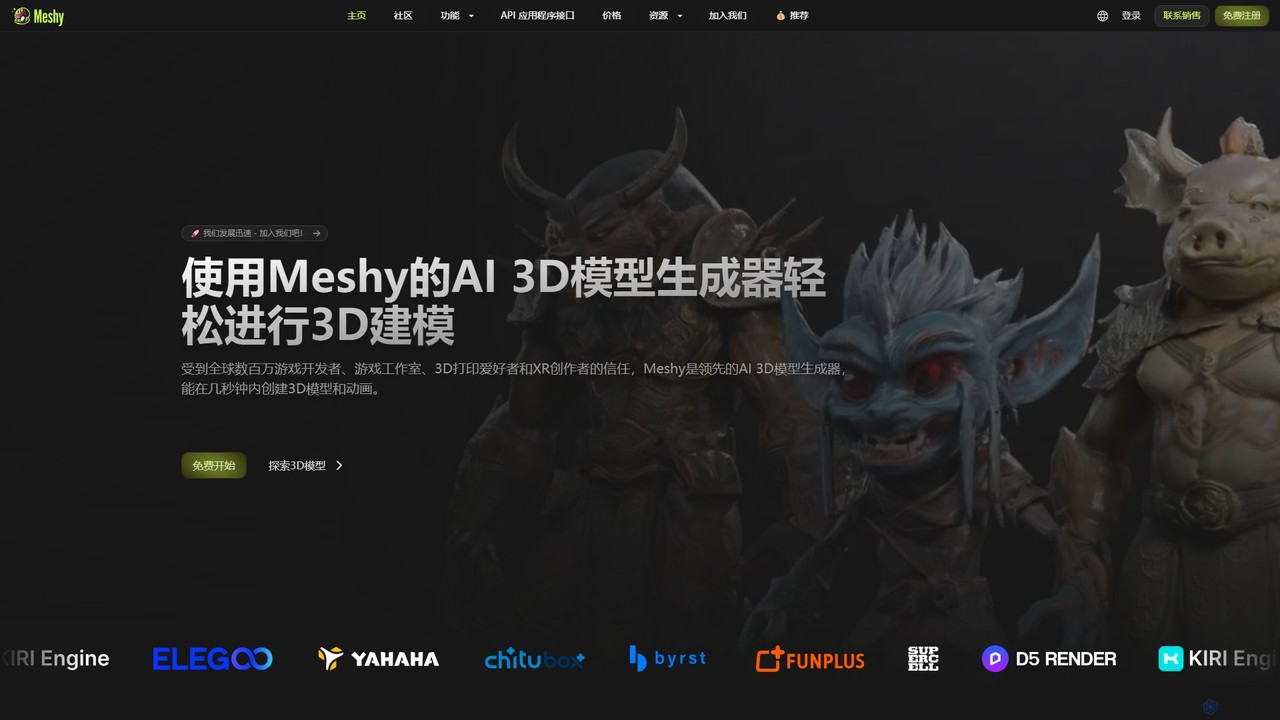
Meshy is an all-in-one AI 3D content creation suite. Generate stunning 3D models, textures, and animations from text or images in minutes. It's the ultimate toolkit for game developers, artists, and creators, simplifying the entire 3D workflow from concept to a fully animated asset.

Generator
Visits 27.4MFavorites 111Likes 99
3daily
Freemium

3daily

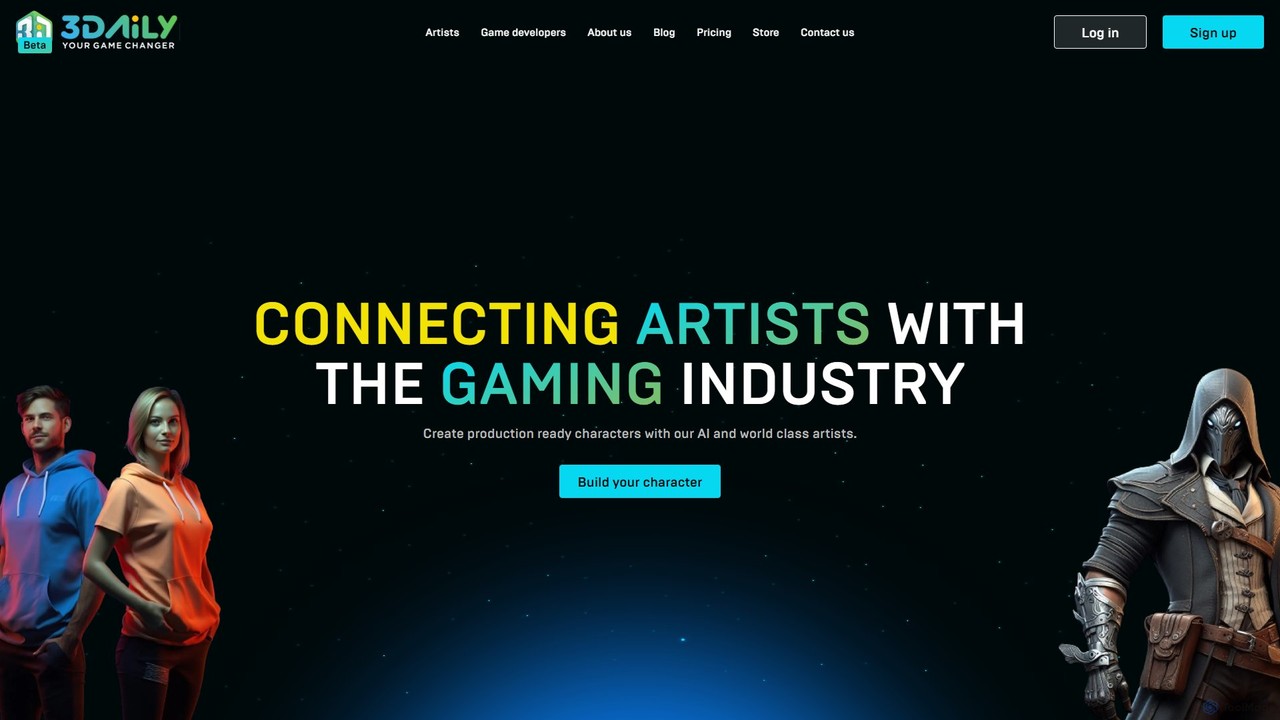
3daily is an AI-powered platform for creating production-ready 3D models, especially game characters. It combines generative AI with artist creativity, offering a character editor, an asset marketplace, and custom orders. Generate high-quality, game-ready meshes for gaming, animation, VTubing, and the metaverse.

Generator
Visits 5.3KFavorites 108Likes 108
alpha3d
Freemium

alpha3d

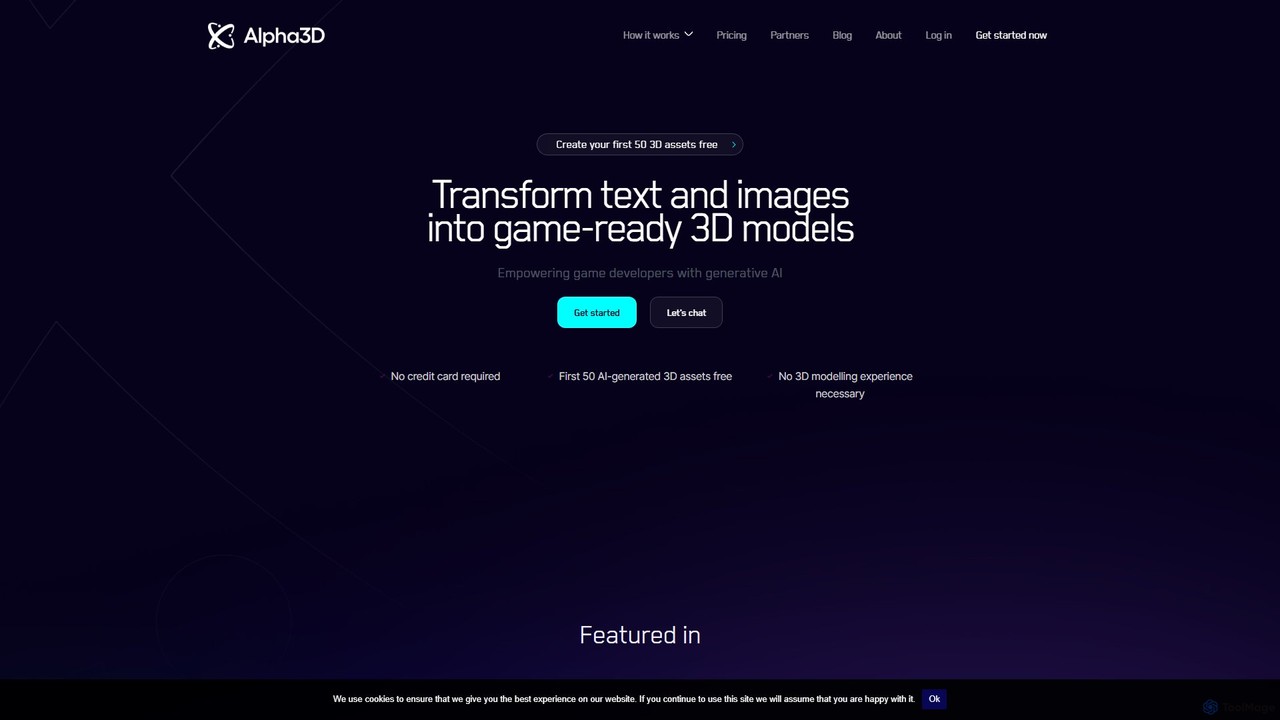
Alpha3D is a generative AI platform that transforms text prompts and 2D images into game-ready 3D models. Designed for game developers, AR/VR creators, and marketers, it simplifies and accelerates 3D asset creation, requiring no prior modeling experience.

Generator
Visits 82KFavorites 131Likes 122
Sloyd
Freemium

Sloyd

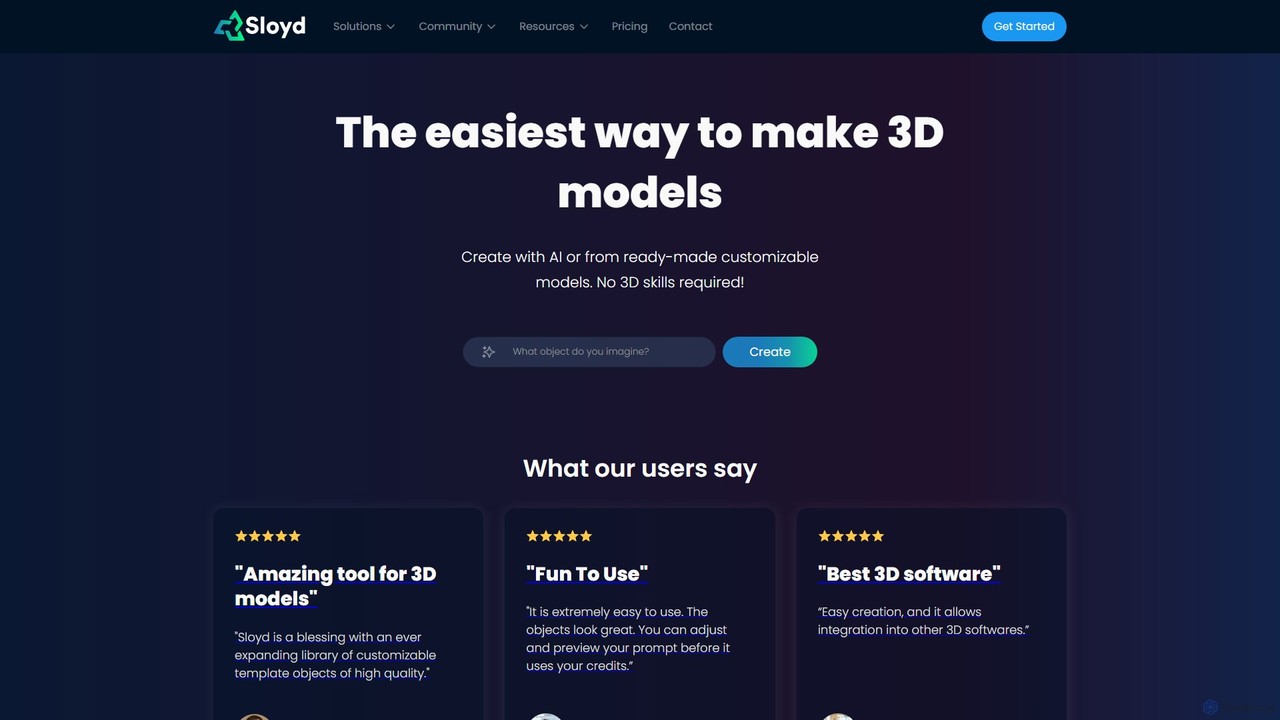
Sloyd is an AI-powered 3D model generator that makes 3D creation effortless. Generate models from text prompts or images, or customize from a vast library of parametric templates. No 3D skills are required, making it perfect for game developers, designers, and hobbyists.

Generator
Visits 443.6KFavorites 82Likes 97
Instant3D
Freemium

Instant3D

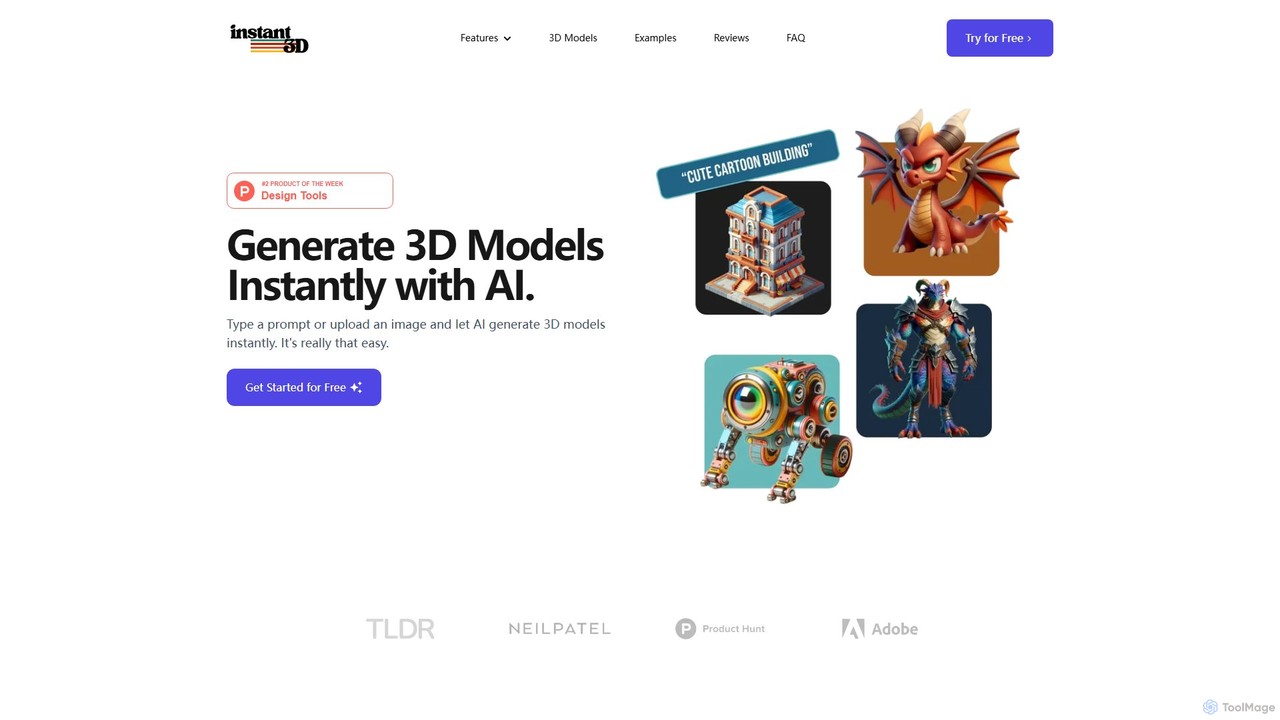
Instant3D is an AI-powered platform that generates high-quality 3D models from text prompts or 2D images in seconds. It's designed for designers, game developers, animators, and hobbyists to accelerate their creative workflow, offering tools for character generation, model optimization, and in-browser editing.

Generator
Visits 5KFavorites 141Likes 131

About Generator

AI 3D Generators are tools that automatically create three-dimensional models, textures, or scenes from text prompts or 2D images. Leveraging advanced generative models, they translate descriptive language or visual data into complex geometric structures and surface details. This technology significantly accelerates the creative process, enabling rapid prototyping and asset creation for digital environments like games and the metaverse. Their primary advantage lies in generating novel concepts and variations with minimal manual effort.

Core Features

  • Text-to-3D Generation: Creates 3D models directly from descriptive text prompts.
  • Image-to-3D Conversion: Transforms a single 2D image into a three-dimensional object.
  • Procedural Asset Variation: Generates multiple unique variations of an asset based on set parameters.
  • AI Texture Synthesis: Produces seamless PBR materials and textures from simple text descriptions.

Use Cases

These tools are widely used in game development for rapid asset prototyping, in architecture for conceptual visualization, and by VFX artists for creating background elements. They are also essential for content creators building immersive experiences for AR, VR, and metaverse platforms.

How to Choose

When selecting a tool, evaluate the quality and detail of the generated models, such as polygon count and topology. Consider the supported export formats (FBX, OBJ, GLB), integration with existing software like Blender or Unity, and the balance between generation speed and final output fidelity.

Featured tool rankings

Generator use cases

1

Rapid Prototyping for Game Assets

A solo game developer needs a variety of props for a new level, such as chests, barrels, and furniture. Instead of spending days modeling each item manually, they use an AI 3D Generator. By inputting prompts like "low-poly wooden barrel with metal rings" or "stylized fantasy treasure chest," they can generate dozens of variations in minutes. This allows them to quickly populate their game world with placeholder or even final assets, drastically reducing development time and enabling faster iteration on level design.

2

Conceptual Visualization for Product Design

A product designer is exploring ideas for a new ergonomic chair. They use an AI 3D Generator to turn their initial 2D sketches into basic 3D forms. This provides an immediate sense of volume and shape that a flat drawing cannot. The designer can then iterate on these generated models, refining the concept before committing to detailed manual modeling in traditional CAD software. This process bridges the gap between 2D ideation and 3D realization, accelerating the early stages of the design cycle.

3

Creating Custom Avatars for Virtual Worlds

A user wants a unique, personalized avatar for their metaverse profile. They upload a selfie to an AI 3D Generator specializing in character creation. The tool analyzes their facial features and generates a stylized 3D head model that captures their likeness. The user can then further customize the hairstyle, accessories, and artistic style. This provides a highly accessible way for non-artists to create bespoke digital identities for VR chat, online gaming, and other virtual platforms.

4

Generating Background Elements for VFX

A VFX artist is tasked with creating a realistic forest scene for a film. Manually creating hundreds of unique rocks, plants, and trees would be extremely time-consuming. Using an AI 3D Generator, the artist can procedurally generate a vast library of natural assets. They can define parameters for size, shape, and texture variation, ensuring no two elements look identical. These assets are then used to populate the background of the digital environment, adding realism and complexity efficiently.

5

AI-Powered Texture Creation for 3D Models

A 3D artist is texturing a sci-fi spaceship model and needs a specific material: "pitted, scorched metal paneling with glowing blue circuits." Instead of searching for textures or creating them from scratch in software like Substance Painter, they use an AI texture generator. They input the text description, and the AI produces a complete set of PBR maps (albedo, normal, roughness, metallic). This allows for the creation of highly specific and unique materials that perfectly match the artistic vision.

6

Architectural Pre-Visualization from Floor Plans

An architect needs to quickly communicate a building design to a client. They upload a 2D floor plan image to an AI 3D Generator. The tool interprets the layout and extrudes the walls, adding basic doors and windows to generate a simple, navigable 3D model of the space. While not a replacement for detailed BIM software, this generated model serves as an excellent pre-visualization tool, helping clients understand the spatial flow and scale of a project at the earliest stages.

Generator FAQ

What is an AI 3D Generator?

An AI 3D Generator is a tool that automatically creates 3D models, textures, or scenes from user inputs like text descriptions or 2D images. Unlike traditional 3D software that requires manual modeling, these tools use generative AI to produce assets, significantly speeding up the creation process for concepts, prototypes, and digital content.

How does an AI 3D Generator differ from 3D modeling software?

The key difference lies in the creation process. AI 3D Generators automate asset creation based on prompts, prioritizing speed and idea generation over precision. Traditional 3D modeling software (like Blender or Maya) provides complete manual control for creating highly detailed and specific models, but requires significant skill and time. Generators are for rapid creation; modeling software is for precise refinement.

Who are the primary users of AI 3D Generators?

These tools are ideal for game developers, concept artists, architects, product designers, and metaverse creators. They are particularly useful for anyone who needs to quickly visualize ideas, create prototypes, or generate a large number of asset variations without deep expertise in manual 3D modeling. Hobbyists and individual creators also find them valuable for bringing their ideas to life.

What kind of quality can I expect from AI-generated 3D models?

The quality of AI-generated 3D models is rapidly improving but can vary. Many tools produce excellent results for conceptual work, game-ready assets with stylized aesthetics, or background elements. However, they may sometimes produce models with imperfect topology or textures that require manual cleanup for high-end production use. The output is often best suited for initial design phases or less prominent visual roles.

What file formats do AI 3D Generators typically support?

Most AI 3D Generators support common, interchangeable 3D file formats to ensure compatibility with other software. The most frequently supported formats include OBJ, FBX, and GLB/glTF. This allows users to easily export the generated assets and import them into game engines like Unity and Unreal Engine, or 3D editing software like Blender, Cinema 4D, and 3ds Max for further refinement.