ToolMage
Sign in

Best 1 Brainstorming AI tools for General Writing

Popular Brainstorming AI tools in General Writing include Ask AI Questions, helping you work more efficiently.

Ask AI Questions
Free

Ask AI Questions

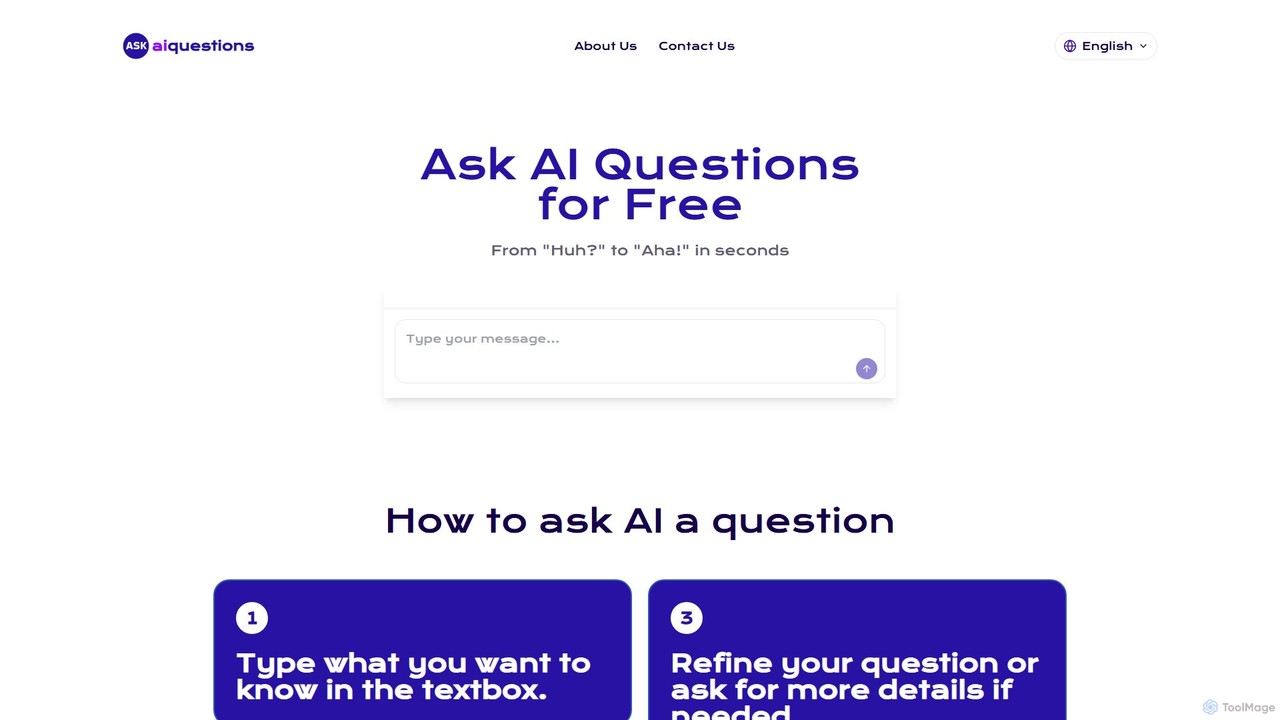
Ask AI Questions is a free, web-based AI tool that provides instant, accurate answers to any question. It supports multiple languages, requires no registration, and ensures user privacy. Ideal for quick fact-checking, in-depth research, and creative brainstorming, it offers a seamless, conversational experience on any device.

Research
Visits 4.3KFavorites 116Likes 110

About Brainstorming

AI Brainstorming tools are a specialized category of writing assistants designed to generate, expand, and organize ideas. They leverage large language models to overcome creative blocks by providing diverse prompts, related concepts, and structured outlines. Unlike general writing tools that focus on composing final text, these tools excel in the initial, divergent phase of creation, helping users explore a topic from multiple angles. This makes them valuable for kickstarting projects, developing strategies, and fostering innovation.

Core Features

  • Idea Generation: Produces lists of topics, keywords, or questions from a single prompt to spark creativity.
  • Visual Mind Mapping: Organizes concepts visually, showing relationships and hierarchies between different ideas.
  • Concept Expansion: Takes a brief idea and elaborates on it with detailed explanations, examples, or sub-topics.
  • Alternative Perspectives: Suggests counterarguments or different viewpoints to challenge assumptions and enrich thinking.
  • Structured Outlining: Creates hierarchical outlines for articles, presentations, or projects, providing a clear framework.

Applicable Scenarios

These tools are widely used by content creators to find new article ideas, marketing teams to devise campaign slogans, and product managers to explore potential features. They are also beneficial in academic settings for students structuring essays and researchers formulating hypotheses, as well as for developers mapping out new software logic.

Selection Criteria

When choosing an AI Brainstorming tool, consider the variety of output formats (e.g., lists, mind maps, prose). Evaluate its interactivity and the ease of editing and building upon generated ideas. Check for integration capabilities with your existing writing or project management software, and assess if collaborative features are needed for team-based sessions.

Featured tool rankings

Brainstorming use cases

1

Developing a Quarterly Content Marketing Plan

A marketing manager needs to create a content calendar for the upcoming quarter centered around the theme 'Sustainable Technology'. Using an AI Brainstorming tool, they input the core theme. The tool generates a mind map branching into sub-topics like 'Eco-friendly Gadgets', 'Green Data Centers', and 'Circular Economy in Tech'. It also suggests blog post titles, podcast episode ideas, and social media campaign angles for each sub-topic, providing a comprehensive foundation for the entire quarter's content strategy in minutes.

2

Plotting a Fictional Novel

A novelist is experiencing writer's block while plotting a fantasy story. They input the basic premise: 'A young librarian discovers a book that writes future events.' The AI Brainstorming tool generates potential plot twists, such as 'The book is sentient and has its own agenda,' or 'Another character is secretly trying to steal the book.' It also outlines possible character arcs for the protagonist, from reluctant hero to master of destiny, helping the author break through their creative impasse and structure the narrative.

3

Ideating New Features for a Mobile App

A product development team is brainstorming new features for their fitness tracking app. They use an AI tool and input the user problem: 'Users lose motivation after a few weeks.' The AI generates a list of feature concepts aimed at increasing engagement, such as 'Gamified daily challenges with badges,' 'AI-powered personal coach with motivational messages,' and 'Social features to compete with friends.' This provides the team with a diverse set of validated ideas to explore, prioritize, and develop further.

4

Structuring an Academic Research Paper

A university student needs to write a research paper on the 'Impact of AI on the Job Market'. They input this topic into an AI Brainstorming tool. The tool generates a structured outline, including sections for an introduction, literature review, methodology, analysis of positive impacts (e.g., new job creation), analysis of negative impacts (e.g., job displacement), and a conclusion. For each section, it suggests key questions to address and potential arguments, helping the student build a logical and comprehensive paper structure.

5

Generating Startup Business Concepts

An aspiring entrepreneur wants to start a business in the sustainable food industry but lacks a specific idea. They use an AI Brainstorming tool, inputting keywords like 'urban farming,' 'food waste reduction,' and 'plant-based protein.' The AI generates several business concepts, such as a subscription service for imperfect produce, a smart indoor gardening kit for apartments, or a B2B platform connecting restaurants with local urban farms. Each concept comes with a brief description of the target market and potential value proposition, giving the entrepreneur a solid starting point.

6

Crafting a Keynote Presentation Outline

A CEO is preparing for a keynote speech at an industry conference on 'The Future of Work'. To ensure a compelling structure, their assistant inputs the topic into an AI Brainstorming tool. The tool suggests an outline starting with a provocative question, followed by sections on current trends, challenges, AI's role, and a visionary conclusion with actionable takeaways. It also generates ideas for powerful opening lines and memorable closing statements, helping to shape a speech that is both informative and inspiring.

Brainstorming FAQ

What are AI Brainstorming tools?

AI Brainstorming tools are applications designed to help users generate, develop, and organize new ideas. Unlike general AI writers that produce complete sentences and paragraphs, these tools focus on the pre-writing stage. They provide outputs like lists of keywords, mind maps, question prompts, and structured outlines. Their primary purpose is to stimulate human creativity and overcome mental blocks by offering diverse perspectives and conceptual connections based on a user's initial input.

How do AI Brainstorming tools differ from general AI writers?

The key difference lies in their purpose and output. AI Brainstorming tools are for divergent thinking—generating a wide range of ideas, concepts, and structures. Their output is often fragmented, like lists, mind maps, or outlines. In contrast, general AI writers are for convergent thinking—taking an idea and crafting it into coherent, polished prose. A brainstorming tool helps you decide what to write about, while a general writer helps you how to write it. They are complementary tools for different stages of the creative process.

How do I choose the right AI Brainstorming tool?

To choose the right tool, consider these factors:

  • Output Formats: Do you need simple lists, visual mind maps, or structured outlines? Choose a tool that provides the format best suited to your workflow.
  • Interactivity: Look for tools that allow you to easily edit, rearrange, and build upon the generated ideas directly within the interface.
  • Collaboration: If you work in a team, check for features like real-time co-editing, sharing, and commenting.
  • Integration: Consider whether the tool can export its output to your preferred writing software, project management platform, or other applications.

Start by identifying your primary use case—whether it's for writing, marketing, or product development—and match it to the tool's strengths.

Who can benefit from using AI Brainstorming tools?

A wide range of professionals and individuals can benefit from these tools. Content creators and marketers use them to generate article topics and campaign ideas. Authors and screenwriters use them to overcome writer's block and plot stories. Students and researchers find them useful for structuring essays and exploring research avenues. Entrepreneurs and product managers leverage them to ideate new business models and product features. Essentially, anyone involved in a creative or strategic process that begins with idea generation can find significant value in using an AI brainstorming assistant.

Can AI Brainstorming tools generate truly original ideas?

AI Brainstorming tools do not 'think' or 'create' in the human sense. They work by identifying patterns and relationships in the vast amount of data they were trained on. Their strength lies in making novel connections between existing concepts that a human might overlook. While the resulting idea might not be 'original' from a philosophical standpoint (as it's derived from existing data), it can be practically original and highly innovative for the user. They act as powerful catalysts for human creativity, sparking new lines of thought rather than creating ideas from nothing.