ToolMage
Sign in

Best 2 Ai Chatbot AI tools for General Writing

Popular Ai Chatbot AI tools in General Writing include Gab AI and Writingmate, helping you work more efficiently.

Writingmate
Freemium

Writingmate

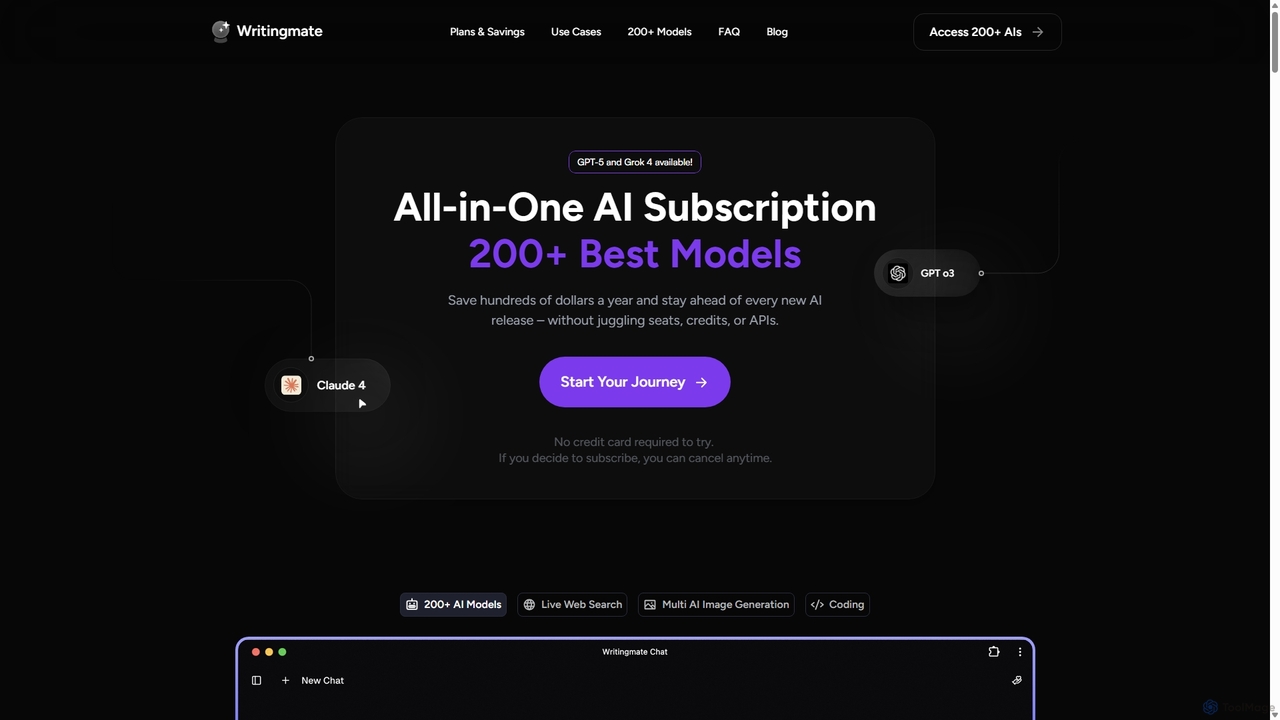
Writingmate is an all-in-one AI platform that provides access to over 200 of the best AI models, including GPT-5, Claude 4, and Grok 4, through a single subscription. It saves users money and time by eliminating the need to manage multiple AI tool subscriptions. Features include a model switcher, live web search, document chat, AI coding assistants, and multi-model image generation, catering to a wide range of professionals from developers to marketers.

Code Assistant
Visits 136.1KFavorites 98Likes 96
Gab AI
Freemium

Gab AI

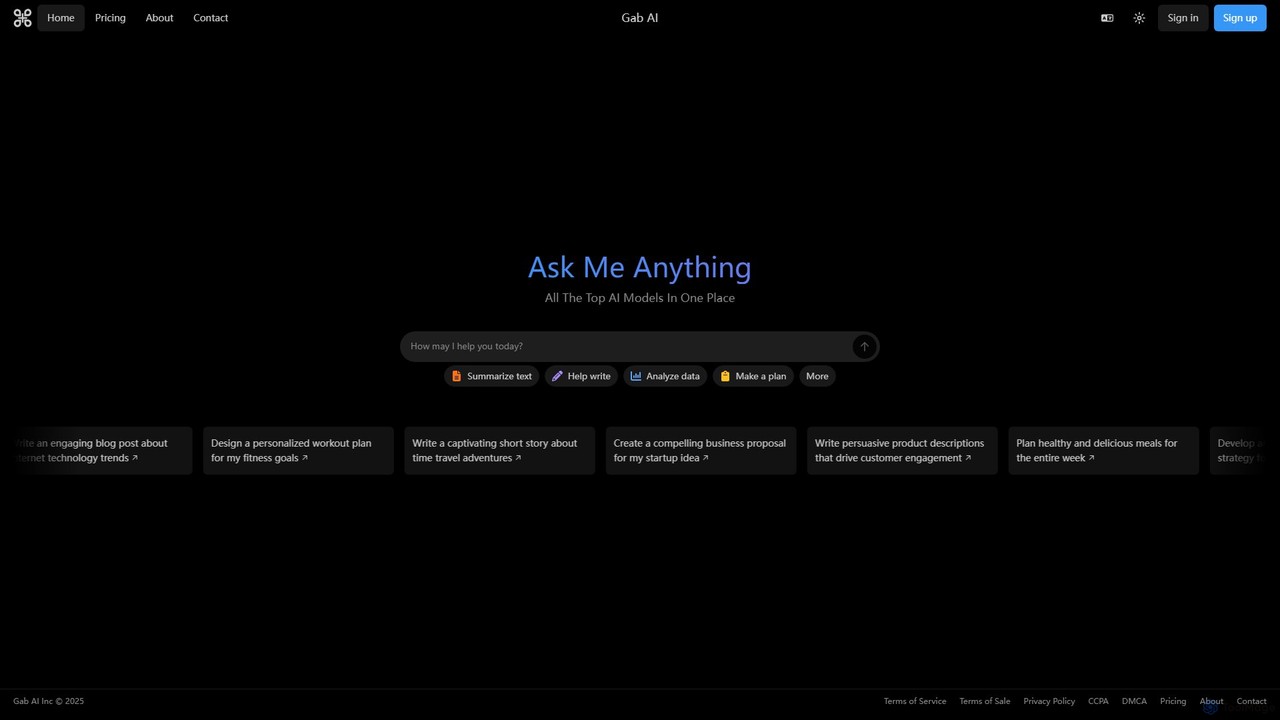
Gab AI is a versatile, all-in-one AI platform that consolidates the power of top large language models into a single, user-friendly interface. It enables users to generate a wide array of content, from blog posts and business proposals to social media calendars and personalized plans. With features for text summarization, data analysis, and creative writing, Gab AI serves as a comprehensive assistant for professionals, marketers, writers, and anyone looking to boost productivity and creativity.

Ai Chatbot
Visits 213.3KFavorites 135Likes 152

About Ai Chatbot

AI Chatbots are tools designed to simulate human-like conversations through text or voice interfaces. They utilize Natural Language Processing (NLP) and machine learning to understand user intent, context, and sentiment, moving beyond simple keyword matching. This enables businesses to automate communication, providing instant, 24/7 responses for customer support, lead generation, and user engagement. As a specialized form of generative writing, AI chatbots create dynamic, interactive dialogues that adapt in real-time.

Core Features

  • Natural Language Understanding (NLU): Accurately interpret user queries, intent, and nuances in conversational language.
  • 24/7 Automated Responses: Provide immediate answers to common questions at any time, reducing customer wait times.
  • Multi-channel Integration: Deploy seamlessly across websites, mobile apps, and messaging platforms like Messenger or WhatsApp.
  • Lead Qualification: Engage visitors, ask targeted questions, and collect contact information to identify potential customers.
  • Conversation Flow Builder: Offer visual, often no-code, interfaces to design and customize dialogue paths and logic.

Use Cases

AI Chatbots are widely used in e-commerce for customer service, in B2B SaaS for sales and lead nurturing, and in large organizations for internal IT or HR support. They are also effective for appointment scheduling in service industries and for providing interactive information in education and healthcare.

How to Choose

When selecting an AI Chatbot, evaluate its NLP capabilities—can it handle complex queries? Consider its integration options with your existing CRM or helpdesk software. Also, assess the ease of use of its conversation builder, its analytics and reporting features, and whether its pricing model aligns with your expected usage volume.

Ai Chatbot use cases

1

Automate 24/7 Customer Support

An e-commerce store manager uses an AI chatbot to handle common customer inquiries around the clock. The chatbot is integrated with their store's database to provide real-time order status updates, answer questions about return policies, and suggest products based on user queries. This frees up the human support team to focus on complex issues, reduces response times from hours to seconds, and improves overall customer satisfaction by providing instant help anytime.

2

Qualify Leads on a B2B Website

A marketing manager for a SaaS company deploys an AI chatbot on their pricing page. The chatbot proactively engages visitors by asking questions about their company size, role, and specific needs. Based on the answers, it qualifies them as a lead, collects their contact information, and can even schedule a demo directly on the sales team's calendar. This process automates the top of the sales funnel, ensuring the sales team only spends time on high-quality, pre-qualified leads.

3

Internal IT & HR Helpdesk Automation

An HR manager in a large corporation implements an AI chatbot on the company's intranet. Employees can ask the chatbot questions about company policies, vacation days, or benefits enrollment. Similarly, the IT department uses it to guide employees through common troubleshooting steps, like resetting a password or connecting to the VPN. This reduces the number of repetitive tickets for both departments and provides employees with instant, self-service access to information.

4

Interactive User Onboarding for Apps

A product manager for a new mobile app uses an in-app AI chatbot to guide new users. Instead of a static tutorial, the chatbot interactively walks users through key features, asks if they have questions, and provides tips based on their actions within the app. This conversational approach makes the onboarding process more engaging and personalized, helping to increase user activation rates and reduce early-stage churn by ensuring users understand the app's value quickly.

5

Automate Restaurant Bookings and Inquiries

A restaurant owner integrates an AI chatbot into their website and social media pages. Potential diners can interact with the bot to check table availability, make a reservation, view the menu, and ask about dietary options or opening hours. The chatbot handles these routine tasks automatically, allowing staff to focus on in-person guests. This improves efficiency and provides a convenient, modern booking experience for customers, potentially increasing the number of reservations.

6

Provide Instant Educational Tutoring

An online learning platform uses an AI chatbot as a tutoring assistant for its students. When a student is stuck on a math problem or a historical concept, they can ask the chatbot for a hint, a step-by-step explanation, or links to relevant course materials. The chatbot can also generate practice quizzes on demand. This provides scalable, on-demand academic support, helping students learn at their own pace without having to wait for a human instructor.

Ai Chatbot FAQ

What is an AI Chatbot?

An AI Chatbot is a software application designed to simulate human conversation through text or voice. Unlike simple rule-based bots, AI chatbots use technologies like Natural Language Processing (NLP) and machine learning to understand the user's intent, context, and sentiment. This allows them to handle a wide range of queries, learn from interactions, and provide more personalized and relevant responses. They are commonly used for customer service, lead generation, and providing information automatically.

How to choose the right AI Chatbot for my business?

To choose the right AI Chatbot, consider these factors:

  • Primary Goal: Determine if you need it for customer support, sales, or internal operations. This will define the required features.
  • Integration Capabilities: Ensure it can connect with your existing tools like CRM, helpdesk software, or e-commerce platforms.
  • Ease of Use: Look for a platform with a user-friendly interface and a visual conversation builder if you don't have a development team.
  • Scalability and Pricing: Choose a solution that can grow with your business and has a pricing model that aligns with your expected conversation volume.
What's the difference between an AI Chatbot and a virtual assistant like Siri?

The main difference lies in their scope and application. An AI Chatbot is typically domain-specific, designed to perform a focused set of tasks for a particular business or website (e.g., handling e-commerce queries). A virtual assistant like Siri or Alexa is a broad, general-purpose agent integrated into an operating system or device. Virtual assistants can perform a wide variety of tasks across many domains (setting alarms, searching the web, controlling smart home devices), whereas a business chatbot is an expert in its narrow, predefined area.

What are the key benefits of using an AI Chatbot?

The key benefits of implementing an AI Chatbot include:

  • 24/7 Availability: They provide instant support to customers anytime, day or night.
  • Cost Reduction: They automate repetitive tasks, reducing the need for a large human support team and lowering operational costs.
  • Increased Efficiency: They can handle multiple conversations simultaneously, something a human agent cannot do.
  • Improved Lead Quality: They can pre-qualify leads by asking targeted questions, ensuring the sales team focuses on the most promising prospects.
  • Data Collection: They gather valuable insights into customer needs, pain points, and frequently asked questions.
Do AI Chatbots require coding skills to set up?

Not necessarily. Many modern AI Chatbot platforms are designed to be user-friendly and offer no-code or low-code solutions. They provide visual drag-and-drop interfaces for building conversation flows, pre-built templates, and simple integration processes. While some advanced customizations or complex integrations might require development skills, a business user without a technical background can typically set up and manage a fully functional chatbot for most common use cases.