
Choosy Chat
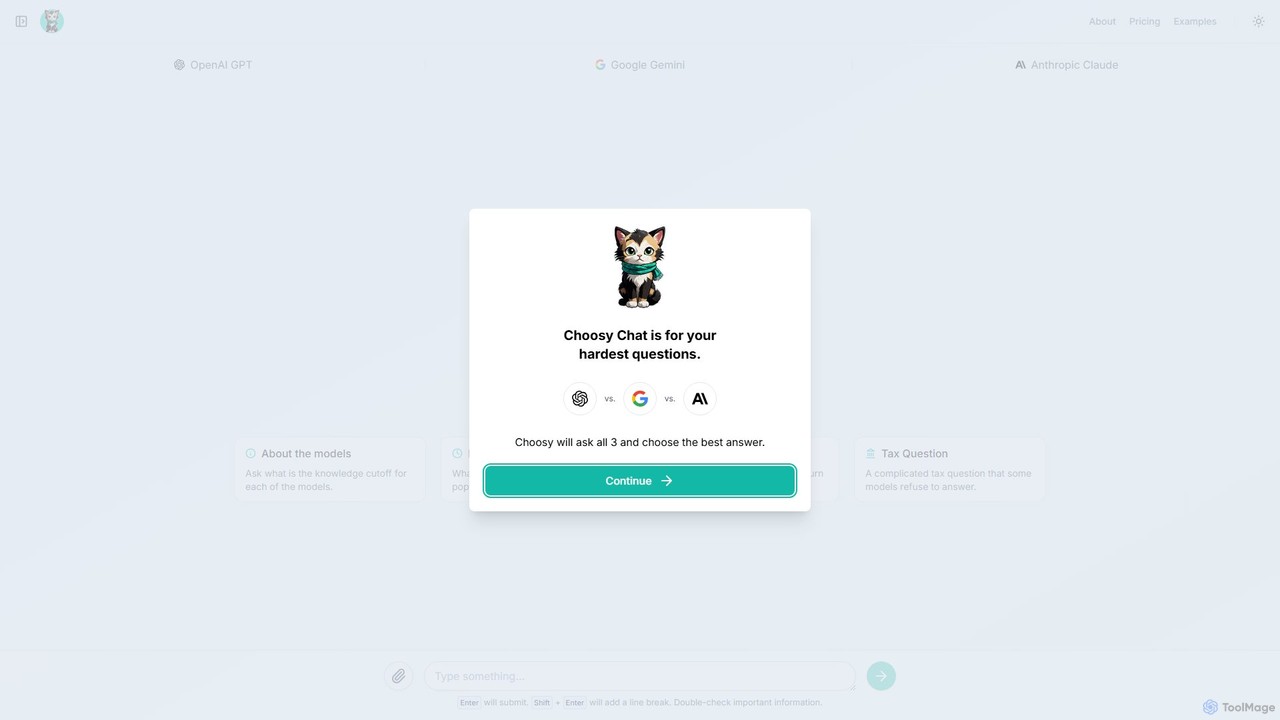
Choosy Chat is an AI tool that simultaneously sends your prompt to GPT, Gemini, and Claude, allowing you …
Choosy Chat is an AI tool that simultaneously sends your prompt to GPT, Gemini, and Claude, allowing you to compare their answers side-by-side. It helps you find the best possible response for any query, from coding to creative writing.
About Idea Generation
Idea Generation tools are AI-powered platforms designed to spark creativity and overcome mental blocks by generating novel concepts, topics, and outlines. Leveraging advanced natural language processing, these tools analyze inputs to suggest diverse ideas, helping users explore new angles and expand their creative horizons. They serve as invaluable assistants for anyone needing a fresh perspective or a starting point for writing, content creation, or problem-solving within the broader field of general writing.
Core Features
- Topic Brainstorming: Generates a wide array of potential topics based on keywords or themes.
- Outline Creation: Develops structured outlines for articles, essays, or presentations from a central idea.
- Keyword Expansion: Suggests related keywords and phrases to enrich content and improve SEO.
- Creative Prompt Generation: Produces unique prompts for stories, poems, or artistic projects.
- Concept Mapping: Helps visualize connections between ideas, fostering deeper exploration.
Use Cases
Content creators can quickly generate blog post ideas, video scripts, or social media topics when facing writer's block. Marketing teams can brainstorm campaign slogans or ad copy concepts. Researchers can formulate novel hypotheses, while educators can structure lesson plans.
How to Choose
Consider the diversity and originality of generated ideas, the flexibility of input options, and integration with other writing tools. Evaluate the tool's ability to refine and expand initial concepts, as well as its user interface, customization options, and pricing structure.
Idea GenerationUse Cases
Generating Blog Post Ideas for Content Marketing
A content marketer struggling with writer's block can input a broad industry topic like "sustainable living" into an AI idea generation tool. The tool then provides a list of unique blog post titles, sub-topics, and potential angles, such as "Zero-Waste Kitchen Hacks" or "The Future of Eco-Friendly Fashion," saving hours of manual brainstorming.
Developing Story Concepts for Fiction Writers
A fiction writer can use an idea generation tool to create novel plot twists, character backstories, or world-building elements. By inputting a genre and a few keywords, the AI can suggest unique scenarios, conflicts, or character archetypes, helping to kickstart a new novel or overcome a narrative impasse.
Brainstorming Marketing Campaign Slogans
A marketing team launching a new product needs a catchy slogan. They input product features and target audience demographics into the AI tool. The tool generates dozens of creative slogan options, allowing the team to quickly identify compelling taglines that resonate with consumers and differentiate their brand.
Creating Educational Content Outlines for Teachers
An educator preparing a new lesson plan on a complex subject, such as "quantum physics," can use an idea generation tool to structure their content. The AI can generate a logical outline with key learning objectives, sub-topics, and potential discussion points, ensuring comprehensive coverage and a clear learning path for students.
Generating Social Media Content Prompts
A social media manager needing daily content for various platforms can leverage an idea generation tool. By inputting trending topics or brand values, the AI provides a stream of engaging post ideas, questions for audience interaction, or short video concepts, maintaining a consistent and fresh content calendar.
Formulating Research Questions for Academics
A researcher embarking on a new study can utilize an idea generation tool to refine their research questions or identify unexplored areas. By feeding in preliminary findings or broad research interests, the AI can suggest specific, testable hypotheses or novel research directions, streamlining the initial phase of academic inquiry.