Ai Tools Best in category 3 results Model Comparison AI Tool

Popular AI tools in the Model Comparison field of Ai Tools include Llm Lab Three、Choosy Chat、Prompto, etc., helping you quickly improve efficiency.

Free
Llm Lab Three

Llm Lab Three

A free tool for developers and researchers to compare Large Language Models (LLMs) side-by-side. Test prompts, tune parameters, …

2.7K
Free
Prompto

Prompto

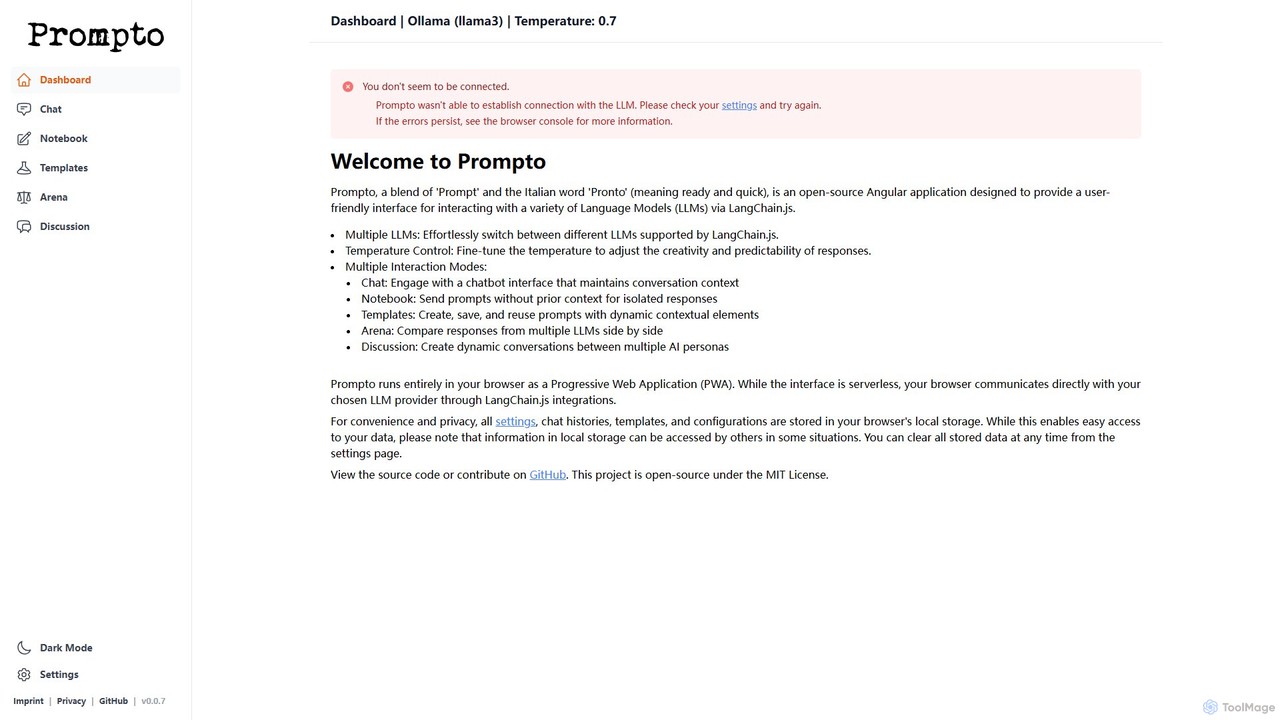
Prompto is a free, open-source, browser-based interface for interacting with a wide range of Large Language Models (LLMs). …

2.6K
Free
Choosy Chat

Choosy Chat

Choosy Chat is an AI tool that simultaneously sends your prompt to GPT, Gemini, and Claude, allowing you …

2.7K

About Model Comparison

Model Comparison tools are specialized platforms for evaluating and benchmarking the performance of different AI models side-by-side. These tools provide a structured environment to test models using standardized datasets, custom prompts, and key performance indicators like accuracy, speed, and cost. They are essential for developers, researchers, and businesses to make data-driven decisions when selecting the most suitable AI model for a specific application. This allows for objective analysis beyond marketing claims, ensuring optimal performance and cost-efficiency.

Core Features

  • Side-by-Side Interface: Directly compare model outputs for the same prompt in a unified view.
  • Automated Benchmarking: Run standardized tests (e.g., MMLU, HellaSwag) to measure objective performance.
  • Cost & Latency Analysis: Track API costs and response times to evaluate the efficiency of different models.
  • Qualitative Leaderboards: Access crowd-sourced or expert-driven rankings based on human preference and quality.
  • Custom Test Suites: Upload your own datasets and prompts to evaluate models on domain-specific tasks.

Use Cases

These tools are widely used by AI developers selecting a foundation model for a new application, MLOps teams monitoring model degradation, and product managers comparing the cost-performance ratio of providers like OpenAI, Anthropic, and Google. Researchers also use them to validate the performance of new models against established benchmarks.

How to Choose

When selecting a tool, consider the range of supported models (open-source vs. proprietary), the available evaluation metrics and benchmarks, the ability to use custom data for testing, and whether you need a user-friendly UI, an API for automation, or both. Also, evaluate the pricing model to ensure it aligns with your testing volume.


Model ComparisonUse Cases

1

Selecting an LLM for a Customer Service Chatbot

A product manager for an e-commerce company needs to choose a Large Language Model (LLM) for their new AI chatbot. Using a model comparison tool, they create a test suite with 100 common customer queries. They run this suite against models like GPT-4, Claude 3, and Llama 3, comparing them on response accuracy, politeness, latency, and cost per 1,000 queries. The platform's side-by-side view reveals that Claude 3 provides the best balance of quality and cost for their specific use case, enabling a data-backed decision in hours instead of weeks of manual testing.

2

Benchmarking a Fine-Tuned Open-Source Model

An ML engineering team has fine-tuned a Llama 3 model on their company's internal knowledge base. To validate its effectiveness, they use a model comparison platform to benchmark it against the base Llama 3 model and GPT-4. They run industry-standard tests like MMLU for general knowledge and a custom test set of 50 internal Q&A pairs. The results show their fine-tuned model outperforms the base model by 30% on internal questions, justifying the resources spent on fine-tuning.

3

Optimizing Cost for an AI-Powered Content Feature

A startup offers an AI feature that summarizes articles for users. As user growth accelerates, the cost of their current high-end model API becomes a concern. The development team uses a model comparison tool to test cheaper, smaller models on their summarization task. They compare outputs for quality, coherence, and length, while monitoring the cost analysis dashboard. They discover a smaller, distilled model that delivers 95% of the quality at only 40% of the cost, significantly improving their profit margins.

4

A/B Testing Image Generation Models for Marketing

A marketing team needs to generate visuals for a new ad campaign. They are unsure whether to use Midjourney, Stable Diffusion, or DALL-E 3 for their desired aesthetic. They use a model comparison tool to input the same set of creative prompts into all three models. The platform organizes the outputs, allowing the team to vote and rank the generated images based on brand alignment, visual appeal, and creativity. This structured process helps them quickly identify Stable Diffusion as the best fit for their campaign's style.

5

Academic Research on Model Capabilities

A university researcher is studying the reasoning abilities of the latest AI models. They leverage a model comparison platform's API to programmatically run thousands of logic puzzles and mathematical problems across a dozen different models. The tool automates the testing, collects the results, and provides aggregated accuracy scores. This saves the researcher hundreds of hours of manual scripting and execution, allowing them to focus on analyzing the data and publishing their findings on model performance trends.

6

Choosing a Code Generation Model for Developer Tools

A company building an IDE plugin wants to add an AI code completion feature. The engineering lead needs to decide between models like GitHub Copilot (GPT-based), Code Llama, and other specialized coding models. They use a model comparison tool with a benchmark suite like HumanEval. This allows them to objectively measure each model's ability to generate correct and efficient code snippets across various programming languages, ensuring they integrate the most reliable and performant option for their users.

Model ComparisonFrequently Asked Questions