General Writing Best in category 1 results Summarizing AI Tool

Popular AI tools in the Summarizing field of General Writing include Wikiwand, etc., helping you quickly improve efficiency.

Wikiwand

Wikiwand

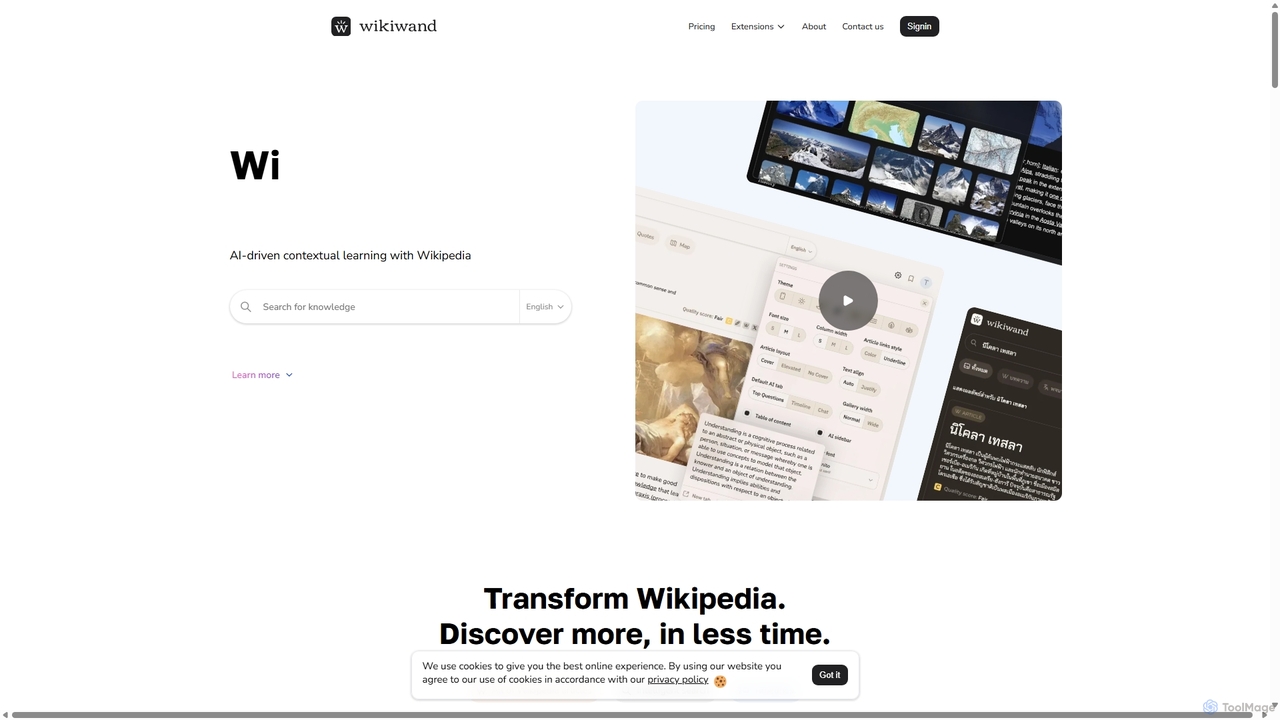
Wikiwand is an AI-powered platform that modernizes the Wikipedia reading experience. It offers a sleek, user-friendly interface and …

3.4M

About Summarizing

Summarizing tools are AI-powered applications designed to condense lengthy texts into shorter, coherent versions while preserving essential information. Leveraging advanced Natural Language Processing (NLP) and machine learning algorithms, these tools analyze content to identify main ideas, key phrases, and critical data points. They significantly enhance productivity by transforming verbose documents, articles, reports, or meeting transcripts into digestible summaries, making information consumption faster and more efficient for various professional and academic needs.

Core Features

  • Automatic Key Phrase Extraction: Identifies and extracts the most important keywords and phrases from the text.
  • Extractive Summarization: Selects and stitches together original sentences from the source text to form a summary.
  • Abstractive Summarization: Generates new sentences and phrases to create a concise summary, often paraphrasing the original content.
  • Multi-Document Summarization: Consolidates information from multiple related documents into a single, cohesive summary.
  • Customizable Length & Detail: Allows users to specify the desired summary length or level of detail.

Applicable Scenarios

Content creators can quickly grasp the essence of research papers or long articles for new content ideas. Business professionals use them to distill lengthy reports, meeting minutes, or market analyses into executive summaries. Students and researchers leverage these tools to rapidly review academic literature and identify relevant information without reading every full text.

How to Choose

When selecting a summarizing tool, consider its accuracy in capturing main points, the supported input formats (text, PDF, web links, audio transcripts), and whether it offers both extractive and abstractive summarization. Evaluate its language support, integration capabilities with existing workflows, and the ability to customize summary length or focus. User interface and pricing models are also crucial factors for long-term usability.

SummarizingUse Cases

1

Quickly Digest Research Papers

Academic researchers and students often face an overwhelming volume of scientific papers and journals. Summarizing tools allow them to input lengthy research articles and instantly receive concise summaries highlighting the methodology, key findings, and conclusions. This enables them to quickly assess the relevance of a paper to their work, saving hours of reading time and accelerating literature reviews for dissertations or new studies.

2

Create Executive Summaries for Business Reports

Business analysts and managers frequently need to present complex, data-heavy reports to stakeholders who require a high-level overview. AI summarizers can take extensive financial reports, market analyses, or project updates and generate succinct executive summaries. This ensures that decision-makers can quickly grasp critical insights and make informed choices without sifting through pages of detailed information, streamlining communication within organizations.

3

Condense Meeting Transcripts and Notes

After long meetings, manually sifting through detailed transcripts or extensive notes to extract action items and key decisions can be time-consuming. Project managers and team leads can feed meeting recordings or their transcribed text into a summarizing tool. The tool then identifies and extracts the most important discussion points, decisions made, and assigned tasks, providing a clear, actionable summary that helps ensure follow-up and accountability.

4

Extract Key Information from News Articles

Journalists, content curators, and marketing professionals need to stay updated on current events and industry trends without spending excessive time reading every full article. Summarizing tools enable them to quickly process multiple news articles, blog posts, or press releases. They can extract the core message, main arguments, and significant developments, allowing for rapid content curation, trend analysis, and efficient information gathering for their own publications or campaigns.

5

Prepare Study Notes from Lectures or Textbooks

Students preparing for exams often struggle to condense vast amounts of information from lecture notes, textbooks, or online courses. Summarizing tools can be invaluable for creating focused study guides. By inputting chapters or lecture transcripts, students receive condensed versions that highlight essential concepts, definitions, and theories, making revision more targeted and effective. This helps improve comprehension and retention of key academic material.

6

Summarize Customer Feedback and Reviews

Product managers and customer service teams need to understand common themes and sentiments from large volumes of customer feedback, reviews, and support tickets. Manually analyzing this data is impractical. Summarizing tools can process thousands of customer comments, identifying recurring issues, popular feature requests, or common complaints. This provides actionable insights for product development, service improvement, and understanding overall customer satisfaction trends.

SummarizingFrequently Asked Questions