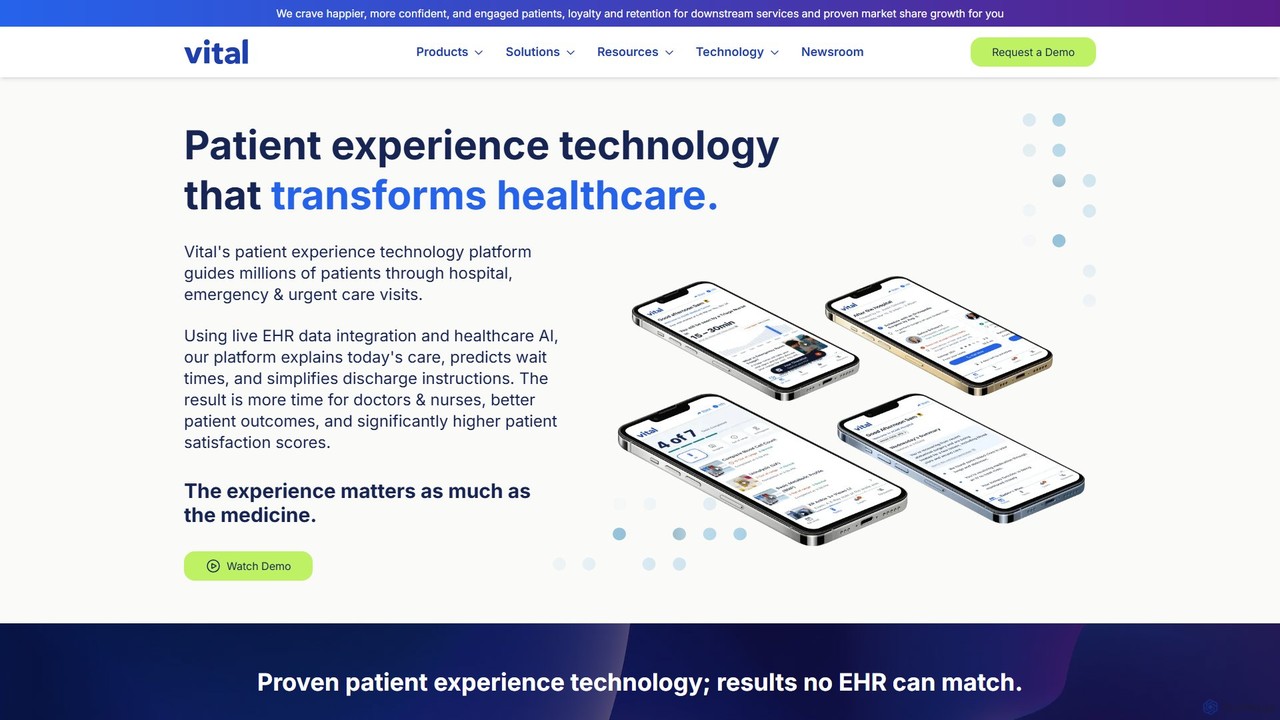
AI Patient Experience tools are a class of software designed to personalize, streamline, and enhance a patient's entire journey within a healthcare system. These tools leverage technologies like natural language processing (NLP) and machine learning to automate communication, provide tailored information, and gather actionable feedback. Their primary value lies in improving patient satisfaction, reducing administrative workload for staff, and enabling more proactive care management. By handling routine tasks like appointment scheduling and answering common questions, they allow healthcare providers to focus on delivering high-quality clinical care.
Core Features
- Intelligent Appointment Scheduling: Automates booking, rescheduling, and reminders to reduce no-shows and administrative overhead.
- AI-Powered Triage: Guides patients to the right level of care by analyzing their described symptoms before a visit.
- Personalized Communication: Delivers tailored educational content and post-discharge follow-ups based on the patient's specific condition.
- Automated Feedback Analysis: Uses sentiment analysis to process patient surveys and reviews, identifying key areas for service improvement.
- Billing & Administrative Support: Provides 24/7 assistance for common billing questions and simplifies patient intake processes.
Use Cases
These tools are widely used by hospitals, private clinics, dental offices, and telehealth platforms. For example, a hospital can deploy an AI chatbot to manage appointment traffic and answer FAQs, while a specialty clinic might use an AI system to send automated, personalized recovery instructions to post-operative patients.
How to Choose
When selecting a tool, consider its integration capabilities with your existing Electronic Health Record (EHR) system. Evaluate its compliance with healthcare regulations like HIPAA. Also, assess the tool's customization options to match your clinic's specific workflows and the quality of its natural language understanding for patient interactions.