Health & Wellness Best in category 1 results Spiritual AI Tool

Popular AI tools in the Spiritual field of Health & Wellness include Teksage, etc., helping you quickly improve efficiency.

Teksage

Teksage

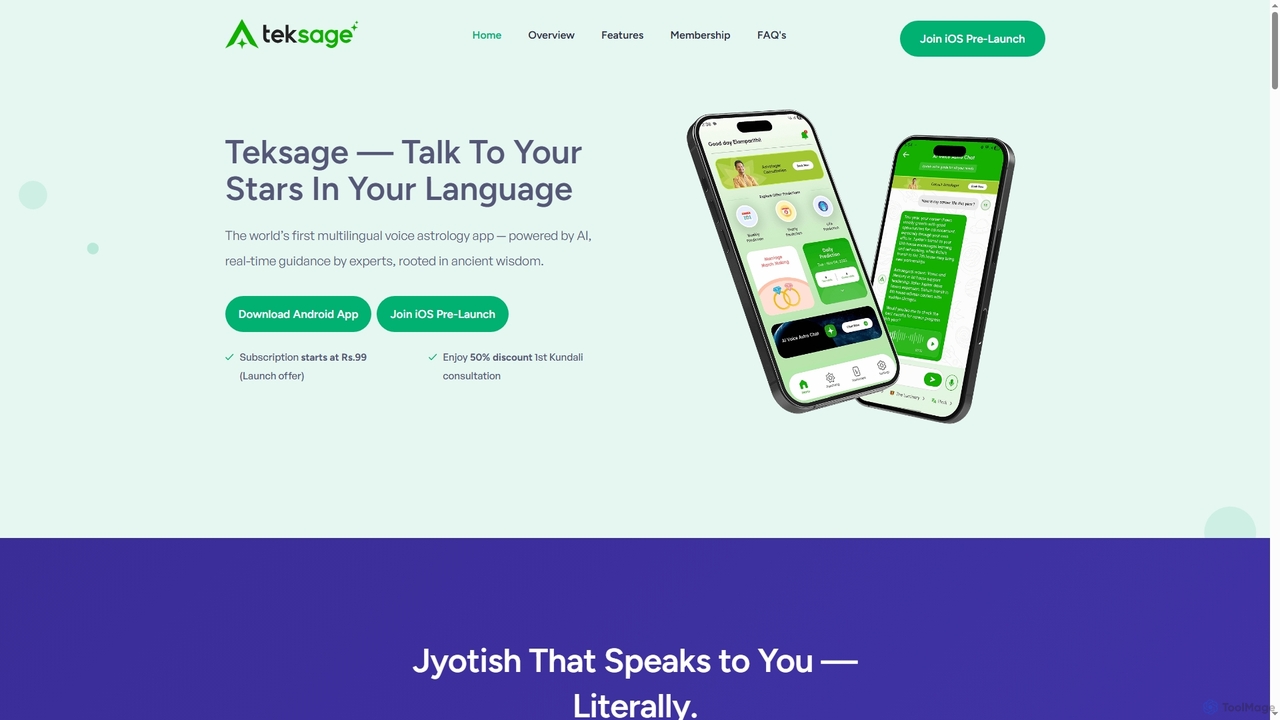
Teksage is the world's first multilingual, voice-based AI Jyotish (Vedic astrology) app. It provides personalized guidance on career, …

706

About Spiritual

Spiritual AI tools are applications designed to support and enhance personal spiritual journeys using artificial intelligence. These tools leverage algorithms for pattern recognition, natural language processing, and data analysis to offer personalized guidance, interpretations, and reflective experiences. They serve as digital companions for practices like meditation, divination, and self-exploration, making ancient wisdom more accessible in a modern context. This technology aims to provide users with new perspectives and structured ways to engage with their inner world.

Core Features

  • Personalized Guided Meditations: Generates meditation sessions tailored to the user's current mood, goals, or time availability.
  • AI-Powered Divination: Offers interpretations for practices like tarot reading, astrology charts, or I Ching, based on vast datasets.
  • Dream Interpretation: Analyzes user-submitted dream journals to identify symbols, themes, and potential subconscious insights.
  • Reflective Journaling Prompts: Provides intelligent prompts to guide users in self-reflection and spiritual journaling.
  • Astrological Analysis: Delivers detailed horoscope readings, birth chart analysis, and transit predictions.

Use Cases

These tools are valuable for individuals seeking personal growth, mindfulness practitioners, and those curious about esoteric traditions. For example, a user can receive a daily AI-generated tarot reading for guidance, or an astrology enthusiast can get an in-depth analysis of their natal chart without needing to consult an expert directly. They are also used by people looking for structured, non-denominational ways to practice daily reflection and mindfulness.

How to Choose

When selecting a Spiritual AI tool, consider the specific practice you're interested in (e.g., tarot, astrology, meditation). Evaluate the depth and quality of the AI's interpretations and the personalization options available. Check user reviews for insights on the app's user experience and the perceived accuracy of its guidance. Finally, consider the privacy policy, especially if you are journaling sensitive personal information.

SpiritualUse Cases

1

Daily Guidance with AI Tarot Reading

A young professional feeling uncertain about their career path uses a Spiritual AI tool for daily guidance. Each morning, they draw a virtual tarot card. The AI provides a detailed interpretation of the card's meaning in the context of their query about work and purpose. Unlike a static guidebook, the AI can offer nuanced insights based on patterns in their previous readings and journal entries. This practice helps them start their day with a reflective mindset, providing a sense of clarity and direction without the cost or scheduling of a human reader, turning introspection into a simple, accessible daily habit.

2

Analyzing Dreams for Self-Discovery

An individual focused on personal growth keeps a dream journal using a Spiritual AI app. After waking, they record their dreams, and the AI's natural language processing identifies key symbols, recurring themes, and emotional tones. The tool cross-references these elements with archetypal databases and psychological theories to suggest possible interpretations. This transforms dream journaling from simple recording into an active process of self-discovery. The user can track how their dream themes evolve over time, gaining insights into their subconscious mind and connecting their inner world to their waking life challenges and successes.

3

Personalized Meditation for Stress Reduction

A busy student uses a Spiritual AI app to build a consistent meditation practice. Instead of generic pre-recorded sessions, the app asks for their current emotional state (e.g., 'stressed', 'anxious', 'unfocused') and available time (e.g., '5 minutes before class'). The AI then generates a unique guided meditation script with soothing background audio tailored to their immediate needs. This level of personalization makes the practice more effective and easier to stick with. Over time, the AI can track their progress and suggest longer or more advanced techniques, acting as a dynamic meditation coach that adapts to their evolving journey.

4

Exploring Astrology with AI Natal Chart Analysis

Someone new to astrology wants to understand their birth chart but finds traditional resources overwhelming. They use a Spiritual AI tool, inputting their birth date, time, and location. The AI instantly generates a comprehensive report that explains the positions of planets, houses, and aspects in clear, easy-to-understand language. It highlights key personality traits, potential strengths, and challenges. The user can then ask follow-up questions like 'What does my Saturn in the 10th house mean for my career?' and receive a contextualized AI-generated answer, making complex astrological concepts accessible to beginners.

5

Generating Spiritual Content for Social Media

A wellness content creator uses a Spiritual AI tool to generate ideas and draft posts. They need to create daily content about mindfulness, affirmations, and moon phases. By providing a topic like 'New Moon in Leo affirmations', the AI can generate several unique, engaging affirmation statements and a short descriptive paragraph. This saves significant brainstorming time and helps overcome creative blocks. The creator can then edit and personalize the AI-generated text to match their brand voice, allowing them to maintain a consistent and high-quality posting schedule for their audience.

6

Facilitating Reflective Journaling Practice

A person looking to start a journaling habit but unsure where to begin uses a Spiritual AI tool. The app provides daily, thought-provoking prompts based on their stated goals, such as 'practicing gratitude' or 'understanding my emotions'. For example, it might ask, 'Describe a small moment today that brought you unexpected joy.' The AI can also analyze their entries over time to identify recurring emotional patterns or themes, offering gentle summaries like, 'It seems you often write about connection when you feel happiest.' This transforms journaling from a daunting task into a guided, interactive experience of self-reflection.

SpiritualFrequently Asked Questions