ToolMage
Sign in

Best 1 Clinic Management AI tools for Healthcare

Popular Clinic Management AI tools in Healthcare include Kliniki, helping you work more efficiently.

Kliniki
Freemium

Kliniki

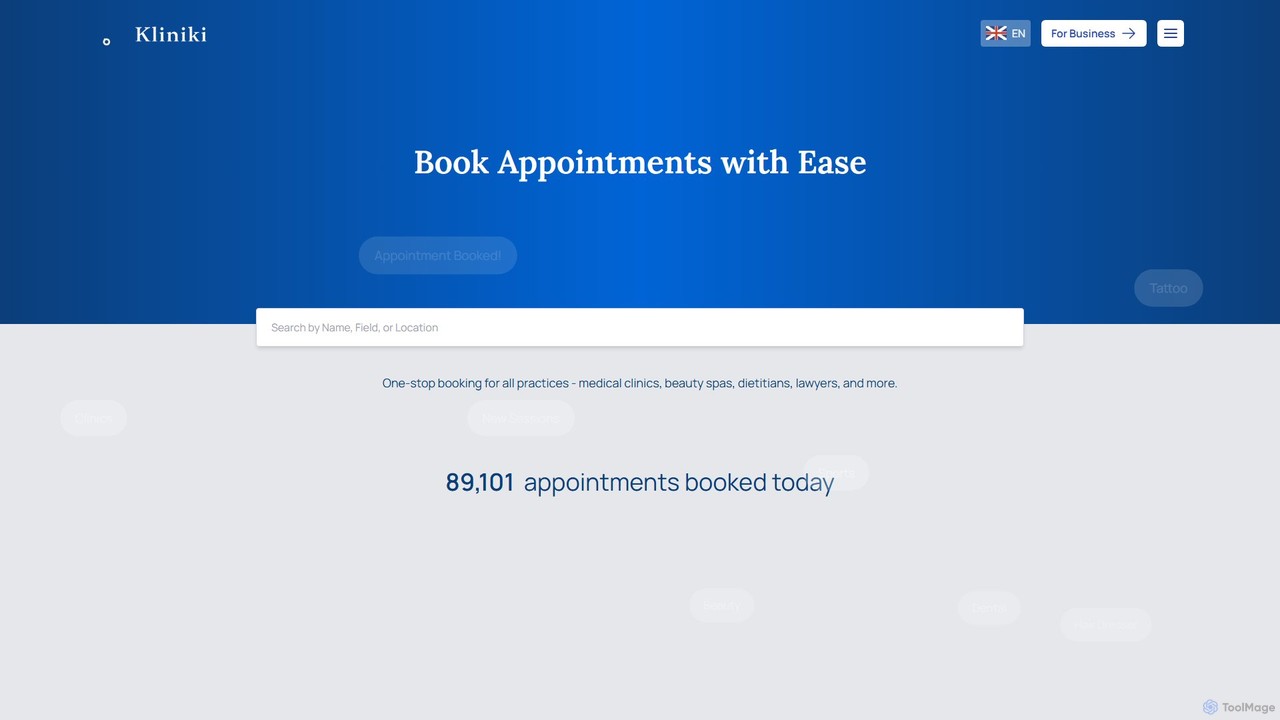
Kliniki is an all-in-one, cloud-based management platform designed for medical clinics, beauty salons, tattoo shops, and various professional practices. It streamlines operations through automation, patient management, online booking, and integrated accounting, saving time and helping businesses grow by improving the client experience.

Practice Management
Visits 8.8KFavorites 146Likes 147

About Clinic Management

Clinic Management AI tools are specialized software solutions designed to optimize and automate various administrative, operational, and patient-facing processes within medical clinics, hospitals, and healthcare facilities. These tools leverage artificial intelligence to enhance efficiency, reduce manual workload, and improve the overall quality of patient care. By integrating advanced algorithms, they provide intelligent insights and support for tasks ranging from appointment scheduling to resource allocation, significantly streamlining daily clinic operations.

Core Features

  • AI-Powered Scheduling: Optimizes appointment slots, reduces no-shows through predictive analytics, and manages staff availability.
  • Intelligent Patient Data Analysis: Processes electronic health records (EHR) to identify trends, flag potential risks, and support operational decision-making.
  • Automated Billing & Claims: Streamlines the complex billing cycle, identifies coding errors, and accelerates insurance claim submissions.
  • Predictive Resource Management: Forecasts demand for staff, equipment, and supplies, ensuring optimal allocation and reducing waste.
  • Personalized Patient Engagement: Automates tailored communication for appointment reminders, follow-ups, and educational content.

Applicable Scenarios

These tools are invaluable for private practices, specialized clinics, urgent care centers, and hospital departments seeking to modernize their operations. Clinic administrators utilize them to manage daily workflows, while medical staff benefit from reduced administrative burdens, allowing more focus on patient care. They are particularly useful in environments aiming to enhance patient throughput, minimize wait times, and improve financial performance.

How to Choose

When selecting a Clinic Management AI tool, consider its integration capabilities with existing EHR/EMR systems, the breadth of its AI-driven features (e.g., scheduling, billing, analytics), its scalability to accommodate clinic growth, and compliance with healthcare data privacy regulations (like HIPAA or GDPR). Evaluate user-friendliness for both administrative and clinical staff, and assess the vendor's support and training offerings.

Clinic Management use cases

1

Optimizing Patient Appointment Scheduling

Clinic administrators and receptionists utilize AI-powered scheduling tools to automatically fill appointment slots, minimize gaps, and reduce patient no-shows. The AI analyzes historical data, patient preferences, and provider availability to suggest optimal schedules, sending automated reminders and rescheduling options, thereby improving clinic efficiency and patient access to care.

2

Automating Medical Billing and Claims Processing

Billing departments in clinics leverage AI to streamline the complex process of medical billing. The AI can automatically review patient records and services rendered, identify potential coding errors, and prepare claims for submission. This significantly reduces manual data entry, minimizes claim rejections, and accelerates revenue cycles, ensuring financial health for the clinic.

3

Enhancing Personalized Patient Communication

Clinic staff use AI tools to deliver highly personalized and timely communications to patients. From automated appointment confirmations and medication reminders to post-visit follow-ups and educational content tailored to specific conditions, AI ensures patients receive relevant information, improving engagement, adherence to treatment plans, and overall satisfaction.

4

Predictive Inventory Management for Medical Supplies

Clinic managers employ AI to forecast the demand for medical supplies, medications, and equipment. By analyzing usage patterns, patient volume, and seasonal trends, the AI system predicts future needs, automates reordering processes, and alerts staff to potential shortages or overstocking. This reduces waste, optimizes storage, and ensures critical supplies are always available.

5

Streamlining Patient Intake and Data Entry

Front desk staff and nurses utilize AI-assisted tools to expedite the patient intake process. AI can help patients complete digital forms, extract relevant information from documents, and accurately enter data into the EHR system. This reduces wait times, minimizes human error in data entry, and frees up staff to focus on direct patient interaction.

6

Analyzing Operational Data for Efficiency Improvements

Clinic leadership and operational managers use AI to analyze vast amounts of operational data, such as patient flow, staff utilization, and service delivery times. The AI identifies bottlenecks, inefficiencies, and areas for improvement, providing actionable insights to optimize clinic layout, staffing levels, and service delivery models, ultimately enhancing overall operational efficiency.

Clinic Management FAQ

What are Clinic Management AI tools?

Clinic Management AI tools are software solutions that integrate artificial intelligence to automate and enhance the administrative and operational functions of healthcare facilities. They go beyond traditional practice management systems by using AI for tasks like predictive scheduling, intelligent data analysis, and personalized patient engagement, aiming to improve efficiency, reduce costs, and elevate patient care within the broader Healthcare category.

How do Clinic Management AI tools benefit clinics?

These tools offer numerous benefits, including significant improvements in operational efficiency by automating routine tasks like scheduling and billing, leading to reduced administrative overhead. They enhance patient experience through personalized communication and shorter wait times. Furthermore, AI-driven insights can optimize resource allocation, minimize no-shows, and improve financial performance by streamlining revenue cycles and reducing errors in claims processing.

What features should I look for in a Clinic Management AI tool?

When selecting a tool, prioritize features such as AI-powered appointment optimization, robust patient data analytics for operational insights, automated and intelligent billing/claims processing, and personalized patient communication capabilities. Also, consider its integration with existing Electronic Health Record (EHR) systems, compliance with data security standards (e.g., HIPAA), scalability, and user-friendliness for all staff members.

How do AI Clinic Management tools differ from traditional EMR/EHR systems?

While traditional EMR/EHR systems primarily focus on digitizing and storing patient health information, AI Clinic Management tools build upon this foundation by adding intelligent automation and predictive capabilities. EMRs manage records; AI tools *analyze* those records to optimize operations, predict trends, and automate complex workflows, offering proactive solutions rather than just reactive data management. They leverage AI to derive actionable insights and automate decision-making support.

Can AI Clinic Management tools improve patient experience?

Absolutely. By automating administrative tasks, AI tools free up staff to focus more on direct patient interaction, leading to more attentive care. Personalized communication (reminders, follow-ups) ensures patients feel valued and informed. Optimized scheduling reduces wait times, and efficient billing processes minimize patient frustration. Overall, these tools contribute to a smoother, more personalized, and less stressful patient journey.