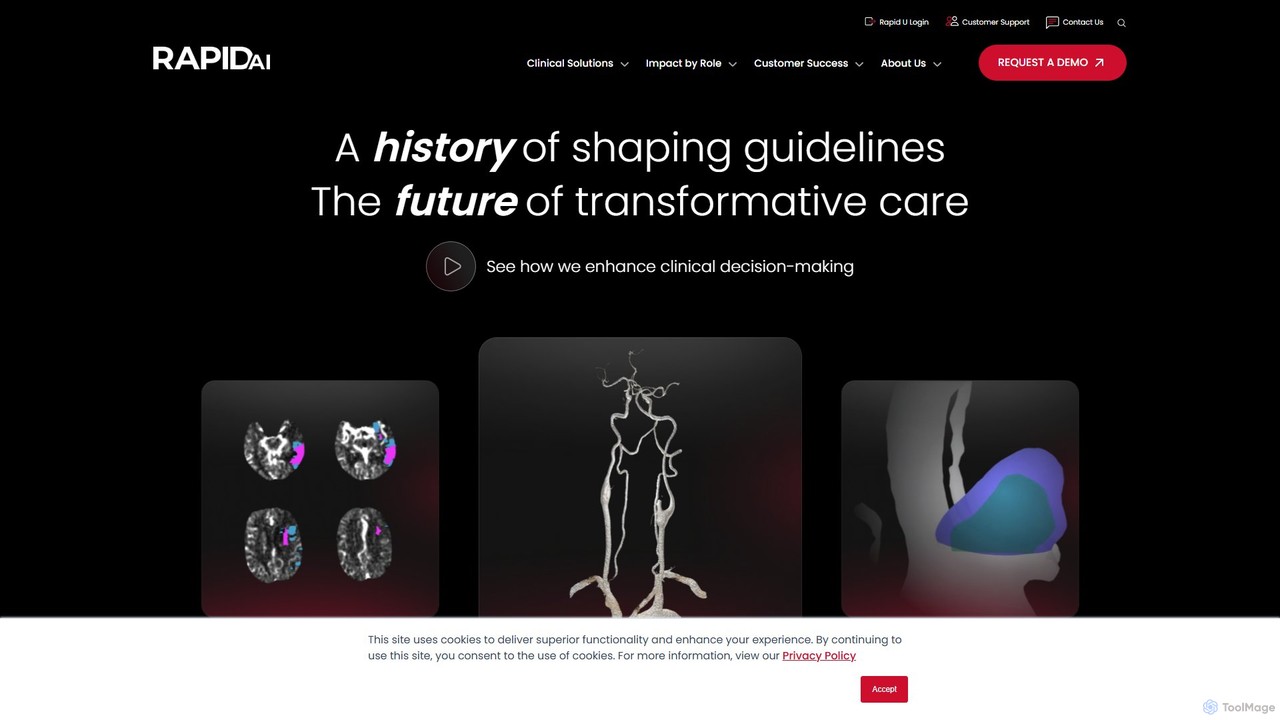
AI Diagnostics tools are a specialized category within healthcare AI, leveraging artificial intelligence to analyze medical data for the identification, classification, and prediction of diseases. These tools employ advanced machine learning algorithms, including deep learning for image recognition and natural language processing for clinical notes, to assist medical professionals in making more accurate and timely diagnostic decisions. Their primary value lies in enhancing diagnostic precision, enabling earlier disease detection, and supporting personalized treatment strategies, ultimately improving patient outcomes and operational efficiency in healthcare.
Core Features
- Advanced Image Analysis: Utilizes deep learning to detect subtle anomalies in medical images like X-rays, CT, MRI, and pathology slides, often surpassing human visual capabilities.
- Predictive Modeling: Analyzes patient data (genomic, EHR, lifestyle) to assess disease risk, predict progression, and forecast treatment responses.
- Early Disease Detection: Identifies early indicators of conditions such as cancer, neurological disorders, or cardiovascular diseases, facilitating timely intervention.
- Data Integration & Interpretation: Aggregates and interprets complex data from various sources, providing comprehensive diagnostic insights and supporting clinical decision-making.
- Automated Reporting: Generates structured reports based on AI analysis, streamlining documentation and reducing administrative burden for clinicians.
Applicable Scenarios
AI Diagnostics tools are indispensable for radiologists, pathologists, oncologists, and general practitioners. They are used in scenarios requiring high-volume data analysis, such as large-scale screening programs for breast cancer or diabetic retinopathy, and in complex cases where subtle patterns are difficult for humans to discern. These tools also support remote diagnostics, enabling specialists to analyze data from distant locations, expanding access to expert medical opinions.
How to Choose
When selecting an AI Diagnostics tool, prioritize accuracy and validation through rigorous clinical trials, ensuring regulatory compliance (e.g., FDA, CE Mark). Consider its integration capabilities with existing hospital information systems (HIS) and electronic health records (EHR), and evaluate the interpretability of its AI models. Data privacy and security features are paramount, alongside the tool's scalability to handle varying patient loads and its ability to adapt to new data types or disease patterns.