ToolMage
Sign in

Best 1 Medical Data AI tools for Data Analysis

Popular Medical Data AI tools in Data Analysis include RapidAI, helping you work more efficiently.

RapidAI
Paid

RapidAI

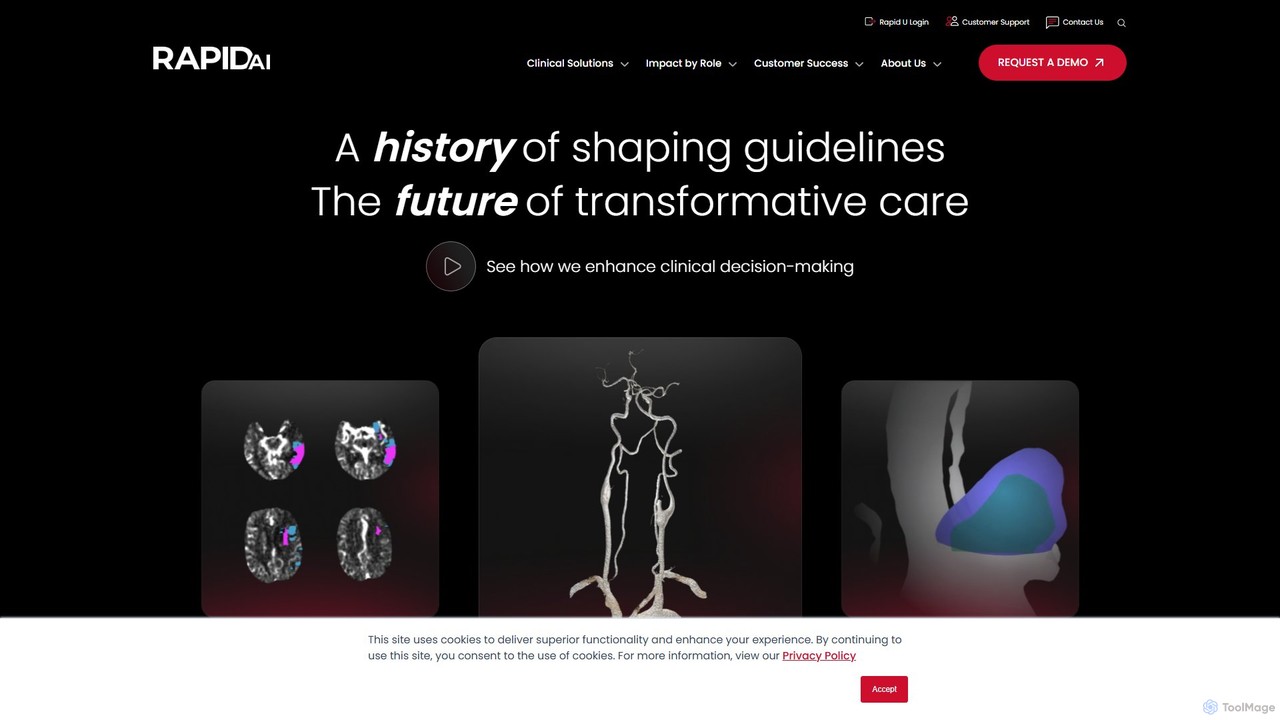
RapidAI is a leading clinical AI platform that enhances medical imaging analysis for life-threatening conditions like stroke and aneurysm. It provides healthcare professionals with real-time, actionable insights to accelerate diagnosis, inform treatment decisions, and improve patient outcomes. The platform is backed by extensive clinical validation and multiple FDA clearances.

Medical Data
Visits 33.6KFavorites 142Likes 141

About Medical Data

Medical Data tools are AI-powered solutions specifically designed to process, analyze, and interpret complex healthcare-related information. These tools leverage advanced machine learning, natural language processing, and computer vision to extract critical insights from diverse data sources, ranging from electronic health records (EHR) and genomic sequences to medical images. Their primary value lies in enhancing diagnostic accuracy, accelerating drug discovery, optimizing patient care, and improving public health outcomes, all while adhering to strict data privacy and compliance regulations.

Core Features

  • Secure Data De-identification: Anonymize sensitive patient information to comply with regulations like HIPAA and GDPR, enabling safe data sharing for research.
  • Clinical Trial Analysis: Accelerate drug development by analyzing vast datasets from clinical studies, identifying trends, and predicting outcomes.
  • Diagnostic Support: Assist clinicians in disease diagnosis by identifying subtle patterns in medical images, patient records, and lab results.
  • Genomic Data Interpretation: Analyze complex DNA/RNA sequences to understand disease predisposition, drug response, and personalized treatment options.
  • Predictive Health Analytics: Forecast disease outbreaks, patient readmission risks, or treatment efficacy based on historical and real-time data.

Applicable Scenarios

These tools are indispensable across the healthcare ecosystem. Pharmaceutical companies utilize them for drug discovery and clinical trial optimization. Hospitals and clinics deploy them for diagnostic assistance, personalized treatment planning, and operational efficiency. Public health organizations leverage them for disease surveillance and population health management, while medical researchers use them to uncover new insights from vast datasets.

How to Choose

Selecting the right Medical Data tool requires careful consideration of several factors. Prioritize solutions with robust data security and compliance certifications (e.g., HIPAA, GDPR). Evaluate the tool's accuracy and interpretability, especially for diagnostic applications. Assess its integration capabilities with existing EHR systems and other healthcare platforms. Consider the specific medical domains it specializes in, its scalability for large datasets, and the level of technical expertise required for implementation and use.

Medical Data use cases

1

Accelerating Drug Discovery and Development

Pharmaceutical researchers utilize Medical Data tools to analyze vast genomic, proteomic, and clinical trial datasets. By applying AI algorithms, they can identify potential drug targets, predict compound efficacy and toxicity, and stratify patient populations for more effective clinical trials. This significantly reduces the time and cost associated with bringing new therapies to market, leading to faster access to life-saving medications.

2

Enhancing Diagnostic Accuracy and Early Detection

Radiologists and pathologists leverage AI-powered Medical Data tools to analyze complex medical images (X-rays, MRIs, CT scans) and pathology slides. These tools can identify subtle anomalies, lesions, or disease markers that might be missed by the human eye, providing a second opinion and significantly improving the accuracy and speed of diagnosis for conditions like cancer, neurological disorders, and cardiovascular diseases, enabling earlier intervention.

3

Personalized Treatment Planning and Patient Management

Clinicians use Medical Data tools to analyze a patient's unique medical history, genetic profile, lifestyle data, and previous treatment responses. This comprehensive analysis allows for the development of highly personalized treatment plans, predicting which therapies will be most effective and minimizing adverse reactions. It also aids in monitoring patient progress, identifying potential risks, and proactively adjusting care strategies for better outcomes.

4

Optimizing Hospital Operations and Resource Allocation

Healthcare administrators and hospital managers deploy Medical Data tools to analyze operational data, including patient flow, bed occupancy rates, staff scheduling, and equipment utilization. Predictive analytics can forecast patient admissions and discharges, allowing for optimized resource allocation, reduced wait times, and improved efficiency across departments. This leads to better patient experiences and more cost-effective healthcare delivery.

5

Public Health Surveillance and Disease Outbreak Prediction

Epidemiologists and public health officials utilize Medical Data tools to monitor population health trends, track disease spread, and predict potential outbreaks. By analyzing vast datasets from electronic health records, social media, environmental factors, and genomic sequencing, these tools can identify emerging health threats, inform public health interventions, and allocate resources effectively during crises, safeguarding community health on a larger scale.

6

Automating Clinical Documentation and Administrative Tasks

Medical Data tools, particularly those with advanced NLP capabilities, can significantly streamline clinical documentation. They can transcribe physician-patient conversations, extract key information from unstructured notes, and automatically populate electronic health records (EHRs). This reduces the administrative burden on healthcare professionals, allowing them to focus more on patient care and improving the accuracy and completeness of medical records, which is crucial for billing and compliance.

Medical Data FAQ

What are Medical Data tools?

Medical Data tools are AI-powered software solutions specifically designed to manage, analyze, and derive insights from healthcare-related information. They leverage advanced technologies like machine learning, natural language processing, and computer vision to process diverse data types, including electronic health records, medical images, genomic sequences, and clinical trial results. Their primary goal is to enhance diagnostic accuracy, personalize treatments, accelerate research, and improve operational efficiency within the healthcare sector.

How do Medical Data tools ensure patient privacy and compliance?

Medical Data tools prioritize patient privacy through robust security measures and adherence to strict regulatory frameworks. They often incorporate features like data de-identification and anonymization to remove personally identifiable information (PII) while retaining data utility for analysis. Compliance with regulations such as HIPAA (Health Insurance Portability and Accountability Act) in the US and GDPR (General Data Protection Regulation) in Europe is fundamental, involving secure data storage, access controls, audit trails, and encryption protocols to protect sensitive health information.

What's the difference between general Data Analysis tools and Medical Data tools?

While Medical Data tools fall under the broader category of Data Analysis, their key distinction lies in specialization. General Data Analysis tools are versatile for various industries, but Medical Data tools are specifically tailored for the unique complexities of healthcare. This includes handling highly sensitive patient data with strict privacy regulations, interpreting complex medical terminology and formats (e.g., DICOM for images, HL7 for EHR), and incorporating domain-specific algorithms for clinical relevance. They also often feature built-in compliance and ethical considerations crucial for medical applications, which general tools lack.

What types of data can Medical Data tools analyze?

Medical Data tools are designed to analyze a wide array of healthcare-specific data types. This includes structured data from Electronic Health Records (EHRs) such as patient demographics, diagnoses, medications, and lab results. They also process unstructured data like clinical notes, physician dictations, and research papers using NLP. Furthermore, these tools are adept at interpreting medical images (X-rays, CT, MRI, ultrasound), genomic and proteomic sequences, data from wearable health devices, and large-scale public health datasets, providing a holistic view of patient and population health.

Who benefits most from using Medical Data tools?

A wide range of stakeholders in the healthcare sector benefit significantly from Medical Data tools. This includes pharmaceutical companies and biotech firms for drug discovery and clinical trials, leading to faster innovation. Clinicians (doctors, specialists) gain enhanced diagnostic support and personalized treatment insights. Hospital administrators improve operational efficiency and resource management. Medical researchers accelerate their studies by analyzing vast datasets. Finally, public health organizations can better monitor and respond to population health challenges, ultimately benefiting patients through improved care and outcomes.