Healthcare Best in category 2 results Electronic Health Records AI Tool

Popular AI tools in the Electronic Health Records field of Healthcare include Athelas、75health, etc., helping you quickly improve efficiency.

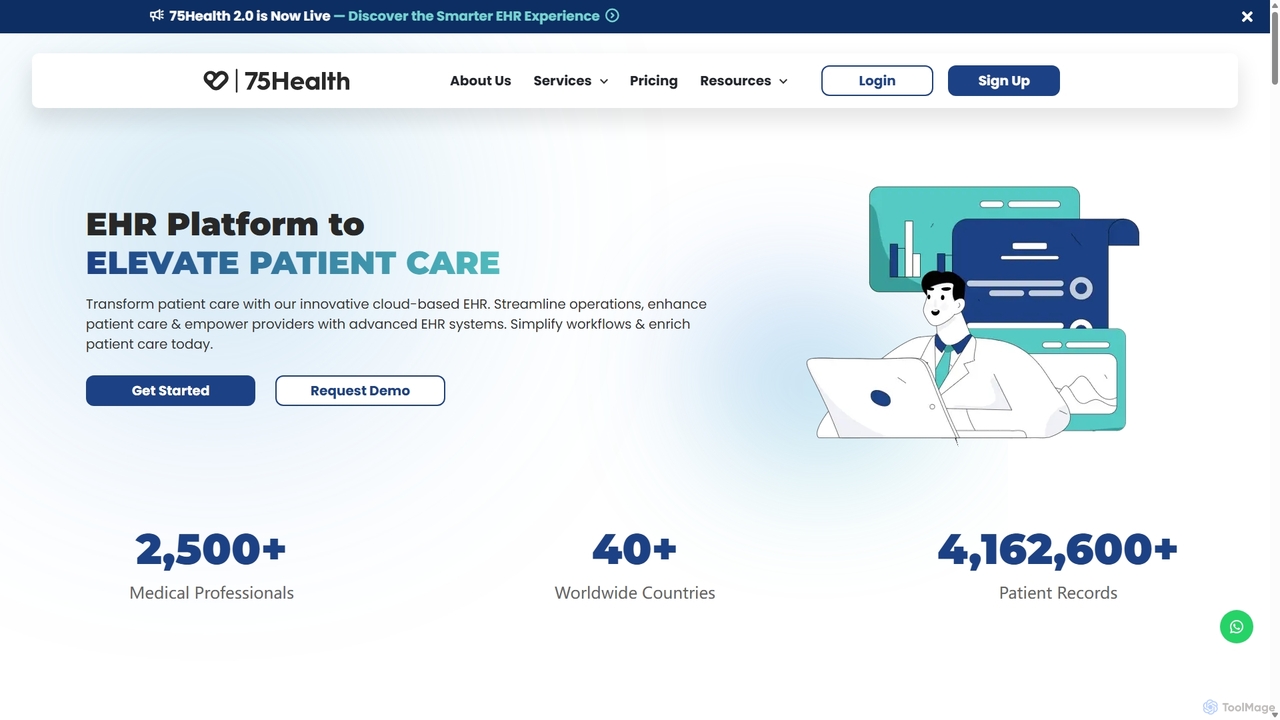
75health

75health

75health is a comprehensive, cloud-based Electronic Health Records (EHR) platform designed for medical professionals and clinics. It streamlines …

4.1K
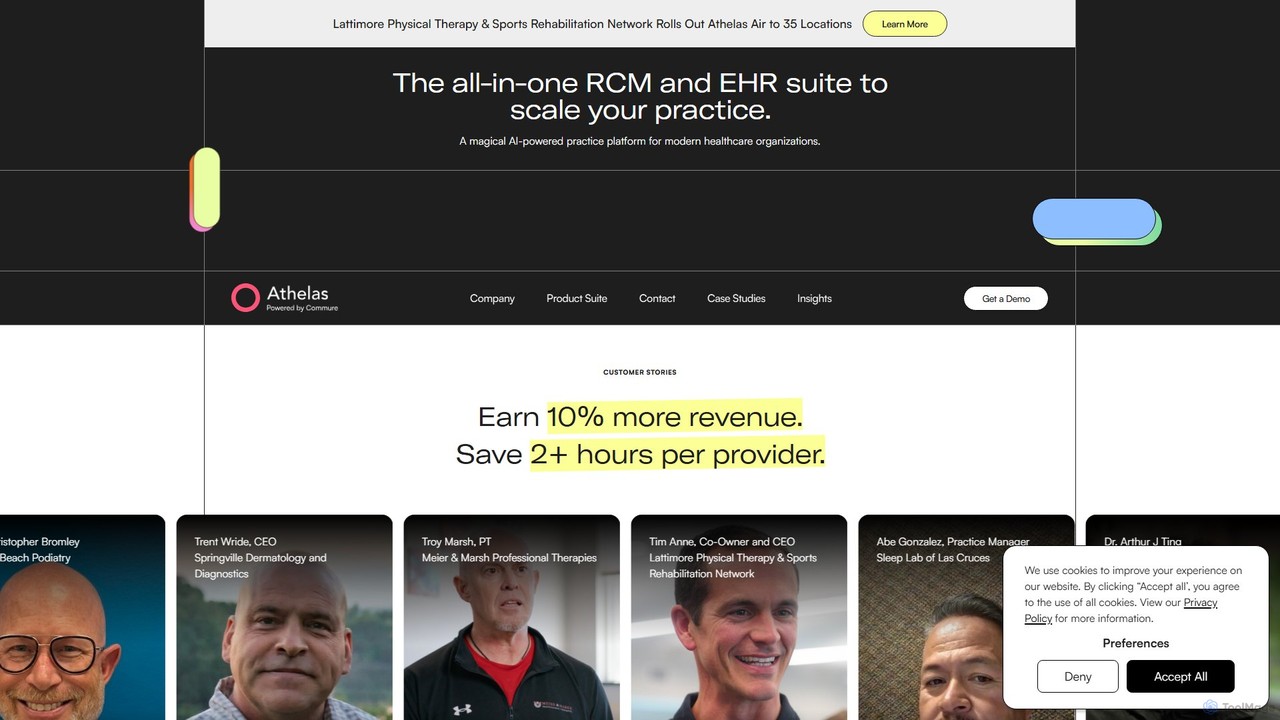
Athelas

Athelas

Athelas is an AI-powered platform designed to streamline healthcare operations. It combines an all-in-one Revenue Cycle Management (RCM) …

215.6K

About Electronic Health Records

AI-powered Electronic Health Records (EHR) are digital systems for creating, managing, and sharing patient health information. These tools utilize artificial intelligence, particularly machine learning and natural language processing (NLP), to automate data entry, provide clinical decision support, and analyze patient data patterns. Their primary value lies in transforming static patient records into dynamic, intelligent assets that help healthcare providers improve diagnostic accuracy, personalize treatment plans, and streamline administrative workflows. AI enhances traditional EHRs by adding predictive analytics and intelligent automation capabilities.

Core Features

  • Intelligent Data Capture: Uses AI-driven OCR and NLP to automatically extract and structure information from unstructured sources like lab reports, clinical notes, and faxes.
  • Clinical Decision Support (CDS): Provides real-time alerts and recommendations to clinicians by analyzing patient data against medical knowledge bases, flagging potential drug interactions or suggesting diagnoses.
  • Predictive Analytics: Employs machine learning models to forecast patient outcomes, such as readmission risks or disease progression, enabling proactive care.
  • Automated Clinical Coding: Leverages NLP to analyze clinical documentation and suggest appropriate medical codes (e.g., ICD-10), accelerating the billing cycle and reducing errors.
  • Voice-to-Text Dictation: Incorporates advanced speech recognition for hands-free, accurate dictation of clinical notes directly into the patient's record.

Applicable Scenarios

AI EHR systems are essential in various healthcare settings, including hospitals, specialty clinics, and primary care practices. They are used daily by clinicians (doctors, nurses) for charting and decision-making, by administrative staff for billing and scheduling, and by hospital managers for operational analytics. For example, a cardiologist uses an EHR to track a patient's long-term heart health, while an oncologist relies on it to manage complex cancer treatment protocols.

Selection Criteria

When choosing an AI EHR tool, consider its interoperability and ability to seamlessly exchange data with other systems like labs and pharmacies. Evaluate the maturity and specificity of its AI features—does it offer robust predictive models relevant to your specialty? Assess its compliance with data privacy regulations such as HIPAA or GDPR. Finally, consider the user interface's intuitiveness and the level of training and support provided, as these factors heavily influence adoption rates among clinical staff.

Electronic Health RecordsUse Cases

1

Automating Clinical Note-Taking with Voice

A primary care physician uses an AI-powered EHR during patient consultations. Instead of typing, the physician dictates notes and observations using a microphone. The system's NLP engine transcribes the speech in real-time, identifies medical entities like symptoms, diagnoses, and medications, and automatically populates the corresponding structured fields in the patient's chart. This process reduces charting time by over 50%, allowing the physician to focus more on patient interaction rather than data entry and minimizing post-visit administrative work.

2

Predicting Hospital Readmission Risks

A hospital's care management team uses the AI EHR's predictive analytics module to identify patients at high risk of readmission. Upon a patient's discharge, the system analyzes hundreds of variables, including diagnosis, length of stay, comorbidities, and social determinants of health from clinical notes. It generates a risk score, flagging high-risk individuals for targeted interventions like follow-up calls or home health visits. This proactive approach helps the hospital reduce its 30-day readmission rate, improving patient outcomes and avoiding financial penalties.

3

Streamlining Medical Billing with Automated Coding

A medical coding specialist in a large clinic uses an AI-enhanced EHR to accelerate the billing process. After a clinician finalizes a patient note, the system's NLP algorithm scans the text to identify diagnoses, procedures, and services rendered. It then suggests the most accurate ICD-10 and CPT codes, along with supporting documentation snippets. This automates a significant portion of the manual coding work, reduces the likelihood of human error, ensures compliance, and shortens the revenue cycle by submitting cleaner claims faster.

4

Providing Real-Time Clinical Decision Support

An emergency room physician is treating a patient with a complex medical history. As the physician enters new symptoms and orders lab tests in the EHR, the AI-driven Clinical Decision Support (CDS) module runs in the background. It cross-references the new data with the patient's existing records and known drug allergies, then issues a real-time alert about a potentially dangerous drug interaction with a medication the physician was about to prescribe. This immediate feedback prevents a potential adverse event and improves patient safety.

5

Identifying Candidates for Clinical Trials

A clinical research coordinator at a pharmaceutical company uses an AI-powered EHR data platform to accelerate trial recruitment. Instead of manually reviewing thousands of charts, the coordinator defines complex eligibility criteria (e.g., specific diagnosis, age range, past treatments, lab values). The AI algorithm then securely and anonymously queries a federated network of hospital EHRs to identify a cohort of potentially eligible patients in a fraction of the time. This significantly speeds up the research timeline and helps bring new therapies to market faster.

6

Managing Population Health and Identifying At-Risk Groups

A public health official uses an aggregated, anonymized EHR data system to monitor community health trends. The AI tools analyze population-level data to identify emerging disease outbreaks, track vaccination rates, or pinpoint geographic areas with a high prevalence of chronic conditions like diabetes. This allows public health organizations to allocate resources more effectively, launch targeted public awareness campaigns, and implement preventative care programs where they are needed most, shifting from reactive to proactive public health management.

Electronic Health RecordsFrequently Asked Questions