
akidolabs
Akido Labs develops Scope AI, an advanced artificial intelligence platform designed to revolutionize healthcare operations. By optimizing scheduling, …
Akido Labs develops Scope AI, an advanced artificial intelligence platform designed to revolutionize healthcare operations. By optimizing scheduling, predicting patient needs, and coordinating care, it aims to make exceptional healthcare universally accessible. The platform empowers providers to increase capacity for in-person visits, reduce wait times, and deliver more proactive, human-centric care, ultimately building a more efficient and equitable healthcare system.
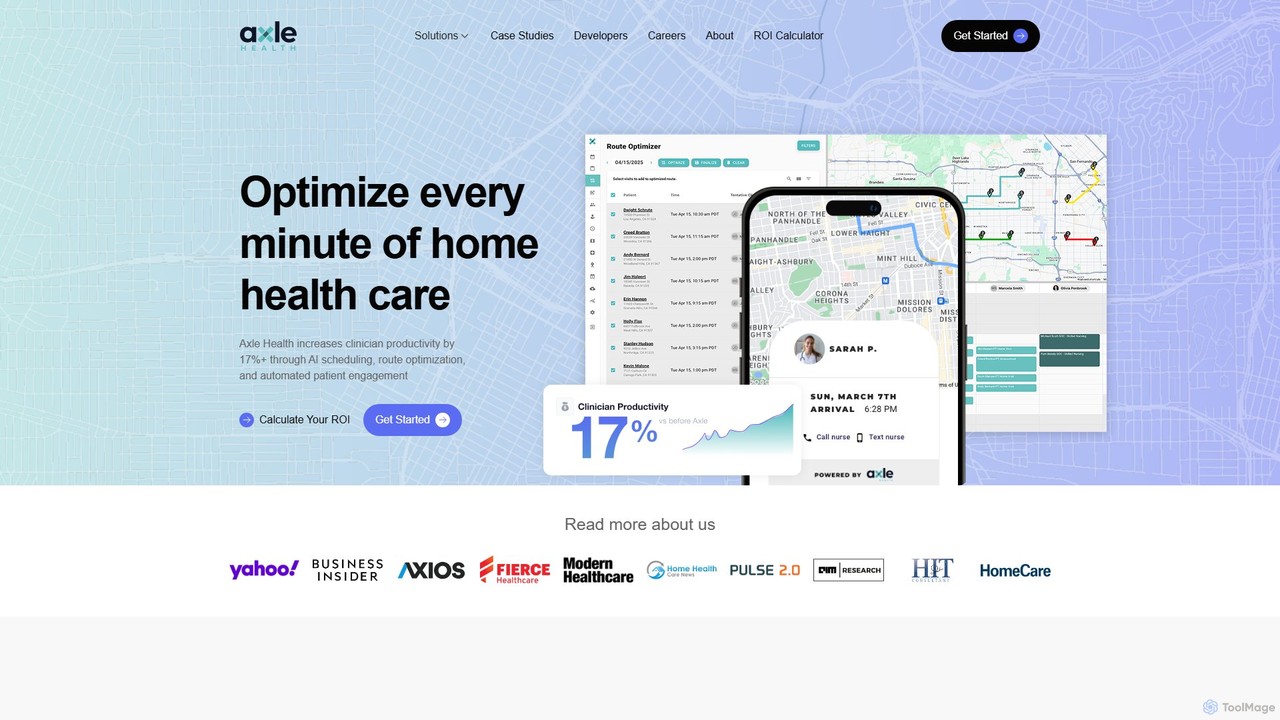
Axle Health
Axle Health is an AI-powered platform for home healthcare agencies, designed to optimize operations and increase efficiency. It …
Axle Health is an AI-powered platform for home healthcare agencies, designed to optimize operations and increase efficiency. It leverages AI for intelligent scheduling, route optimization, and automated patient engagement, resulting in a 17%+ increase in clinician productivity, reduced drive time, and fewer missed appointments. The platform provides real-time visibility into field operations and seamlessly integrates with existing EMR systems.
About Operations Management
Operations Management AI tools in healthcare are designed to optimize the complex processes and resource allocation within medical facilities. These tools leverage machine learning, predictive analytics, and automation to enhance operational efficiency, reduce costs, and improve patient care delivery. They address critical challenges from patient flow management and staff scheduling to medical supply chain logistics, ensuring smoother and more effective healthcare operations while adhering to strict regulatory standards.
Core Features
- Predictive Scheduling: Optimizes staff and patient appointments based on demand forecasts and resource availability.
- Resource Allocation: Manages medical equipment, hospital beds, and facility usage efficiently to prevent bottlenecks.
- Supply Chain Optimization: Forecasts demand for medical supplies, streamlines procurement, and manages inventory levels.
- Workflow Automation: Automates repetitive administrative tasks like billing, patient intake, and record updates.
- Patient Flow Management: Analyzes and improves patient journeys through the facility, from admission to discharge.
Use Cases
Hospital administrators use these tools for bed management and surgical suite scheduling. Clinic managers apply them to optimize patient intake and reduce wait times. Healthcare supply chain professionals leverage them for inventory forecasting and vendor management, ensuring critical supplies are always available.
How to Choose
Consider the tool's integration capabilities with existing EMR/EHR systems, its scalability for different facility sizes, and compliance with healthcare regulations (e.g., HIPAA). Evaluate the accuracy of its predictive models and the user interface for ease of adoption by medical staff and administrators.
Operations ManagementUse Cases
Optimizing Hospital Bed Management
Hospital operations managers utilize AI to predict bed availability based on admission and discharge patterns, patient acuity, and historical data. This enables efficient patient placement, reduces wait times in emergency departments, and optimizes the utilization of hospital resources. The result is improved patient flow and enhanced overall operational efficiency within the facility.
Automating Medical Supply Chain Forecasting
Healthcare procurement teams leverage AI to analyze historical consumption data, seasonal trends, and patient demographics to accurately forecast demand for critical medical supplies and pharmaceuticals. This minimizes stockouts of essential items, reduces waste from overstocking, and optimizes inventory levels across multiple facilities, leading to significant cost savings and improved patient care continuity.
Enhancing Staff Scheduling for Clinical Teams
Clinic administrators utilize AI-powered tools to create optimized schedules for doctors, nurses, and support staff, considering skill sets, patient demand fluctuations, and regulatory compliance for working hours. This improves staff satisfaction by ensuring fair workload distribution, reduces overtime costs, and guarantees adequate coverage for patient safety and quality of care.
Streamlining Patient Appointment Scheduling
Medical practices deploy AI to manage patient appointments, factoring in physician availability, patient preferences, visit complexity, and historical no-show rates to reduce missed appointments and optimize clinic flow. This leads to higher patient satisfaction through reduced wait times, increased clinic capacity, and more efficient utilization of medical staff time.
Predictive Maintenance for Medical Equipment
Biomedical engineering departments use AI to monitor the performance of critical medical devices (e.g., MRI machines, ventilators) and predict potential failures before they occur. By analyzing sensor data and usage patterns, AI can schedule proactive maintenance, minimizing equipment downtime, extending asset lifespan, and ensuring patient safety by preventing unexpected malfunctions during critical procedures.
Improving Operating Room Efficiency
Surgical unit managers employ AI to analyze surgical schedules, procedure durations, and recovery times to optimize operating room utilization. This reduces turnaround times between surgeries, increases the number of procedures performed daily, and enhances overall surgical department productivity. AI helps in dynamic rescheduling to accommodate emergencies while maintaining high efficiency.