Healthcare Best in category 2 results Pharmacovigilance AI Tool

Popular AI tools in the Pharmacovigilance field of Healthcare include DrugCard, etc., helping you quickly improve efficiency.

DrugCard

DrugCard

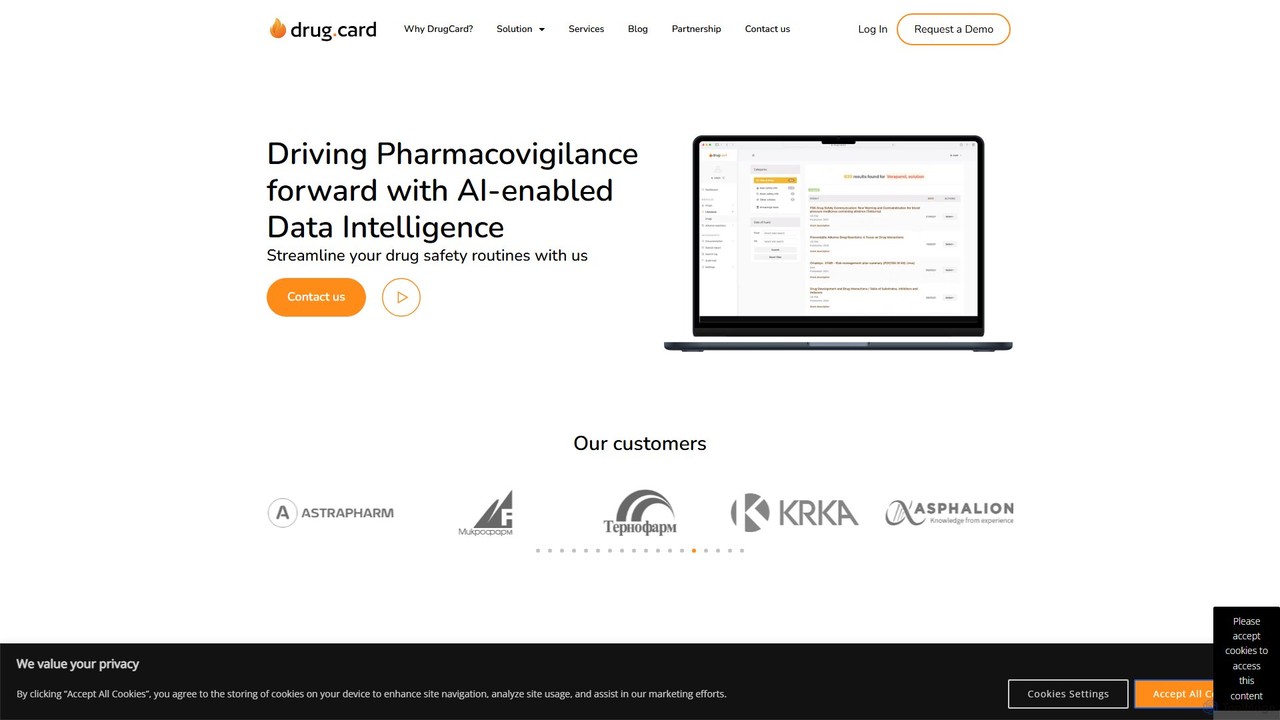
DrugCard is an AI-powered electronic pharmacovigilance system designed for pharmaceutical companies and CROs. It automates the monitoring of …

4.1K
DrugCard

DrugCard

DrugCard is an AI-powered data intelligence platform designed for pharmacovigilance. It automates the process of local medical literature …

9.6K

About Pharmacovigilance

AI Pharmacovigilance tools are specialized systems designed to automate the detection, assessment, understanding, and prevention of adverse effects from drugs. Leveraging Natural Language Processing (NLP) and machine learning, these tools analyze vast amounts of unstructured data from sources like electronic health records, social media, and scientific literature. Their primary value lies in enhancing the speed and accuracy of drug safety monitoring, enabling faster identification of potential risks and ensuring regulatory compliance. This proactive approach is a critical component of post-market surveillance in the healthcare industry.

Core Features

  • Automated Adverse Event Reporting (AER): Uses NLP to automatically identify and extract information about adverse drug reactions from various text sources.
  • Signal Detection and Management: Employs algorithms to analyze large datasets and detect statistically significant patterns that may indicate new drug safety risks.
  • Automated Case Processing: Streamlines the intake, data entry, and classification of Individual Case Safety Reports (ICSRs) to reduce manual effort.
  • Regulatory Compliance Reporting: Automates the generation of standardized reports required by health authorities like the FDA and EMA.

Applicable Scenarios

These tools are primarily used by pharmaceutical companies, biotechnology firms, and contract research organizations (CROs) for post-market drug safety surveillance. Regulatory agencies also utilize them to monitor public health. They are essential for safety teams processing high volumes of case reports and for researchers analyzing real-world evidence.

Selection Criteria

When choosing an AI Pharmacovigilance tool, consider its compliance with regulations such as 21 CFR Part 11 and GDPR. Evaluate the accuracy of its NLP models on medical terminology, its ability to integrate with existing safety databases, and its scalability to handle growing data volumes from diverse sources.

PharmacovigilanceUse Cases

1

Automating Individual Case Safety Report (ICSR) Processing

A pharmacovigilance team at a global pharmaceutical company receives thousands of adverse event reports weekly via email and web forms. Using an AI tool, they automate the entire intake process. The system's NLP capabilities read unstructured narratives, accurately extracting key data points like patient demographics, drug names, dosages, and adverse event terms. This reduces manual data entry time by over 80%, minimizes human error, and allows safety specialists to focus on medical review and analysis rather than administrative tasks.

2

Early Safety Signal Detection from Social Media

A biotech firm launches a new medication and wants to monitor real-world patient experiences beyond clinical trials. They deploy an AI pharmacovigilance tool to scan social media platforms, patient forums, and health blogs. The AI identifies posts where patients discuss potential side effects not listed in the official drug information. By analyzing sentiment and clustering similar reports, the system flags a potential signal of 'persistent mild nausea'. This allows the safety team to investigate the issue months earlier than they would have through traditional reporting channels.

3

Automating Systematic Literature Reviews

A Contract Research Organization (CRO) is responsible for monitoring scientific literature for safety information related to dozens of drugs for its clients. Manually screening thousands of publications is time-consuming and prone to oversight. They implement an AI tool that automatically searches databases like PubMed and Embase, screens abstracts for relevance based on predefined criteria (drug name, adverse events), and categorizes the findings. This automation reduces the manual screening workload by 90% and ensures no critical publication is missed, maintaining regulatory compliance for their clients.

4

Generating Standardized Case Narratives

A safety physician needs to write a clear and concise narrative for an Individual Case Safety Report (ICSR) that will be submitted to a regulatory authority. An AI pharmacovigilance tool assists by automatically structuring the available data—patient history, event onset, drug administration details, and outcomes—into a coherent narrative template. The tool suggests standardized medical terminology and ensures all required elements are included, improving the quality and consistency of reports across the organization and speeding up the review and submission process.

5

Risk Analysis in Electronic Health Records (EHR)

A national health authority wants to proactively identify safety risks across its population's health data. They use an AI platform to analyze millions of anonymized Electronic Health Records (EHRs). The AI performs disproportionality analysis, comparing the incidence of specific adverse events in patients taking a certain drug versus those who are not. It successfully identifies a higher-than-expected rate of acute kidney injury associated with a widely used anti-inflammatory drug, triggering a formal investigation and a potential update to safety guidelines.

6

Quality Control and Duplicate Detection in Safety Databases

A large pharmaceutical company's global safety database contains millions of case reports, with a high risk of duplicate entries from different sources (e.g., a physician and a patient reporting the same event). An AI tool is used to perform intelligent duplicate checks. It goes beyond simple field matching by using NLP to compare case narratives for semantic similarity. The system flags potential duplicates with a confidence score, allowing data managers to efficiently review and merge records, thereby improving data quality and the accuracy of signal detection analyses.

PharmacovigilanceFrequently Asked Questions