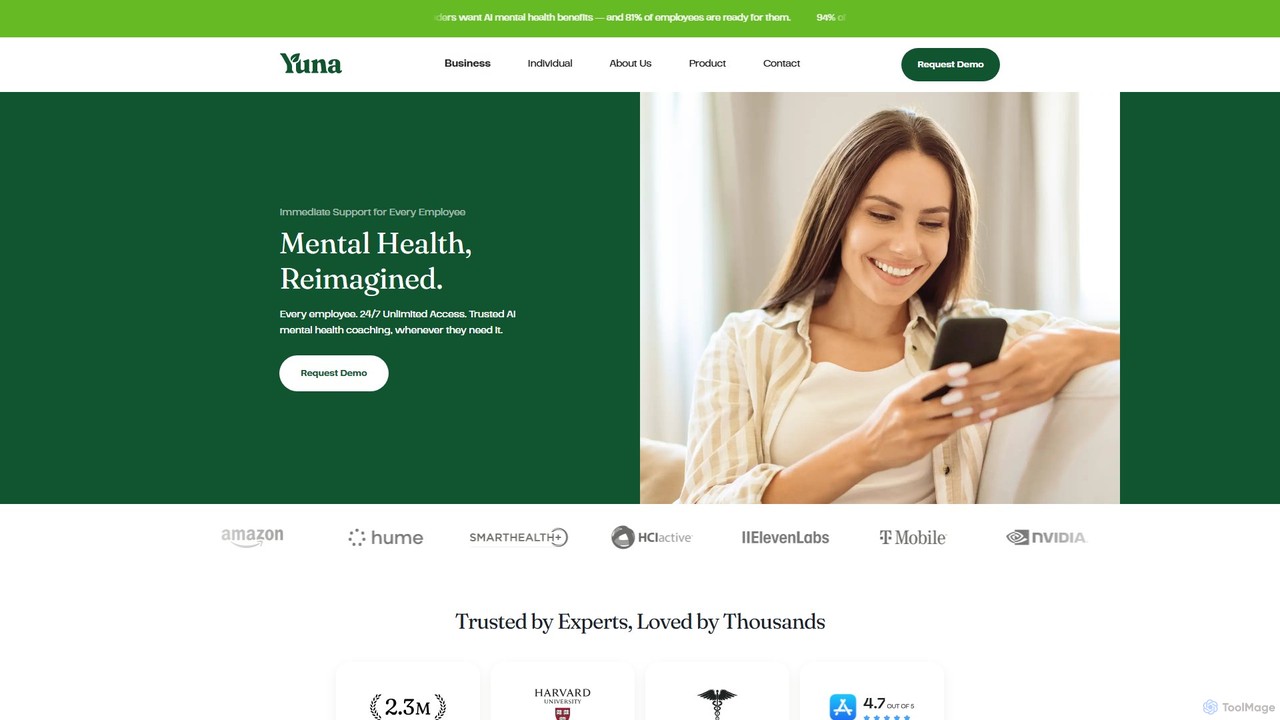
Employee Wellness AI tools are specialized platforms that leverage artificial intelligence to support and enhance the physical, mental, and financial well-being of an organization's workforce. These tools utilize data analytics, machine learning, and natural language processing to offer personalized recommendations, proactive support, and insights into employee health trends. By automating wellness initiatives and providing accessible resources, they help foster a healthier, more engaged, and productive work environment, ultimately reducing burnout and improving retention within the broader HR function.
Core Features
- Personalized Wellness Plans: AI-driven recommendations for exercise, mindfulness, nutrition, and stress reduction tailored to individual needs.
- Mental Health Support: AI chatbots and resources for stress management, anxiety reduction, and access to professional counseling services.
- Burnout Risk Detection: Algorithms analyze work patterns and feedback to identify early signs of burnout and suggest interventions.
- Physical Activity Tracking: Integration with wearables and apps to monitor activity, set goals, and encourage healthy habits through gamification.
- Financial Wellness Guidance: AI-powered advice and tools for budgeting, savings, and financial planning to reduce employee stress.
Use Cases
These tools are crucial for HR departments and organizational leaders aiming to cultivate a supportive workplace culture. They are used to implement scalable wellness programs, provide confidential support channels, and gather anonymized insights into workforce well-being. For example, a large corporation might deploy an AI wellness platform to offer mental health resources to employees across different time zones, ensuring equitable access to support and proactively addressing potential well-being issues before they escalate.
How to Choose
When selecting an AI Employee Wellness tool, consider its scope of well-being support (mental, physical, financial), the level of personalization offered, and its integration capabilities with existing HR systems. Evaluate data privacy and security protocols, as sensitive employee information is involved. Also, assess the user experience and engagement features, as adoption rates are key to program success, and look for platforms that provide actionable analytics for HR to measure impact.