
ToolMage
Sign in

Best 1 Hris AI tools for Hr

Popular Hris AI tools in Hr include BambooHR, helping you work more efficiently.

BambooHR
Paid

BambooHR

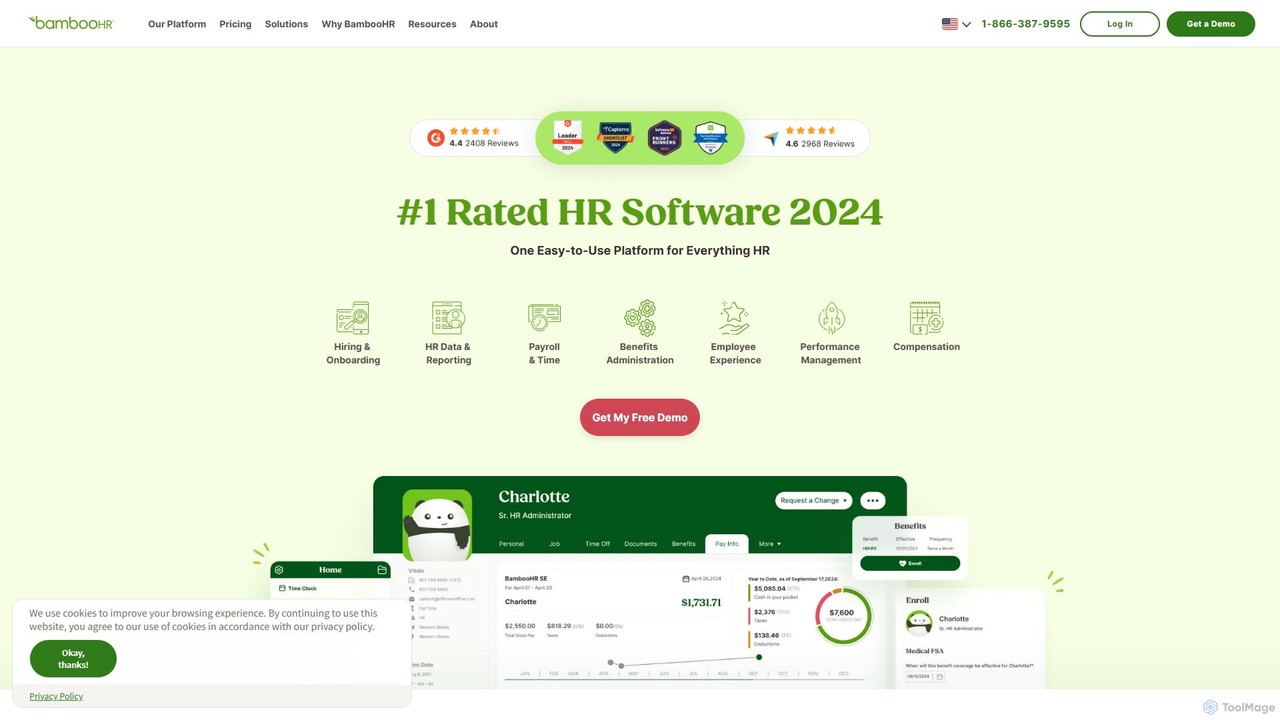
BambooHR is an all-in-one, cloud-based HR software for small and medium-sized businesses. It centralizes all employee, payroll, time, and benefits information into a single platform, automating HR processes to free up time for strategic initiatives. It's designed to be user-friendly for HR managers, executives, and employees.

Payroll
Visits 15.4MFavorites 139Likes 127

About Hris

Hris (Human Resources Information System) with AI capabilities are integrated software solutions designed to manage and automate core HR processes, enhanced by artificial intelligence for deeper insights and improved efficiency. These platforms leverage AI to streamline tasks from recruitment and onboarding to performance management and payroll, transforming traditional HR functions into more strategic, data-driven operations. By centralizing employee data and applying intelligent automation, AI-powered Hris tools empower organizations to optimize workforce management, enhance employee experience, and make informed decisions based on predictive analytics.

Core Features

  • AI-Powered Recruitment: Automates resume screening, candidate matching, and initial candidate communication through chatbots.
  • Predictive Workforce Analytics: Utilizes AI to forecast talent turnover, identify skill gaps, and optimize staffing and resource allocation.
  • Intelligent Employee Self-Service: Provides AI-driven chatbots for instant answers to HR queries, benefits information, and policy guidance.
  • Automated Performance Insights: Analyzes performance data and feedback using AI to identify trends, suggest personalized development plans, and streamline evaluations.

Use Cases

Organizations utilize AI-powered Hris to transform their HR operations. For instance, companies can significantly reduce time-to-hire by automating candidate screening and initial interviews. They can also improve employee retention by using predictive analytics to identify at-risk employees and proactively offer support or development opportunities. Furthermore, these systems enhance employee engagement by providing personalized learning recommendations and instant support through intelligent assistants.

How to Choose

When selecting an AI-powered Hris, prioritize solutions that offer robust AI features relevant to your specific HR challenges, such as advanced analytics or intelligent automation. Evaluate its integration capabilities with existing enterprise systems (e.g., ERP, CRM) to ensure seamless data flow. Consider scalability to accommodate future growth and the vendor's commitment to data security and compliance. Finally, assess the user experience for both HR professionals and employees to ensure high adoption rates.

Featured tool rankings

Hris use cases

1

AI-Powered Candidate Sourcing and Screening

Recruitment teams use AI-powered Hris to automate the initial stages of hiring. The system can analyze vast numbers of resumes, identify candidates whose skills and experience best match job requirements, and even conduct preliminary chatbot interviews. This significantly reduces manual workload, speeds up the hiring process, and helps identify top talent more efficiently by filtering out unqualified applicants.

2

Predictive Workforce Planning and Turnover Analysis

HR departments leverage AI in Hris to gain foresight into workforce dynamics. By analyzing historical data, the system can predict potential employee turnover, identify critical skill gaps that may emerge, and recommend strategies for proactive talent acquisition or upskilling initiatives. This enables data-driven workforce planning, ensuring the organization has the right people with the right skills at the right time.

3

Personalized Employee Onboarding and Learning Paths

New hires benefit from AI-driven onboarding experiences within the Hris. The system can provide personalized checklists, deliver relevant training materials based on their role, and offer chatbot support for common questions. For ongoing development, AI recommends tailored learning paths and resources, fostering continuous growth and improving employee engagement and retention.

4

Automated Performance Feedback and Goal Alignment

Managers and employees utilize AI-enhanced Hris for more objective and continuous performance management. AI can analyze feedback from various sources, identify patterns in performance, and suggest areas for improvement or recognition. It also helps align individual goals with organizational objectives, providing real-time insights and facilitating more meaningful performance reviews.

5

Intelligent Employee Self-Service and Support

Employees can access instant support and information through AI-powered chatbots integrated into the Hris. These chatbots can answer common questions about payroll, benefits, company policies, and leave requests 24/7, reducing the burden on HR staff. This improves employee satisfaction by providing quick, accurate responses and frees up HR teams to focus on more strategic initiatives.

6

Optimized Compensation and Benefits Management

HR professionals use AI within the Hris to ensure competitive and fair compensation structures. AI can analyze market data, internal equity, and individual performance to recommend optimal salary ranges and personalized benefits packages. This helps attract and retain talent, ensures compliance, and optimizes HR spending by making data-driven decisions on remuneration.

Hris FAQ

What is an AI-powered Hris?

An AI-powered Hris (Human Resources Information System) is a software platform that integrates artificial intelligence to automate and enhance various HR functions beyond traditional data management. It leverages AI for tasks like predictive analytics, intelligent automation, and personalized employee interactions, transforming HR from administrative to strategic. This allows for more efficient talent acquisition, improved employee experience, and data-driven decision-making across the entire employee lifecycle.

How does AI enhance traditional Hris functionalities?

AI significantly enhances traditional Hris by adding intelligence and predictive capabilities. While a traditional Hris automates data entry and basic workflows, AI introduces features like automated resume screening, predictive turnover analysis, personalized learning recommendations, and intelligent chatbots for employee support. This shifts HR from reactive to proactive, providing deeper insights, reducing manual tasks, and improving overall efficiency and employee satisfaction.

What should I consider when choosing an AI-powered Hris?

When selecting an AI-powered Hris, consider the specific AI capabilities offered, such as advanced analytics, machine learning for predictions, or natural language processing for chatbots. Evaluate its integration potential with your existing IT ecosystem and its scalability to grow with your organization. Data security and compliance with privacy regulations (e.g., GDPR, CCPA) are paramount. Finally, assess the vendor's reputation, support, and the system's user-friendliness for both HR teams and employees.

Who benefits most from implementing an AI-powered Hris?

Both HR professionals and employees benefit significantly from an AI-powered Hris. HR teams gain efficiency through automation, deeper insights from predictive analytics, and more time for strategic initiatives. Employees benefit from personalized experiences, faster access to information via chatbots, tailored learning opportunities, and a more streamlined HR journey. Organizations as a whole benefit from improved talent acquisition, higher retention rates, and better workforce planning.

What are the key future trends for AI in Hris?

Future trends for AI in Hris include even greater personalization of employee experiences, with AI tailoring everything from benefits to career paths. Predictive analytics will become more sophisticated, offering proactive solutions for workforce challenges like skill gaps and retention risks. We'll also see enhanced ethical AI considerations, ensuring fairness and transparency in AI-driven HR decisions, alongside seamless integration with other business intelligence tools for a holistic view of organizational performance.