Humaans
Humaans is an AI-powered Human Resource Information System (HRIS) designed for high-performing, growing teams. It centralizes all employee …
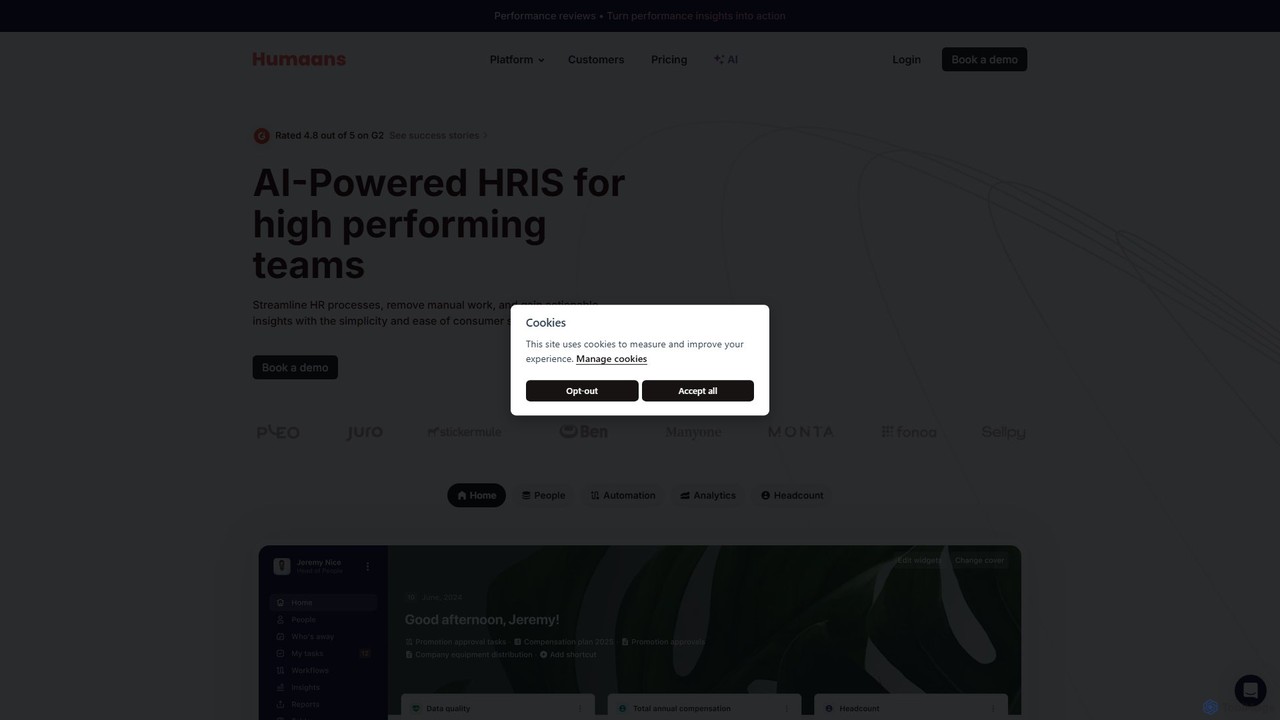
Humaans is an AI-powered Human Resource Information System (HRIS) designed for high-performing, growing teams. It centralizes all employee data, automates HR processes like onboarding and offboarding, and provides actionable insights through powerful analytics. Featuring an AI companion, it streamlines workflows and enhances employee experience.
About Human Resources Information System
Human Resources Information System (HRIS) tools are integrated software solutions designed to manage and automate core human resources processes and data. These systems centralize employee information, from recruitment to retirement, leveraging technology to streamline administrative tasks and enhance HR efficiency. By providing a unified platform, HRIS enables organizations to improve data accuracy, ensure compliance, and gain strategic insights into their workforce.
Core Functions
- Employee Data Management: Centralized storage and management of employee profiles, contact details, job history, and personal information.
- Payroll & Benefits Administration: Automation of salary processing, tax calculations, deductions, and management of employee benefits plans.
- Time & Attendance Tracking: Digital recording and management of employee work hours, leaves, and absences for accurate payroll and compliance.
- Recruitment & Onboarding: Streamlining applicant tracking, candidate communication, and the new hire onboarding process.
- Performance Management: Tools for setting goals, conducting performance reviews, and tracking employee development.
Applicable Scenarios
HRIS is crucial for businesses of all sizes, particularly those with growing workforces or complex HR needs. Small to medium-sized enterprises (SMEs) use HRIS to professionalize their HR operations, while large corporations leverage it for global workforce management and strategic planning. HR departments, managers, and employees benefit from self-service portals, automated workflows, and comprehensive reporting capabilities.
How to Choose
When selecting an HRIS, consider your organization's specific needs regarding employee count, budget, and desired functionalities. Evaluate the system's scalability, integration capabilities with existing software (e.g., ERP, accounting), user-friendliness, and vendor support. Data security, compliance with local regulations, and the availability of self-service options for employees are also critical factors.

Human Resources Information SystemUse Cases
Automating Payroll Processing and Tax Compliance
HR managers use HRIS to automatically calculate salaries, deductions, and taxes for all employees, ensuring timely and accurate payments while adhering to local and national tax regulations. This significantly reduces manual errors and saves hours of administrative work each pay period, allowing HR teams to focus on more strategic initiatives.
Streamlining Employee Onboarding for New Hires
HR teams leverage HRIS to create a seamless onboarding experience, allowing new employees to digitally complete paperwork, access company policies, and enroll in benefits before their first day. This accelerates integration, reduces administrative burden, and ensures compliance with necessary documentation, improving the overall new hire experience.
Centralizing Employee Data for Comprehensive Reporting
Business leaders and HR professionals utilize HRIS to consolidate all employee information—from demographics to performance reviews—into a single database. This enables the generation of detailed reports on workforce analytics, talent trends, and compliance, supporting strategic decision-making and providing a holistic view of the organization's human capital.
Facilitating Performance Management and Goal Tracking
Managers use HRIS modules to set individual and team goals, conduct regular performance reviews, and track employee progress against objectives. The system provides a structured framework for feedback, development planning, and identifying high-potential talent, fostering a culture of continuous improvement and growth within the organization.
Managing Time Off Requests and Attendance Records
Employees submit leave requests directly through the HRIS self-service portal, which managers can approve or deny. The system automatically updates attendance records, tracks accrued leave balances, and ensures compliance with company leave policies, reducing manual tracking and potential discrepancies in time management.
Administering Employee Benefits and Open Enrollment
HR administrators use HRIS to manage various employee benefits programs, including health insurance, retirement plans, and wellness initiatives. During open enrollment periods, employees can review and select their benefits packages directly within the system, simplifying the process for both HR and staff and ensuring accurate record-keeping.