Humaans
Humaans is an AI-powered Human Resource Information System (HRIS) designed for high-performing, growing teams. It centralizes all employee …
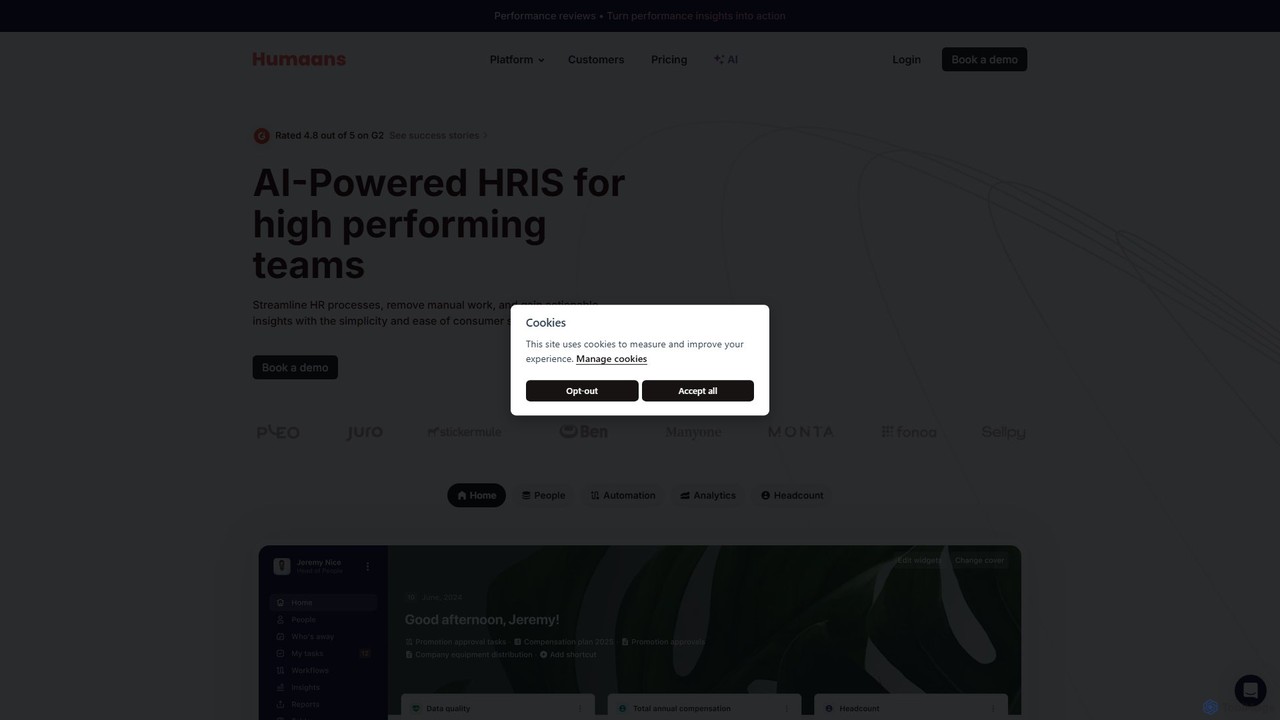
Humaans is an AI-powered Human Resource Information System (HRIS) designed for high-performing, growing teams. It centralizes all employee data, automates HR processes like onboarding and offboarding, and provides actionable insights through powerful analytics. Featuring an AI companion, it streamlines workflows and enhances employee experience.
About Hr Analytics
HR Analytics tools are AI-powered platforms designed to analyze workforce data and generate actionable insights. They utilize machine learning and statistical models to uncover patterns in the entire employee lifecycle, from recruitment to retention. These tools empower organizations to make data-driven decisions, optimizing talent strategies, reducing attrition, and improving overall workforce productivity. As a specialized application of business analytics, HR Analytics focuses exclusively on transforming people-related data into strategic assets.
Core Features
- Predictive Attrition Analysis: Forecasts which employees are at a high risk of leaving, enabling proactive retention efforts.
- Talent Acquisition Optimization: Analyzes recruitment funnels to identify the most effective hiring sources and reduce time-to-hire.
- Performance & Productivity Insights: Correlates various data points to identify the key drivers of high performance and engagement.
- Compensation & Pay Equity Analysis: Audits salary data to ensure fair compensation practices and identify potential biases.
- Sentiment Analysis: Processes employee feedback from surveys and communications to gauge morale and identify cultural trends.
Use Cases
HR Analytics tools are primarily used by HR managers, talent acquisition specialists, compensation analysts, and business leaders in mid-to-large enterprises. They are particularly valuable in industries with high employee turnover or complex talent needs, such as technology, consulting, and retail. Common applications include building succession plans by identifying high-potential employees and optimizing training programs by pinpointing skill gaps across the organization.
How to Choose
When selecting an HR Analytics tool, first consider its data integration capabilities with your existing HRIS, ATS, and payroll systems. Evaluate the transparency and customizability of its predictive models. Ensure the platform adheres to strict data privacy and security standards like GDPR. Finally, assess the user interface for ease of use, particularly the quality of its dashboards and reporting features for non-technical HR professionals.

Hr AnalyticsUse Cases
Predicting and Reducing Employee Turnover
An HR manager at a large tech company uses an HR Analytics tool to proactively combat attrition. The platform integrates data from performance reviews, project assignments, compensation history, and manager feedback. Its AI model identifies employees with a high probability of leaving in the next quarter, flagging non-obvious patterns like a decline in communication activity or changes in work hours. Based on these predictions, the HR team can initiate targeted retention strategies, such as career development conversations or salary adjustments, before an employee decides to resign, significantly reducing turnover costs.
Optimizing Recruitment Channel Effectiveness
A talent acquisition team struggles to allocate their budget across multiple job boards and social media platforms. By using an HR Analytics tool, they can track the entire candidate journey from application to hire. The tool analyzes data to reveal which channels produce not only the most applicants, but also the highest quality candidates who pass interviews and accept offers. This allows the team to reallocate their spending to the most effective channels, improving the quality of hires and reducing the overall cost-per-hire.
Ensuring Fair Compensation and Pay Equity
A compensation analyst is tasked with conducting a company-wide pay equity audit. Using an HR Analytics platform, they can analyze salary data against variables like role, seniority, location, performance ratings, and demographics. The tool automatically flags statistically significant pay gaps that may indicate bias. This data-driven approach allows the company to make targeted salary adjustments, demonstrate a commitment to fairness, and reduce legal risks associated with pay discrimination, all while streamlining a traditionally complex and time-consuming process.
Identifying High-Potential Employees for Leadership
A large organization needs to build a robust succession plan. Instead of relying solely on manager nominations, they use an HR Analytics tool to identify high-potential employees objectively. The system analyzes a combination of performance data, project success rates, 360-degree feedback, and learning agility metrics. It generates a ranked list of potential future leaders, uncovering hidden talent that might have been overlooked. This allows the L&D department to create personalized development plans and ensure a healthy pipeline of talent for critical roles.
Analyzing Employee Engagement Survey Insights
After a company-wide engagement survey, an HR team is faced with thousands of open-ended comments. Manually coding this data is impossible. They upload the raw data into an HR Analytics tool with natural language processing (NLP) capabilities. The tool automatically performs sentiment analysis and topic modeling, identifying key themes like 'work-life balance concerns' and 'desire for more training'. It visualizes this data in dashboards, allowing HR to quickly pinpoint problem areas by department or location and develop targeted action plans to improve employee morale.
Strategic Workforce Planning and Skill Gap Analysis
A strategic HR business partner needs to align the company's talent strategy with its five-year growth plan. They use an HR Analytics tool to model future workforce needs based on projected revenue growth and market expansion. The platform then analyzes the current workforce's skills inventory against these future requirements, clearly identifying critical skill gaps. This analysis provides a clear roadmap for the L&D and talent acquisition teams, informing decisions on whether to upskill existing employees or hire externally to meet future business goals.