Hr Best in category 1 results Corporate Training AI Tool

Popular AI tools in the Corporate Training field of Hr include Sana, etc., helping you quickly improve efficiency.

Sana

Sana

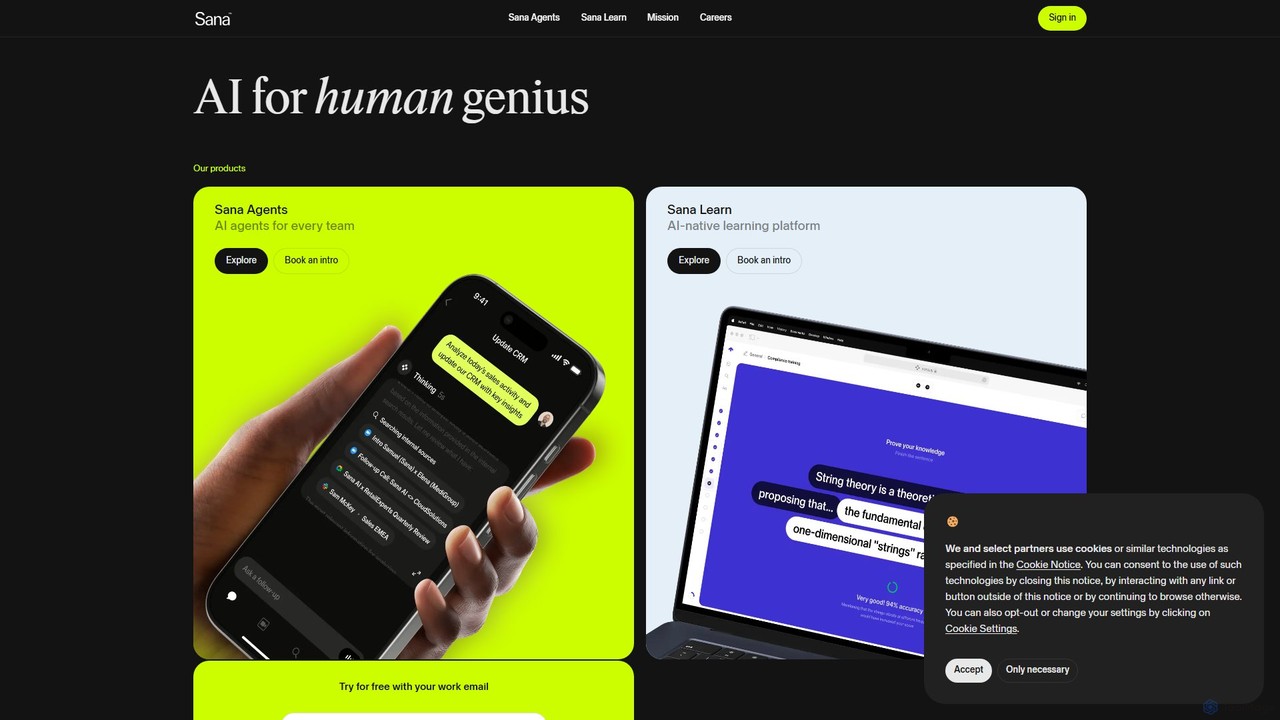
Sana is an all-in-one AI platform designed for the workplace. It combines a powerful knowledge assistant with an …

496.5K

About Corporate Training

AI Corporate Training tools are a class of platforms that use artificial intelligence to create, personalize, and deliver employee learning experiences. These tools leverage generative AI and machine learning to automatically produce course materials, adapt content to individual learning styles, and analyze skill gaps. Their primary value lies in making corporate education more scalable, engaging, and directly tied to performance outcomes. This approach moves beyond static content libraries to dynamic, data-driven development programs.

Core Features

  • AI-Powered Content Generation: Automatically creates training modules, quizzes, video scripts, and role-playing scenarios from source documents or simple prompts.
  • Personalized Learning Paths: Dynamically adjusts curriculum based on an employee's role, existing knowledge, and performance data.
  • Intelligent Skill Gap Analysis: Uses AI-driven assessments to identify knowledge gaps at individual, team, and organizational levels.
  • Interactive Simulations: Provides realistic, AI-powered role-playing for skills like sales, customer service, and leadership without human intervention.
  • Performance Analytics: Measures training effectiveness by correlating learning activities with on-the-job performance metrics and business KPIs.

Applicable Scenarios

These tools are widely used by Learning & Development (L&D) departments, HR managers, and sales enablement teams. Industries such as technology, finance, and retail deploy them for scalable employee onboarding, compliance training, and leadership development. For example, a global sales team can use AI simulations to practice new product pitches in multiple languages.

Selection Criteria

When choosing an AI Corporate Training tool, evaluate the quality and relevance of its AI-generated content. Assess the sophistication of its personalization engine and the depth of its analytics. Consider its ability to integrate with your existing HRIS or LMS platforms. Also, review the user interface for both administrators and learners to ensure ease of use.

Corporate TrainingUse Cases

1

Automated Onboarding for New Hires

An HR manager at a fast-growing tech company needs to onboard 20 new employees each month. Using an AI Corporate Training tool, they create a standardized yet personalized onboarding program. The AI generates modules on company culture, product knowledge, and compliance based on internal documents. It then assigns a unique learning path to each new hire based on their role (e.g., engineering, sales, marketing), tracks their progress, and automatically flags areas where individuals are struggling, allowing for timely intervention. This reduces the manual workload for the HR team by over 60% and ensures a consistent, high-quality onboarding experience for everyone.

2

Developing Sales Skills with AI Role-Play

A sales director wants to improve their team's negotiation and objection-handling skills. They use an AI training platform to create realistic customer simulations. Sales representatives can practice conversations with an AI avatar that mimics different customer personas, from skeptical to price-sensitive. The AI provides instant, private feedback on their tone, word choice, and strategy, allowing them to refine their approach in a safe environment. The platform's analytics show the director which skills the team struggles with most, enabling targeted group coaching sessions. This leads to a 15% increase in deal closure rates within one quarter.

3

Scalable Compliance Training for a Global Workforce

A compliance officer at a multinational corporation is responsible for ensuring all 10,000 employees complete annual data privacy training. Using an AI platform, they upload the company's policy documents. The AI instantly generates an interactive training course, complete with quizzes and scenarios, and translates it into five languages. The system automatically enrolls employees, sends reminders, and tracks completion rates. The AI also identifies common areas of misunderstanding across the organization by analyzing quiz results, allowing the compliance officer to issue targeted clarifications. This ensures 100% compliance and provides auditable records, while saving hundreds of hours of administrative work.

4

Personalized Leadership and Soft Skills Coaching

A Learning and Development (L&D) specialist wants to provide personalized coaching for 50 mid-level managers. Instead of hiring expensive external coaches for everyone, they use an AI coaching tool. Each manager interacts with an AI coach through chat or voice, discussing real-world challenges like giving difficult feedback or managing team conflicts. The AI provides guidance, suggests frameworks, and helps them practice conversations. The L&D specialist receives anonymized, aggregated data on common leadership challenges, which informs the design of future workshops. This hybrid approach provides scalable, on-demand coaching and makes professional development more accessible and consistent.

5

Rapid Upskilling for Technical Teams

A software development manager needs to get their team of 30 engineers proficient in a new cloud computing platform within two weeks for a critical project. They use an AI training tool and provide it with the platform's official documentation. The AI instantly structures a comprehensive curriculum, creates hands-on coding exercises, and generates a knowledge base chatbot for instant answers to technical questions. The personalized paths allow senior engineers to skip basics while junior members get more foundational content. This accelerates the learning process, ensuring the team is project-ready in record time, far faster than traditional instructor-led training would allow.

6

Analyzing Training Impact on Business KPIs

The Head of L&D at a retail company wants to prove the ROI of their customer service training program. They integrate their AI training platform with their CRM and customer satisfaction (CSAT) survey tools. The platform analyzes the correlation between employees completing specific training modules (e.g., 'De-escalation Techniques') and their subsequent performance metrics (e.g., improved CSAT scores, reduced call resolution times). The AI generates a dashboard showing a clear link: agents who completed the advanced training saw a 10-point increase in their CSAT scores on average. This data provides concrete evidence of the training's value, helping secure a larger budget for the next fiscal year.

Corporate TrainingFrequently Asked Questions