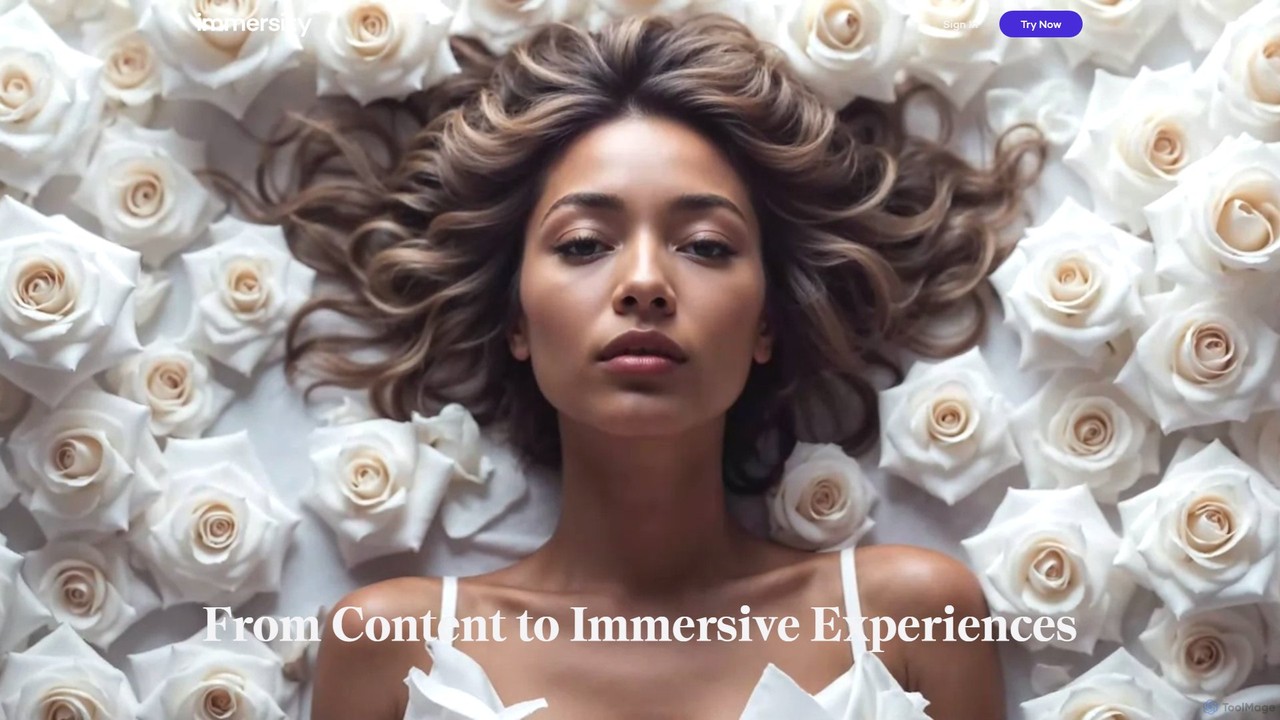
Immersity
Immersity is an AI-powered platform that converts 2D images and videos into immersive 3D experiences. It generates depth …
Immersity is an AI-powered platform that converts 2D images and videos into immersive 3D experiences. It generates depth and motion, allowing users to create animated 3D photos, videos, and specialized content like Apple Music Album Motion. Ideal for artists, marketers, and creators seeking to add a dynamic dimension to their visuals without complex 3D software.
About 3D Conversion
AI 3D Conversion tools are a specialized category of software that automatically generate three-dimensional models from 2D inputs like images, text, or videos. Leveraging advanced techniques such as photogrammetry, NeRFs (Neural Radiance Fields), and generative models, these tools interpret visual or textual data to construct geometric shapes and textures. This technology dramatically accelerates the creation of 3D assets, making it accessible beyond traditional 3D artists. It provides a powerful bridge between two-dimensional concepts and immersive three-dimensional worlds.
Core Features
- Image-to-3D: Generates a 3D mesh and texture from a single or multiple photographs of an object.
- Text-to-3D: Creates 3D models based on descriptive text prompts, ideal for rapid prototyping.
- Video-to-3D: Reconstructs 3D scenes or objects by analyzing motion and perspective from video footage.
- Texture Generation: Automatically creates or applies realistic surface textures to the generated 3D models.
- Format Export: Allows exporting models in standard formats like OBJ, FBX, and glTF for use in other software.
Use Cases
These tools are widely used in e-commerce for creating interactive product viewers, in game development for rapid asset prototyping, and in AR/VR for building immersive experiences. They also serve industries like architecture for quick visualizations and digital heritage for preserving artifacts.
How to Choose
When selecting a 3D Conversion tool, consider the supported input types (image, text, video). Evaluate the quality and detail of the output models and ensure it offers necessary export formats (e.g., glTF, FBX) for your workflow. Also, assess the balance between ease of use for beginners and advanced controls for professionals.

3D ConversionUse Cases
E-commerce Product Visualization
An e-commerce manager for a fashion brand needs to create engaging, interactive online shopping experiences. Instead of relying on static 2D photos, they use an AI 3D Conversion tool to process images of their new handbag line. By uploading multiple photos of each product from different angles, the tool automatically generates a detailed, textured 3D model. This model is then embedded into the product page, allowing customers to rotate, zoom, and inspect the handbag from all sides. This significantly enhances user engagement and can lead to higher conversion rates by providing a more realistic product preview.
Rapid Prototyping for Game Assets
An indie game developer is working on a fantasy RPG and needs to quickly populate the world with various props like chests, barrels, and weapons. Using a Text-to-3D conversion tool, the developer can simply type prompts like "ornate wooden treasure chest with iron fittings" or "glowing magical sword". The AI generates a base 3D model in seconds. While these models may require further refinement in a traditional 3D software, this process allows for extremely fast iteration and concept validation, saving hundreds of hours compared to modeling each asset from scratch. It helps establish the game's visual style early in development.
Creating Content for AR/VR Experiences
A marketing agency is developing an augmented reality (AR) application for a furniture client, allowing customers to visualize products in their own homes. To do this, they need 3D models of the entire furniture catalog. Using an Image-to-3D tool, they take high-quality photos of each chair, table, and sofa from multiple angles. The AI processes these images and generates realistic, true-to-scale 3D models in a mobile-friendly format like glTF. This avoids the costly and time-consuming process of manually modeling each item, enabling the agency to quickly build a large library of AR-ready assets for their immersive application.
Digital Archiving of Cultural Artifacts
A museum curator wants to create a digital archive of a collection of fragile ancient pottery. Physical handling must be minimized to prevent damage. By using a Video-to-3D or photogrammetry-based tool, the curator can simply walk around each artifact while recording a high-resolution video. The AI software then analyzes the video frames, calculates depth and perspective, and reconstructs a highly detailed 3D model of the pottery. This digital twin can be used for academic research, virtual museum exhibits, and educational purposes, preserving the object's form and texture for future generations without risking the original piece.
Conceptual Architectural Visualization
An architect needs to quickly present a building concept to a client. Instead of spending days creating a detailed 3D model, they can use an AI tool to convert their 2D sketches or floor plans into a basic 3D massing model. By uploading a drawing of the building's facade, the AI can extrude the shapes and even suggest basic textures. This allows the client to get a feel for the building's volume, scale, and form early in the design process. It serves as an excellent starting point for more detailed modeling and facilitates clearer communication between the architect and the client.
3D Character Creation from Sketches
A character designer for an animated short film has created several 2D concept sketches of the protagonist. To move to the 3D modeling stage, they use an AI 3D conversion tool that specializes in character generation. By uploading the front and side view sketches, the AI interprets the 2D drawings to generate a symmetrical base 3D mesh that captures the character's proportions and key features. This base mesh is not the final product but provides a solid foundation for a 3D artist to begin sculpting details, adding textures, and preparing the model for rigging and animation, significantly shortening the initial modeling phase.