ToolMage
Sign in

Best 2 Ai Image Generators for Image

Popular Ai Image Generators in Image include ourdream.ai and Createspace, helping you work more efficiently.

Createspace

Createspace

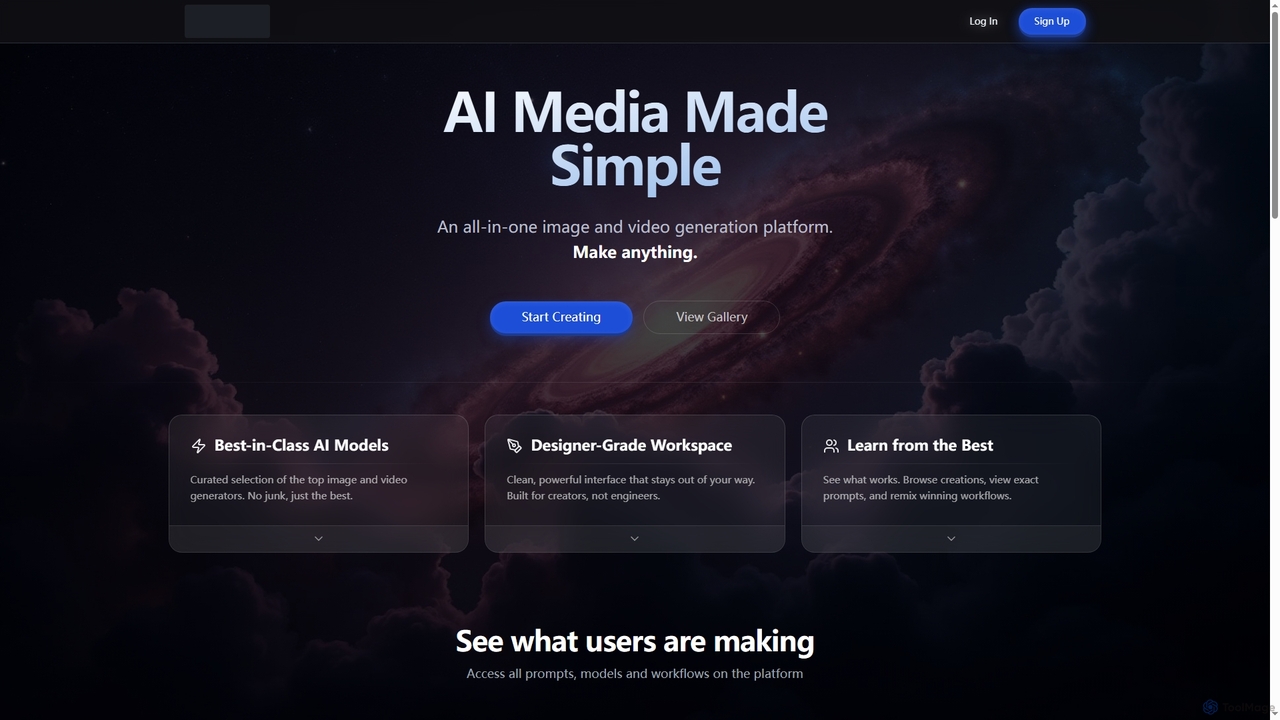
Createspace is an all-in-one AI media generation platform, offering a curated selection of top-tier image and video models. It provides a clean, intuitive workspace designed for creators to easily generate, compare, and remix content. Users can draw inspiration from a community gallery with accessible prompts and workflows.

Generative Art
Visits 5.4KFavorites 133Likes 124
ourdream.ai
Freemium

ourdream.ai

ourdream.ai is an AI companion playground offering unlimited chat, image, and video generation. Create your perfect AI girlfriend or companion, customize their personality and appearance, and engage in immersive role-playing and conversation.

Adult
Visits 46.6MFavorites 135Likes 132

About Ai Image Generators

AI Image Generators are AI-powered tools that transform textual descriptions, sketches, or other inputs into unique visual content. Leveraging advanced deep learning models like Generative Adversarial Networks (GANs) and Diffusion Models, they enable users to create high-quality images, illustrations, and digital art from simple prompts. These tools democratize visual creation, allowing anyone to produce stunning visuals for various applications without extensive design skills, significantly accelerating creative workflows in the broader 'Image' category.

Core Features

  • Text-to-Image Generation: Convert descriptive text prompts into diverse visual outputs, from photorealistic scenes to abstract art, offering unparalleled creative freedom.
  • Image-to-Image Transformation: Modify existing images based on new prompts, apply stylistic transfers, or generate variations while preserving core elements.
  • Style Transfer & Customization: Apply a wide array of artistic styles, adjust parameters like mood, lighting, composition, and color palettes to fine-tune the output.
  • Upscaling & Enhancement: Improve the resolution and detail of generated images, making them suitable for professional printing or high-definition digital display.
  • Batch Generation & Variation: Efficiently create multiple image variations from a single prompt or generate images in bulk, ideal for exploring different concepts or large-scale projects.

Use Cases

AI Image Generators are widely adopted by content creators, marketers, game developers, and artists across various industries. They are used for rapidly prototyping visual concepts, generating unique assets for marketing campaigns and social media, designing characters and environments for games, and creating personalized digital art. These tools significantly accelerate the visual production pipeline, enabling faster iteration and diverse creative exploration.

How to Choose

When selecting an AI Image Generator, consider the quality and realism of its output, the flexibility of its customization options, and the range of available artistic styles and models. Evaluate its ease of use, integration capabilities with other design software, and the pricing model, including credit systems or subscription tiers. Additionally, assess the community support, the speed of image generation, and the ethical guidelines regarding data usage and content moderation.

Featured tool rankings

Ai Image Generators use cases

1

Generating Marketing Campaign Visuals

Marketing professionals can leverage AI image generators to quickly produce a wide array of visuals for advertising campaigns, social media posts, and website banners. By inputting specific product descriptions, brand aesthetics, or target audience demographics, they can generate unique images that resonate with their audience, test different creative concepts, and maintain a consistent brand identity across various platforms, saving significant time and resources compared to traditional graphic design.

2

Concept Art for Game Development

Game designers and artists utilize AI image generators to rapidly prototype concept art for characters, environments, and in-game assets. By providing textual descriptions of desired elements, they can generate numerous visual iterations in minutes, exploring different styles, moods, and compositions. This accelerates the initial design phase, allowing for quicker feedback loops and more efficient development of visually rich game worlds.

3

Creating Unique Blog & Article Illustrations

Content creators and bloggers can use AI image generators to produce custom, copyright-free illustrations and featured images for their articles and blog posts. Instead of relying on stock photos or hiring illustrators, they can input keywords related to their content to generate unique visuals that perfectly match the article's theme, enhancing engagement and making their content stand out visually.

4

Fashion Design & Product Visualization

Fashion designers and product developers can employ AI image generators to visualize new clothing lines, accessories, or product prototypes. By describing materials, patterns, colors, and styles, they can generate realistic mock-ups and design variations. This allows for rapid iteration on designs, presentation to stakeholders, and early market testing without the need for physical samples, streamlining the design and production process.

5

Personalized Digital Art & Avatars

Individual artists and enthusiasts can use AI image generators to create personalized digital art, unique avatars, or custom profile pictures. By inputting personal photos, stylistic preferences, or imaginative concepts, they can generate bespoke artworks that reflect their individuality or artistic vision. This offers a new avenue for self-expression and creative exploration, making digital art accessible to a broader audience.

6

Architectural Visualization & Interior Design

Architects and interior designers can utilize AI image generators to quickly visualize design concepts for buildings, rooms, and landscapes. By providing floor plans, material preferences, and desired aesthetics, they can generate photorealistic renderings or stylistic interpretations of their designs. This aids in client presentations, design iteration, and exploring various spatial arrangements and material palettes efficiently.

Ai Image Generators FAQ

What are AI Image Generators?

AI Image Generators are sophisticated software tools that leverage artificial intelligence, primarily deep learning models, to create visual content from various inputs. They can transform text descriptions (text-to-image), existing images (image-to-image), or even sketches into unique, high-quality images, illustrations, or digital art. Their core function is to generate novel visuals that match user prompts, making complex image creation accessible to a wider audience.

How do AI Image Generators work?

AI Image Generators typically work using advanced neural networks, most commonly Diffusion Models or Generative Adversarial Networks (GANs). Diffusion Models learn to generate images by progressively denoising a random noise image into a coherent visual based on a given prompt. GANs consist of two competing networks: a generator that creates images and a discriminator that evaluates their realism. Through this adversarial process, the generator learns to produce increasingly realistic and diverse images that align with user specifications.

What is the difference between AI Image Generators and AI Image Editors?

AI Image Generators focus on creating entirely new images from scratch based on prompts, transforming abstract ideas into visual realities. In contrast, AI Image Editors are designed to modify, enhance, or manipulate existing images. While generators produce novel content, editors refine or alter pre-existing visuals, such as removing backgrounds, adjusting colors, or applying filters. Both fall under the broader 'Image' category but serve distinct creative purposes.

What kind of images can AI Image Generators create?

AI Image Generators are incredibly versatile and can create a vast range of images. This includes photorealistic landscapes, portraits, and objects; various artistic styles like oil painting, watercolor, or pixel art; abstract compositions; concept art for games or films; and even fantastical creatures or scenes. The output quality and style largely depend on the specific model used and the detail of the user's prompt, allowing for immense creative exploration.

How to choose the best AI Image Generator for my needs?

Choosing the best AI Image Generator depends on your specific requirements. Consider the quality and style of the images it produces (e.g., photorealistic vs. artistic), the ease of use of its interface, and the flexibility of its customization options. Evaluate the pricing model, whether it's subscription-based or credit-based, and check for integration capabilities with your existing workflows. Also, look into community support, the speed of generation, and the ethical considerations of the tool's data training.