Nano-Banana
Nano-Banana is an advanced online AI image editor that empowers users to create and modify images with text …
Nano-Banana is an advanced online AI image editor that empowers users to create and modify images with text prompts, offering features like generation, inpainting, style transfer, and outpainting. It ensures character consistency and scene coherence with fast, studio-quality results.
Pixelshot
Pixelshot is an AI product photography tool that transforms ordinary product images into professional, studio-quality visuals in seconds. …
Pixelshot is an AI product photography tool that transforms ordinary product images into professional, studio-quality visuals in seconds. It offers 100+ templates, custom prompt generation, and plain language editing to create stunning photos for e-commerce, marketing, and social media without requiring photography skills.
Banana Editor
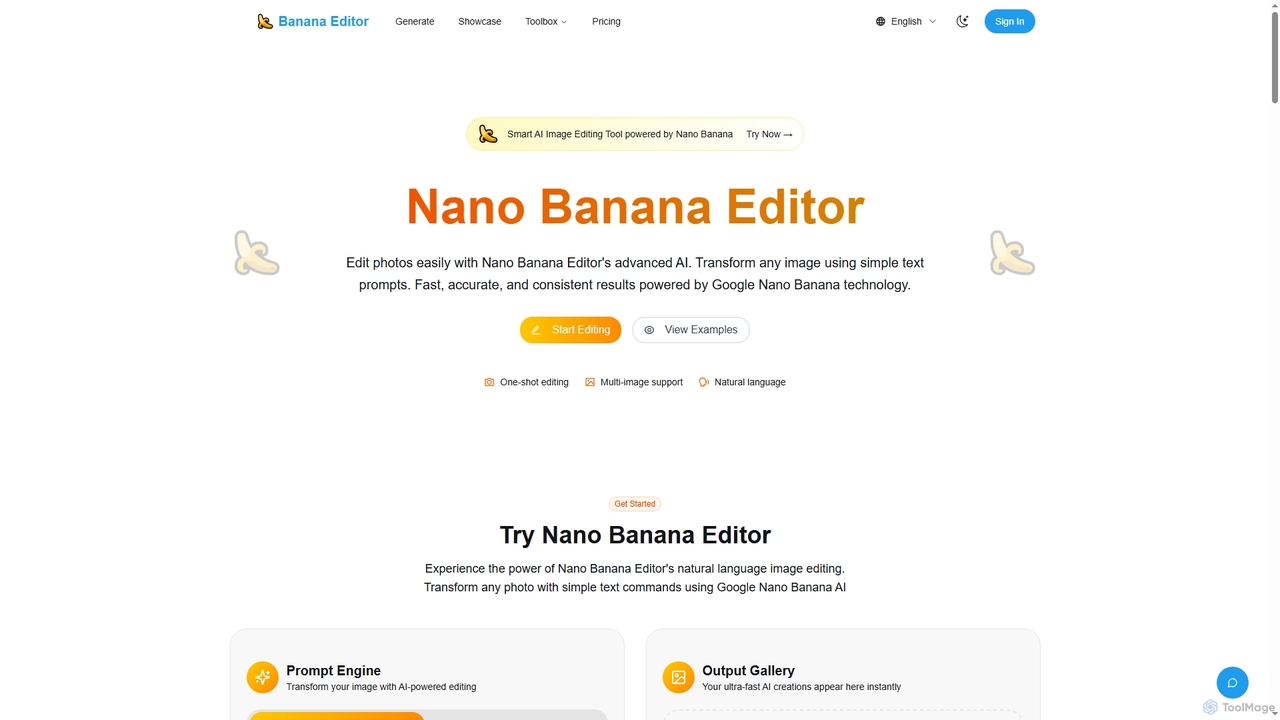
Banana Editor is an advanced AI image editing tool powered by Google Nano Banana technology. It allows users …
Banana Editor is an advanced AI image editing tool powered by Google Nano Banana technology. It allows users to transform and enhance photos using simple natural language text prompts, ensuring fast, accurate, and consistent results for various creative and commercial applications.
About Generative
Generative AI tools are a cutting-edge category of AI-powered image tools specifically designed to create entirely new visual content or profoundly transform existing images. Unlike traditional image editing software that primarily modifies existing pixels, these tools leverage advanced deep learning models, such as Generative Adversarial Networks (GANs) and diffusion models, to synthesize novel visual elements from various inputs. Whether it's generating photorealistic scenes from text prompts, applying complex artistic styles, or intelligently extending image boundaries, generative tools offer unprecedented creative possibilities for artists, designers, marketers, and developers. They fundamentally shift the paradigm from merely editing existing visuals to generating entirely new ones, enabling rapid prototyping, boundless creative exploration, and efficient production of diverse visual assets.
Core Features
- Text-to-Image Generation: Creating diverse and high-quality images, illustrations, or photorealistic scenes directly from textual descriptions or prompts.
- Image-to-Image Transformation: Applying specific styles, textures, or complex modifications to an existing image based on a reference image, sketch, or textual prompt.
- Inpainting & Outpainting: Intelligently filling missing or unwanted parts within an image (inpainting) or seamlessly extending its boundaries with contextually relevant content (outpainting).
- Object Generation & Replacement: Seamlessly adding new objects, characters, or elements into an image, or swapping existing ones, based on detailed descriptions.
- Style Transfer: Applying the distinct artistic style of one image (e.g., a famous painting) to the content of another photograph or illustration, creating unique visual fusions.
Applicable Scenarios
Generative AI tools are revolutionizing workflows across various creative and commercial fields. They are indispensable for graphic designers seeking rapid concept iteration, allowing them to explore countless design variations in minutes. Marketing professionals utilize them to produce unique advertising visuals and social media content without the need for expensive photoshoots or extensive manual design. Furthermore, game developers and architects leverage these tools to generate diverse assets like character variations, environmental elements, or realistic architectural visualizations, significantly accelerating their design and production pipelines.
How to Choose
When selecting a Generative AI tool, it is crucial to consider several key factors. Evaluate the quality and fidelity of its output, assessing whether it meets your aesthetic and technical standards (e.g., photorealistic, artistic, abstract). Examine the range and flexibility of its underlying generation models, and the level of granular control it offers over the creative process. Additionally, consider its integration capabilities with your existing creative software, the transparency and fairness of its pricing model, and the availability of community support or comprehensive tutorials. Prioritize tools that align precisely with your specific creative goals, technical requirements, and ethical considerations regarding AI-generated content.

GenerativeUse Cases
Concept Art & Game Asset Generation
Game developers and concept artists utilize generative AI to rapidly produce diverse visual ideas for characters, environments, and props. By inputting text prompts or rough sketches, they can generate hundreds of variations in minutes, significantly accelerating the initial design and iteration phases of game development or film production.
Marketing & Advertising Visuals Creation
Marketing teams leverage generative AI to create unique and engaging visuals for campaigns, social media, and product advertisements. Instead of relying on stock photos or expensive photoshoots, they can describe desired scenes or product placements, generating custom, high-quality images that resonate with target audiences and maintain brand consistency.
Personalized Content for Digital Media
Content creators, bloggers, and social media managers use generative tools to produce tailored images for articles, posts, and presentations. This allows them to generate visuals that perfectly match their narrative or theme, enhancing audience engagement and reducing the time spent searching for or creating original graphics.
Fashion Design & Virtual Product Prototyping
Fashion designers employ generative AI to visualize new apparel designs, explore fabric patterns, and create virtual try-on experiences. This enables rapid prototyping and iteration of clothing lines, allowing designers to experiment with countless styles and materials digitally before committing to physical production, saving costs and time.
Architectural & Interior Design Visualization
Architects and interior designers use generative AI to transform basic sketches or 3D models into realistic renderings of buildings, rooms, or landscapes. This helps clients visualize proposed designs with different materials, lighting, and furniture arrangements, facilitating better communication and faster decision-making in the design process.
E-commerce Product Image Enhancement
Online retailers utilize generative AI to create compelling lifestyle product images from simple studio shots. By placing products in various realistic or imaginative settings, they can generate diverse marketing assets that showcase products in context, attracting more customers and improving conversion rates without the need for elaborate staging.