ToolMage
Sign in

Best 1 Metadata Management AI tools for Image Editing

Popular Metadata Management AI tools in Image Editing include Aimodified, helping you work more efficiently.

Aimodified
Free

Aimodified

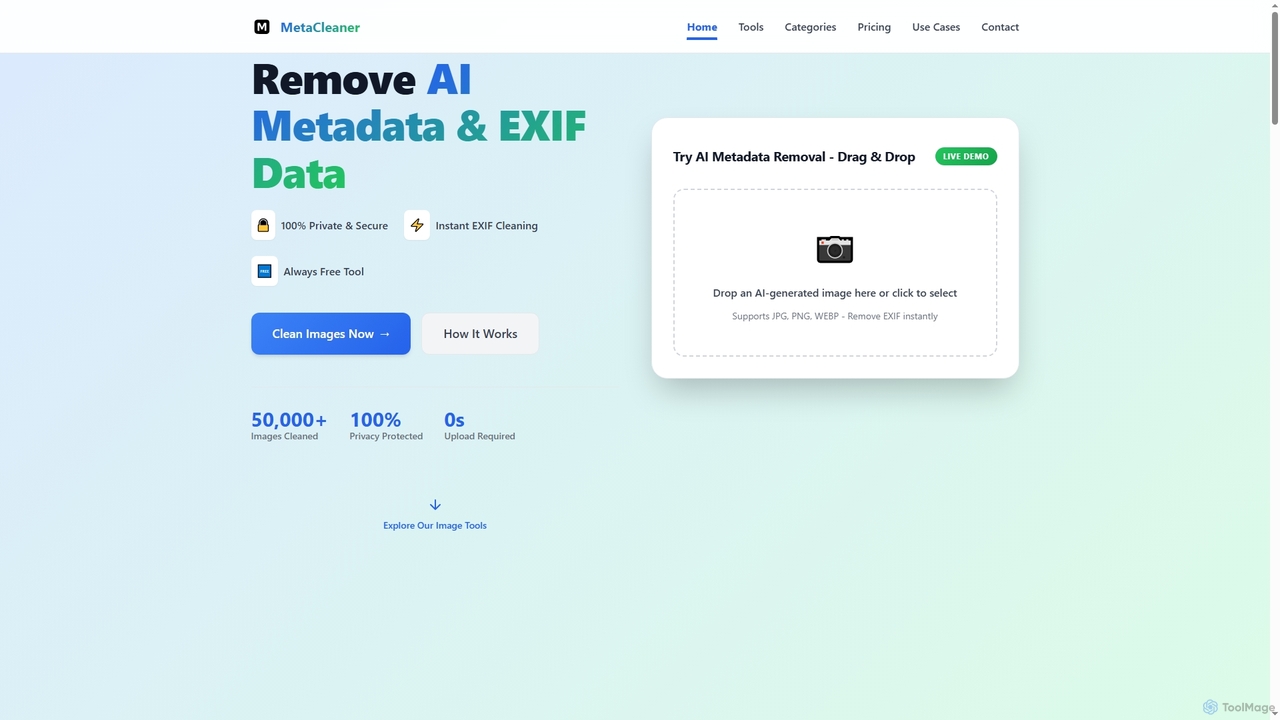
Aimodified is a free, browser-based tool designed to remove AI-generated metadata and EXIF data from images. It ensures privacy and helps content creators bypass AI detection on social media platforms like Pinterest, offering instant cleaning for single or batch image processing.

Post Processing
Visits 6KFavorites 117Likes 119

About Metadata Management

Metadata Management tools are specialized AI-powered solutions designed to organize, enrich, and control the descriptive information associated with digital assets, particularly images. These tools leverage AI to automate the extraction, editing, and application of metadata like EXIF, IPTC, and XMP data. Their primary value lies in enhancing asset discoverability, ensuring compliance, and streamlining workflows within large image collections. They are essential for anyone managing significant volumes of visual content, providing structure and context beyond the visual data itself.

Core Features

  • Automated Metadata Extraction: Automatically identifies and extracts embedded data such as camera settings, date, and location from images.
  • Batch Editing & Tagging: Allows users to efficiently modify, add, or remove metadata fields, keywords, and tags across multiple images simultaneously.
  • Copyright & Licensing Management: Embeds and manages intellectual property rights, usage terms, and creator information directly within image files.
  • Geotagging & Location Data: Facilitates the addition or correction of geographical coordinates and location names for visual assets.
  • Metadata Schema & Validation: Supports custom metadata schemas and validates data integrity to ensure consistency and adherence to standards.

Applicable Scenarios

Metadata Management tools are indispensable for professionals handling extensive digital image libraries. They are widely used by photographers for portfolio organization, marketing teams for brand asset management, and archivists for long-term digital preservation. These tools ensure that images are not just visually appealing but also intelligently structured and easily retrievable based on their underlying data.

How to Choose

When selecting a Metadata Management tool, consider its compatibility with various metadata standards (EXIF, IPTC, XMP) and its batch processing capabilities for efficiency. Evaluate its integration options with existing Digital Asset Management (DAM) systems or image editing software. Assess the user interface for ease of use and the level of automation offered by its AI features, ensuring it aligns with your workflow and technical expertise.

Metadata Management use cases

1

Organizing Professional Photography Portfolios

Professional photographers can use Metadata Management tools to meticulously tag thousands of images with detailed EXIF data, custom keywords (e.g., client name, project type, location), and copyright information. This allows for rapid searching and filtering of specific shots, ensuring that clients can quickly find relevant images and that intellectual property is protected. It streamlines the process of preparing images for submission or online display, saving significant time compared to manual organization.

2

Managing Brand Assets for Marketing Campaigns

Marketing teams frequently handle vast libraries of brand images, logos, and campaign visuals. Metadata Management tools enable them to embed usage rights, expiration dates, product IDs, and campaign-specific tags into each asset. This ensures that only approved and current images are used across various channels, preventing brand inconsistencies or legal issues. It significantly improves asset governance and speeds up content deployment for new marketing initiatives.

3

Digital Archiving and Historical Preservation

Institutions like museums, libraries, and historical societies manage vast collections of digitized historical images. Metadata Management tools are critical for embedding rich descriptive metadata, including dates, creators, subjects, and provenance information, into these digital artifacts. This ensures long-term discoverability and contextual understanding for researchers and the public, preserving cultural heritage in a structured and accessible format. It's vital for maintaining the integrity and historical accuracy of digital archives.

4

E-commerce Product Image Optimization

E-commerce businesses often deal with thousands of product images that require consistent and accurate metadata for inventory management and website search. Metadata Management tools allow for batch application of SKUs, product names, color codes, and material descriptions to product photos. This ensures that customers can easily find products through search filters and that backend inventory systems are correctly linked, significantly improving data consistency and operational efficiency for online retailers.

5

Streamlining Media Production Workflows

Media companies, news agencies, and video production houses generate vast amounts of visual content daily. Metadata Management tools are crucial for embedding essential information like photographer credits, event details, location, and keywords into images and video frames. This allows editors and journalists to quickly locate specific assets for stories, ensuring timely publication and proper attribution. It significantly accelerates content discovery and retrieval within fast-paced media production environments.

6

Ensuring Legal Compliance for Image Usage

Organizations often face legal risks related to image usage, including copyright infringement and licensing violations. Metadata Management tools allow legal and compliance departments to embed detailed licensing agreements, copyright notices, and usage restrictions directly into image files. This provides an auditable trail of permissions and ensures that all visual assets are used in accordance with legal requirements, minimizing potential liabilities and protecting the organization from costly disputes.

Metadata Management FAQ

What is Metadata Management in the context of image editing?

Metadata Management in image editing refers to the process of organizing, enriching, and controlling the descriptive information associated with digital images. These AI-powered tools go beyond visual manipulation, focusing on data like EXIF (camera settings), IPTC (editorial info), and XMP (custom data). They are crucial for making images searchable, ensuring proper attribution, and maintaining data consistency across large collections, complementing traditional image editing by adding structured information.

Why is metadata important for digital images?

Metadata is crucial for digital images because it provides context, enhances discoverability, and ensures proper management. It allows users to quickly search, filter, and categorize images based on criteria like date, location, subject, or copyright. Without robust metadata, large image collections become unmanageable, leading to lost assets, inefficient workflows, and potential legal issues regarding usage rights. It's the backbone of efficient digital asset management.

How do Metadata Management tools differ from standard image editors?

Standard image editors primarily focus on manipulating the visual aspects of an image, such as color correction, cropping, or applying filters. Metadata Management tools, however, specialize in handling the *information about* the image, not the pixels themselves. While some image editors offer basic metadata editing, dedicated metadata tools provide advanced features like batch processing, custom schema support, and robust validation, making them distinct and complementary to image editing software. They manage the data that makes images discoverable and compliant.

What types of metadata can AI Metadata Management tools handle?

AI Metadata Management tools can handle a wide array of metadata types. This includes technical metadata like EXIF (camera model, aperture, shutter speed), descriptive metadata such as IPTC (keywords, captions, copyright, creator), and administrative metadata like XMP (custom fields, usage rights, licensing). Many tools also support geotagging for location data, facial recognition for tagging individuals, and object recognition for automated keyword generation, significantly enriching the data associated with each image.

Who benefits most from using AI Metadata Management tools?

A wide range of professionals and organizations benefit significantly from AI Metadata Management tools. This includes professional photographers, marketing and creative teams, digital archivists, e-commerce businesses, and media production companies. Anyone managing large volumes of digital images, where efficient search, compliance, and structured data are critical, will find these tools invaluable. They help streamline workflows, reduce manual data entry, and ensure assets are discoverable and correctly attributed.