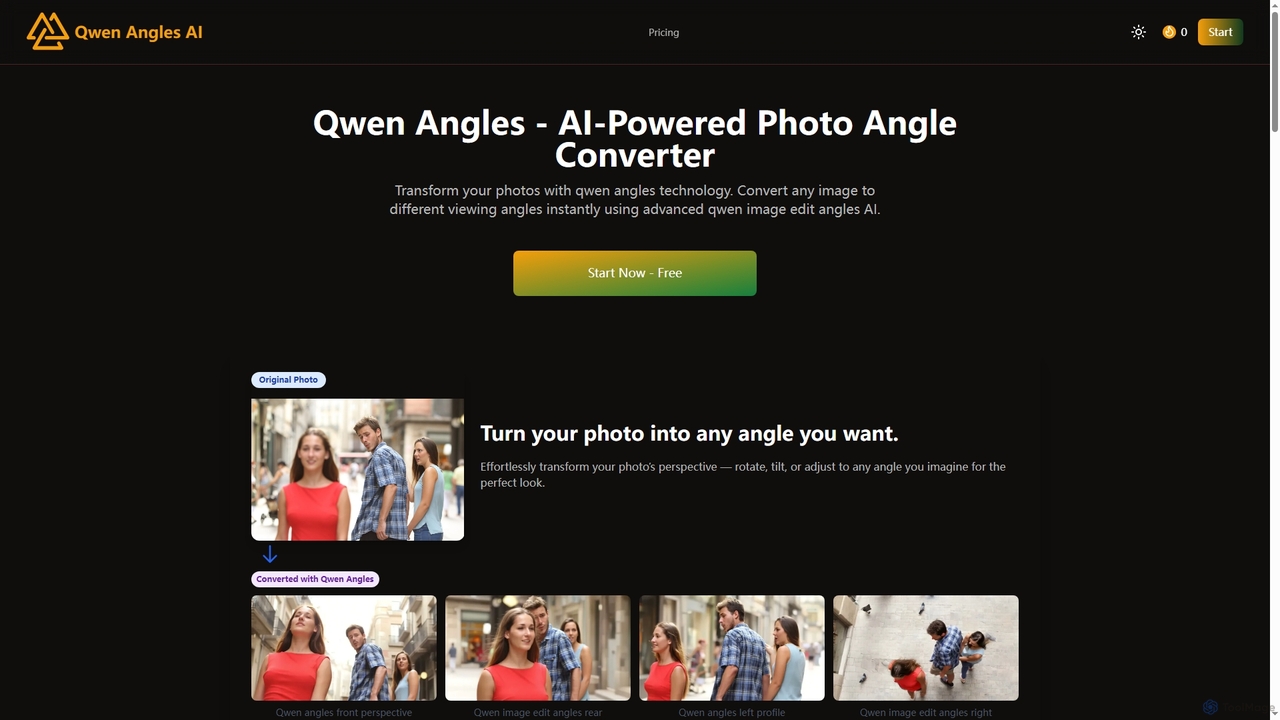
Perspective Transformation tools are AI-powered solutions designed to adjust the viewpoint and spatial relationships within images. These tools leverage advanced algorithms to correct distortions, change angles, and seamlessly integrate elements, making them invaluable for photo editing, graphic design, and architectural visualization. They enable users to manipulate image geometry with precision, transforming flat or skewed visuals into perfectly aligned or artistically altered perspectives.
Core Features
- Automatic Distortion Correction: Intelligently identifies and corrects lens distortions, keystoning, and other perspective errors.
- Viewpoint Adjustment: Allows users to change the apparent angle or height from which an image is viewed.
- Object Integration: Seamlessly warps and aligns objects or textures into existing scenes with correct perspective.
- Grid-based Manipulation: Provides customizable grids for precise manual control over perspective points and planes.
- Batch Processing: Applies perspective corrections or transformations to multiple images simultaneously.
Use Cases
Professionals in photography, graphic design, and architecture frequently utilize perspective transformation tools. Photographers correct skewed building shots, designers integrate product mockups onto angled surfaces, and architects adjust renderings to match specific site views. These tools are crucial for achieving visual accuracy and creative flexibility in various visual media projects.
How to Choose
When selecting a perspective transformation tool, consider its accuracy in distortion correction, the flexibility of viewpoint adjustment controls, and its ability to seamlessly integrate elements. Evaluate the user interface for ease of use, especially for complex manipulations, and check for batch processing capabilities if you handle large volumes of images. Integration with existing design workflows and pricing models are also important factors.