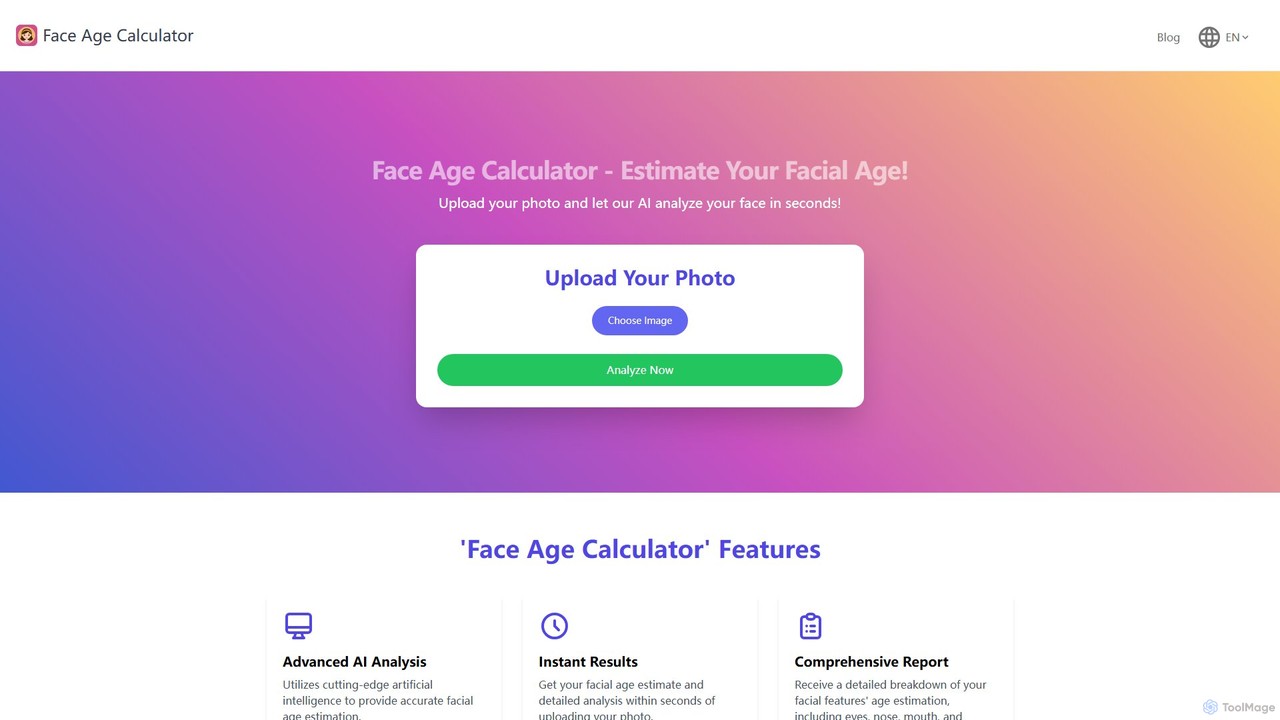
Face Analysis tools are AI-powered solutions designed to detect, analyze, and interpret various characteristics and emotions from human faces in images or videos. Leveraging advanced computer vision and machine learning algorithms, these tools can identify facial features, estimate demographics, and recognize emotional states. They provide valuable insights for applications ranging from security and marketing to healthcare and user experience enhancement, specializing within the broader field of AI image processing.
Core Features
- Facial Feature Detection: Accurately identifies and maps key facial landmarks like eyes, nose, mouth, and eyebrows.
- Demographic Estimation: Predicts age, gender, and ethnicity from facial images with varying degrees of accuracy.
- Emotion Recognition: Analyzes micro-expressions and facial cues to infer emotional states such as happiness, sadness, or anger.
- Identity Verification: Compares facial biometrics for authentication and identification purposes against known databases.
- Liveness Detection: Determines if a presented face is real or a spoof (e.g., photo, video, mask) to prevent fraud.
Use Cases
These tools are widely adopted in sectors requiring detailed facial data. For instance, in retail, they help understand customer demographics and reactions to displays. In security, they enhance access control and surveillance by verifying identities. Additionally, in healthcare, they assist in monitoring patient expressions for pain assessment or emotional well-being, offering a specialized view within image analysis.
How to Choose
When selecting a Face Analysis tool, consider its accuracy in diverse conditions, the range of features it detects (e.g., age, emotion, liveness), its integration capabilities with existing systems, and compliance with privacy regulations like GDPR. Evaluate the API's ease of use, processing speed, and scalability for your specific data volume and ethical considerations.