
ToolMage
Sign in

Best 1 Inspiration AI tools for Image

Popular Inspiration AI tools in Image include Promptworld, helping you work more efficiently.

Promptworld
Free

Promptworld

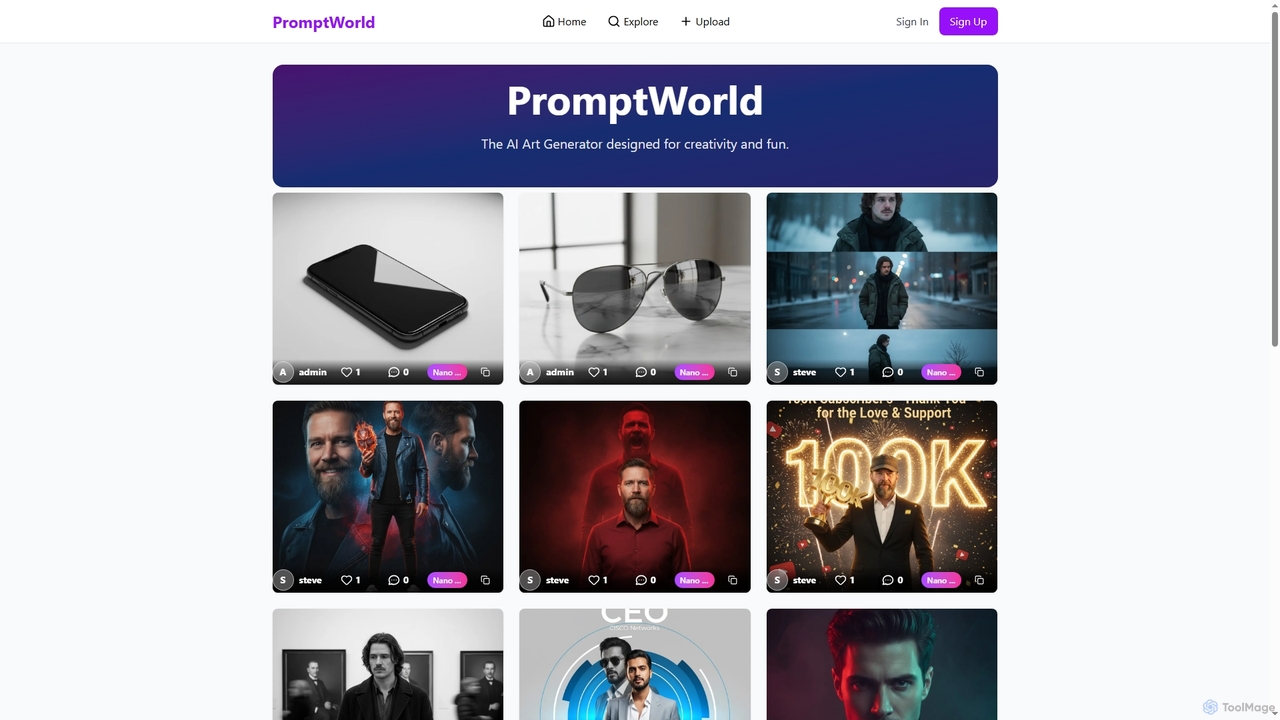
Promptworld is a community-driven platform for AI art enthusiasts. It serves as a central gallery to explore, share, and discover images created with various AI art generators like Midjourney, DALL-E, and Stable Diffusion. Users can browse by category or AI tool and upload their own creations.

Art
Visits 7.6KFavorites 157Likes 164

About Inspiration

AI Inspiration tools are a specialized category of image-related AI designed to spark creativity and overcome artistic blocks. They function by analyzing vast visual datasets to generate novel ideas, detailed text prompts, or unique stylistic combinations. These tools are primarily used in the initial ideation phase of a creative project, providing a conceptual foundation rather than a finished image. Their value lies in offering unexpected perspectives and helping creators explore new aesthetic territories before committing to a final design.

Core Features

  • Conceptual Blending: Merges disparate ideas or keywords to create entirely new visual concepts.
  • Prompt Expansion: Transforms simple user input into rich, descriptive text prompts for use in AI image generators.
  • Style Discovery: Suggests unique artistic styles, color palettes, and compositional arrangements based on a theme.
  • Visual Mood Board Generation: Automatically curates a collage of inspirational images to establish a project's visual direction.

Use Cases

These tools are invaluable for digital artists, graphic designers, game developers, and content creators. For instance, a character designer can use them to brainstorm unique character concepts, while a marketing team can generate fresh visual themes for a new advertising campaign. They serve as a digital muse for any role that relies on a consistent flow of visual creativity.

How to Choose

When selecting an AI Inspiration tool, consider the output format you need—whether it's text prompts, visual concepts, or mood boards. Evaluate the diversity of its style database and its ability to generate truly unique ideas. Also, assess the user interface for ease of use and whether it integrates or complements your existing creative workflow, such as exporting prompts to your preferred AI image generator.

Inspiration use cases

1

Ideation for Digital Art and Character Design

A digital artist is tasked with creating a series of fantasy characters but is facing a creative block. They use an AI Inspiration tool by inputting simple keywords like 'celestial warrior' and 'forest spirit'. The tool generates a variety of detailed text prompts and visual concept boards. For example, it might suggest 'a celestial warrior whose armor is forged from constellations, wielding a spear of solidified moonlight' or blend the concepts to propose 'a forest spirit with bark-like skin and bioluminescent fungi growing like a crown'. This process provides dozens of unique starting points, breaking the creative impasse and allowing the artist to quickly move into the sketching and rendering phase with a clear, original vision.

2

Generating Themes for Marketing Campaigns

A marketing team for a sustainable fashion brand needs a fresh visual theme for their upcoming spring collection campaign. Instead of traditional brainstorming, they use an AI Inspiration tool. They input terms like 'urban nature', 'minimalist', and 'recycled materials'. The AI generates several mood boards, each with a distinct aesthetic. One board combines images of brutalist architecture with delicate plant life, suggesting a 'Concrete Jungle' theme. Another provides a color palette derived from natural dyes and earthy tones. This allows the team to visualize multiple campaign directions in minutes, saving hours of research and discussion, and ensuring a cohesive and innovative visual identity for the launch.

3

Exploring Concepts for Game Environment Design

A game development studio is in the pre-production phase for a new sci-fi RPG. The lead environment artist uses an AI Inspiration tool to explore unique world concepts. They input prompts that blend different genres, such as 'biopunk city grown from giant coral' and 'clockwork desert powered by solar winds'. The AI generates visual concepts and detailed descriptions that help the team visualize these unfamiliar worlds. This process accelerates concept art creation by providing a rich foundation of ideas, ensuring the game's world feels distinct and imaginative right from the start, and helps align the entire art team on a shared creative direction.

4

Developing Visuals for a Book Cover

A book cover designer is working on a historical fiction novel set in ancient Rome but with a magical realism twist. To capture this unique tone, the designer uses an AI Inspiration tool. They input 'Roman mosaic', 'dreamlike atmosphere', and 'hidden constellations'. The tool generates prompts like 'A fragmented Roman mosaic depicting a familiar myth, but the cracks glow with the light of hidden constellations, casting an ethereal haze over the scene.' This specific, evocative prompt gives the designer a powerful starting point, far more targeted than generic stock photos, enabling them to create a cover that is both historically grounded and magically intriguing.

5

Architectural Visualization and Concept Design

An architect is in the early stages of designing a public library and wants to move beyond conventional designs. They use an AI Inspiration tool to generate conceptual directions. By combining terms like 'biophilic design', 'parametric architecture', and 'ancient library of Alexandria', the tool produces unique visual prompts. It might suggest a structure where bookshelves grow organically like trees towards a central, sunlit atrium, or a facade with parametric patterns that mimic ancient scrolls. These AI-generated concepts serve as a catalyst for innovation, helping the architect present a visionary proposal to the client that merges modern technology with natural and historical elements.

6

Crafting Prompts for AI Art Competitions

An AI artist plans to enter a competition with the theme 'Symbiotic Futures'. To gain a competitive edge, they use an AI Inspiration tool specifically for prompt engineering. They input the core theme, and the tool expands it into highly detailed and nuanced prompts. It might suggest adding specific artistic styles ('in the style of Moebius'), technical details ('volumetric lighting, cinematic depth of field'), and conceptual layers ('a city where buildings and flora are a single, interconnected organism'). This process transforms a broad theme into a precise, executable prompt, significantly increasing the chances of generating a unique and award-winning image in their chosen AI image generator.

Inspiration FAQ

What are AI Inspiration tools for images?

AI Inspiration tools are specialized software designed to help creators generate ideas, concepts, and text prompts for visual projects. Unlike AI image generators that create final images, these tools focus on the pre-production or ideation phase. They work by analyzing patterns in art, design, and language to suggest unique combinations of styles, subjects, and themes, effectively acting as a digital brainstorming partner to overcome creative blocks.

How do AI Inspiration tools differ from AI Image Generators?

The primary difference lies in their output and purpose. An AI Inspiration tool's main output is an idea, a concept, or a text prompt—it provides the 'what to create'. An AI Image Generator's output is a finished image—it handles the 'how to create it'. Inspiration tools are used at the beginning of the creative process to find direction, while image generators are used to execute a specific, pre-defined vision. Often, a user will use an inspiration tool to craft a perfect prompt and then input that prompt into an image generator.

Who can benefit from using AI Inspiration tools?

A wide range of creative professionals and hobbyists can benefit from these tools. This includes:

  • Digital Artists & Illustrators: For overcoming artist's block and discovering new styles.
  • Graphic Designers: For brainstorming logos, branding concepts, and campaign visuals.
  • Game Developers: For creating unique concepts for characters, environments, and assets.
  • Content Creators & Marketers: For generating fresh ideas for social media posts and advertisements.
  • Writers & World-builders: For visualizing scenes, characters, and settings to enhance their descriptions.
What are the key features to look for in an AI Inspiration tool?

When choosing an AI Inspiration tool, consider the following features:

  • Quality of Prompt Generation: How well does it translate simple ideas into detailed, creative, and usable text prompts?
  • Conceptual Blending Capability: Can it effectively merge unrelated concepts to spark truly novel ideas?
  • Style and Theme Database: Does it have a diverse and extensive library of artistic styles, artists, and themes to draw from?
  • User Interface (UI): Is the tool intuitive and easy to use, allowing for quick experimentation and iteration?
  • Integration: Does it offer features like exporting prompts or connecting with other creative applications to streamline your workflow?
Can AI Inspiration tools create a final, usable image?

Generally, no. The primary function of an AI Inspiration tool is not to produce a finished piece of artwork. Its output is typically text (a prompt), a collection of reference images (a mood board), or a rough visual concept. This output is intended to be a starting point. The user then takes this inspiration—often the generated text prompt—and uses it in a separate AI Image Generator or traditional creative software (like Photoshop or Procreate) to create the final, high-quality image.