ToolMage
Sign in

Best 1 Search Engine AI tools for Image

Popular Search Engine AI tools in Image include Lenso.ai, helping you work more efficiently.

Lenso.ai
Freemium

Lenso.ai

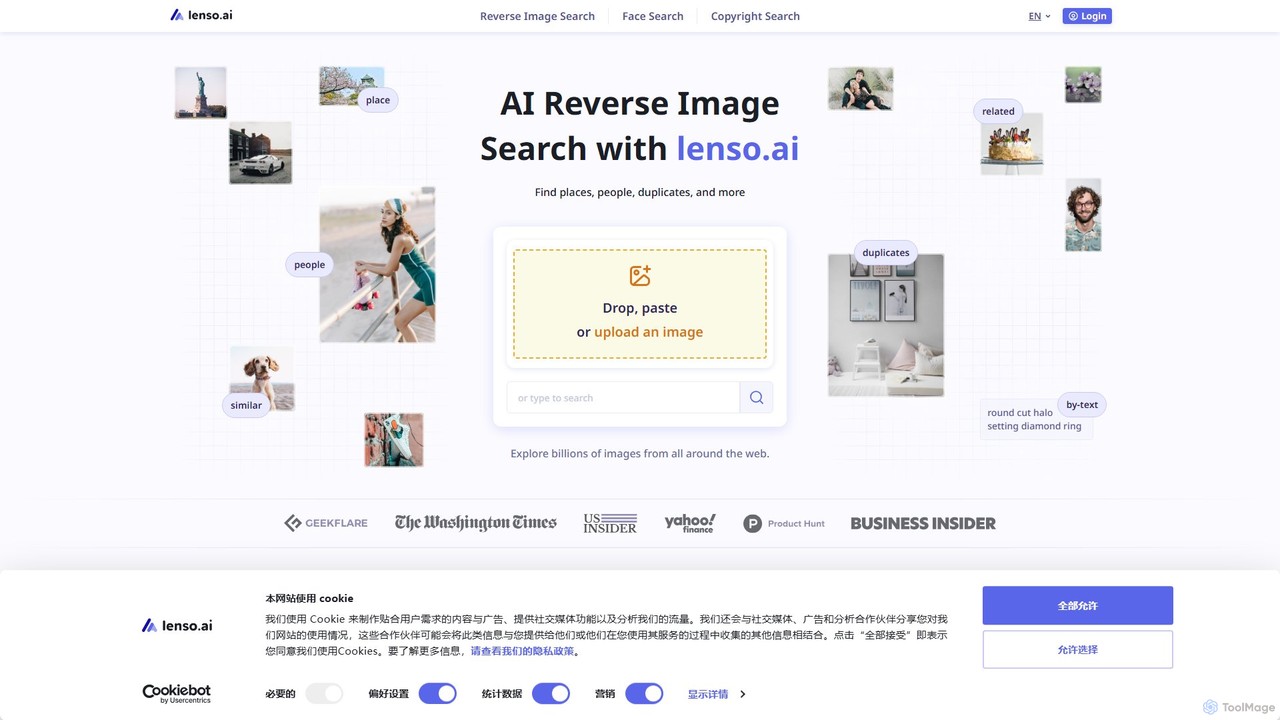
Lenso.ai is a powerful AI-driven reverse image search engine. It allows users to find places, people, duplicates, and related images by simply uploading a picture. Featuring advanced facial recognition, copyright tracking, and a developer API, it serves content creators, marketers, and individuals concerned with their digital footprint.

Search Engine
Visits 1.6MFavorites 142Likes 147

About Search Engine

AI Image Search Engines are specialized tools that leverage computer vision and deep learning to find images based on their visual content, not just text-based tags. They analyze pixels, patterns, objects, and concepts within an image, allowing for highly intuitive searches using natural language, example images, or specific visual attributes. This technology empowers users to discover visually similar content, locate the source of an image, or sift through vast digital asset libraries with unprecedented efficiency. These tools go beyond simple keyword matching to understand the context and composition of a visual.

Core Features

  • Semantic Search: Use natural language phrases like "a dog catching a frisbee at the beach" to find relevant images.
  • Reverse Image Search: Upload an image to find its source, similar visuals, or instances of its use online.
  • Visual Similarity Search: Discover images with a similar style, color palette, composition, or mood.
  • Attribute Filtering: Narrow down searches by specific criteria such as dominant colors, image orientation, or the presence of faces.
  • Object & Scene Detection: Identify and search for specific objects, settings, or actions depicted within images.

Use Cases

These tools are widely used by graphic designers for finding inspiration, marketers for sourcing on-brand stock photography, and e-commerce managers for product discovery and catalog management. Journalists and researchers also use them to verify image authenticity and trace origins, while individuals can use them to organize personal photo collections.

How to Choose

When selecting an AI Image Search Engine, consider the search capabilities you need (e.g., semantic vs. reverse search). Evaluate its ability to index your own image library versus searching the web. Also, assess the quality of its filtering options, API availability for integration, and the pricing model's suitability for your usage volume.

Search Engine use cases

1

Finding Design Inspiration with Semantic Search

A graphic designer working on a new branding project for an eco-friendly company needs inspiration for a logo. Instead of browsing through endless pages of generic keywords, they use an AI Image Search Engine and type in a descriptive query: "minimalist logo design with a single leaf and earth tones on a clean background." The tool analyzes the concept and returns a highly curated set of images that match the aesthetic, style, and subject matter, saving hours of manual searching and providing relevant, high-quality starting points for their creative process.

2

Verifying Image Authenticity with Reverse Search

A journalist comes across a powerful image on social media claiming to be from a recent event. To verify its authenticity before reporting, they use an AI Image Search Engine's reverse search feature. By uploading the image, the engine scans the web for other instances of it. The results show the same image was published on a news site two years prior, related to a different event. This allows the journalist to quickly debunk the misinformation and maintain journalistic integrity, preventing the spread of false news.

3

Managing E-commerce Product Catalogs

An e-commerce manager for a fashion retailer needs to identify all products with a 'floral pattern' for a seasonal promotion. Manually tagging thousands of items is impractical. They use an AI Image Search Engine connected to their product database. The tool's object detection feature automatically identifies and tags all items featuring floral prints. They can then use a visual similarity search on a best-selling floral dress to find and promote stylistically similar items, boosting cross-selling opportunities and campaign efficiency.

4

Sourcing On-Brand Marketing Imagery

A marketing team needs stock photos for a new campaign that reflect their brand's aesthetic: warm, authentic, and featuring natural light. Standard stock photo sites yield generic results. They use an AI Image Search Engine and upload a few images from a previous successful campaign. The visual similarity search function then scours stock libraries for images with a similar mood, color palette, and composition. This ensures all new imagery is consistent with the established brand identity, strengthening brand recognition and campaign cohesion.

5

Organizing a Personal Digital Photo Library

A photographer has a personal library of over 50,000 photos stored on a hard drive, with inconsistent tagging. To find photos from a specific trip, they would have to scroll through folders for hours. By using an AI Image Search Engine to index their library, they can now search with natural language queries like "photos of my family at the Grand Canyon during sunset." The AI identifies people, locations (landmarks), and even the time of day, instantly retrieving the relevant photos without any prior manual tagging, transforming a chaotic archive into a searchable database.

6

Monitoring Brand Logo Usage Online

A brand manager wants to track how their company's logo is being used across the internet, including on social media and blogs, to find user-generated content and check for unauthorized use. They set up an alert in an AI Image Search Engine to continuously scan for images containing their logo. When a new image is found, they receive a notification. This allows them to quickly engage with positive user content or issue takedown notices for improper use, protecting their brand's intellectual property and reputation proactively.

Search Engine FAQ

What is an AI Image Search Engine?

An AI Image Search Engine is a tool that uses artificial intelligence, specifically computer vision, to analyze and understand the content of images. Unlike traditional search engines that rely on keywords and metadata, these tools can search based on visual similarity, natural language descriptions (e.g., "a red car driving on a mountain road"), or by identifying objects, colors, and styles within the images themselves. This allows for a more intuitive and accurate way to find and organize visual content.

How does an AI Image Search Engine differ from Google Images?

While Google Images incorporates some AI, a dedicated AI Image Search Engine often provides more advanced, content-first capabilities. The key differences are:

  • Search Method: Traditional search relies heavily on file names, tags, and surrounding text. AI search analyzes the actual pixel data to understand concepts, objects, and aesthetics.
  • Query Type: AI search excels at complex natural language queries and "search by image" (reverse and similarity search) to find conceptually or stylistically similar content.
  • Application: Many AI search tools are designed for specific use cases, like managing private digital asset libraries (DAM) or e-commerce catalogs, offering deeper integration and customization than a general web search tool.

How do I choose the right AI Image Search Engine?

To choose the right tool, evaluate your specific needs based on these factors:

  • Data Source: Do you need to search the public web, licensed stock photo libraries, or your own private collection of images? Choose a tool that supports your target data source.
  • Primary Use Case: Are you primarily doing reverse image searches to find sources, or semantic searches for creative inspiration? Ensure the tool's strengths align with your tasks.
  • Filtering Capabilities: Check if the tool allows you to filter results by color, orientation, style, or other attributes that are important to your workflow.
  • Integration (API): If you need to integrate the search function into your own application or content management system, look for a tool with a well-documented API.

Who can benefit from using an AI Image Search Engine?

A wide range of professionals and individuals can benefit. Designers and artists use them to find visual inspiration and reference materials. Marketers and content creators use them to source on-brand stock photos and track user-generated content. E-commerce managers leverage them for catalog organization and product discovery. Journalists and researchers use them to verify image sources and combat misinformation. Finally, anyone with a large personal photo collection can use them to easily find specific memories without manual tagging.

Can these tools search for text within images?

Yes, many advanced AI Image Search Engines include Optical Character Recognition (OCR) technology. This feature allows the tool to 'read' and index any text that appears within an image, such as text on a sign, a product label, or a slide in a presentation. This means you can search for an image by typing the text you remember seeing in it, making it a powerful feature for finding specific documents, screenshots, or photos containing written information.