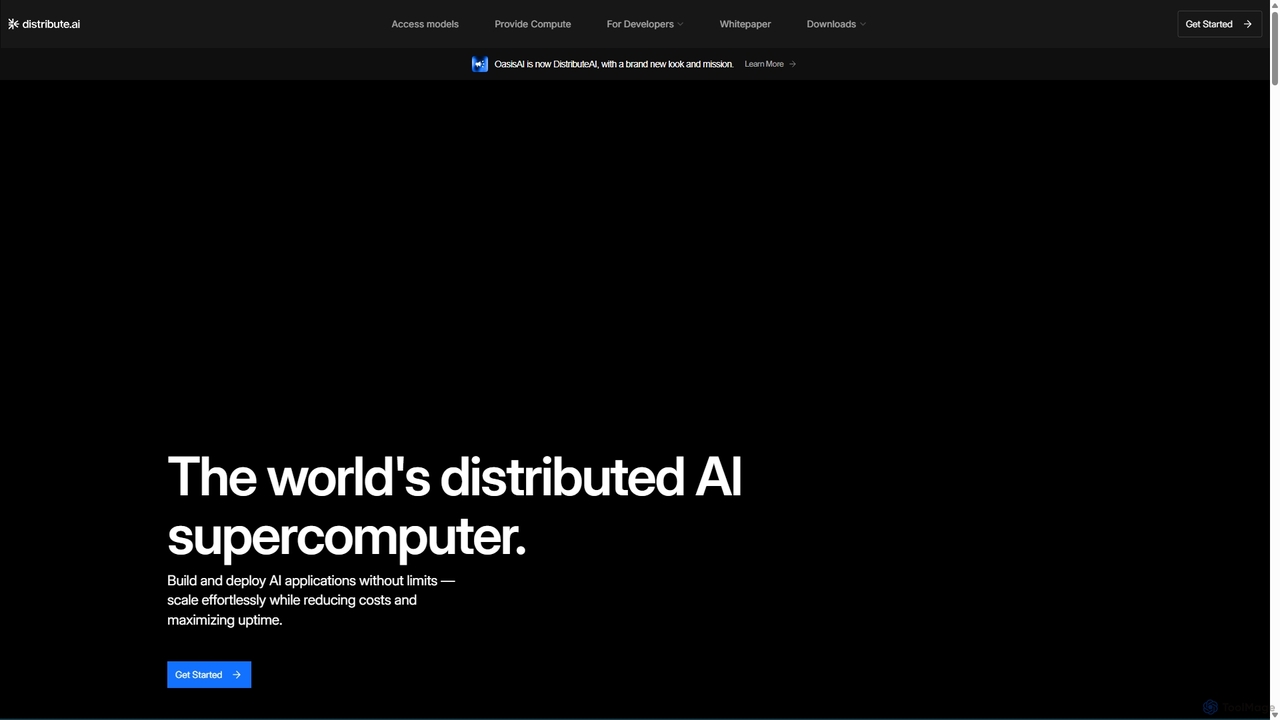
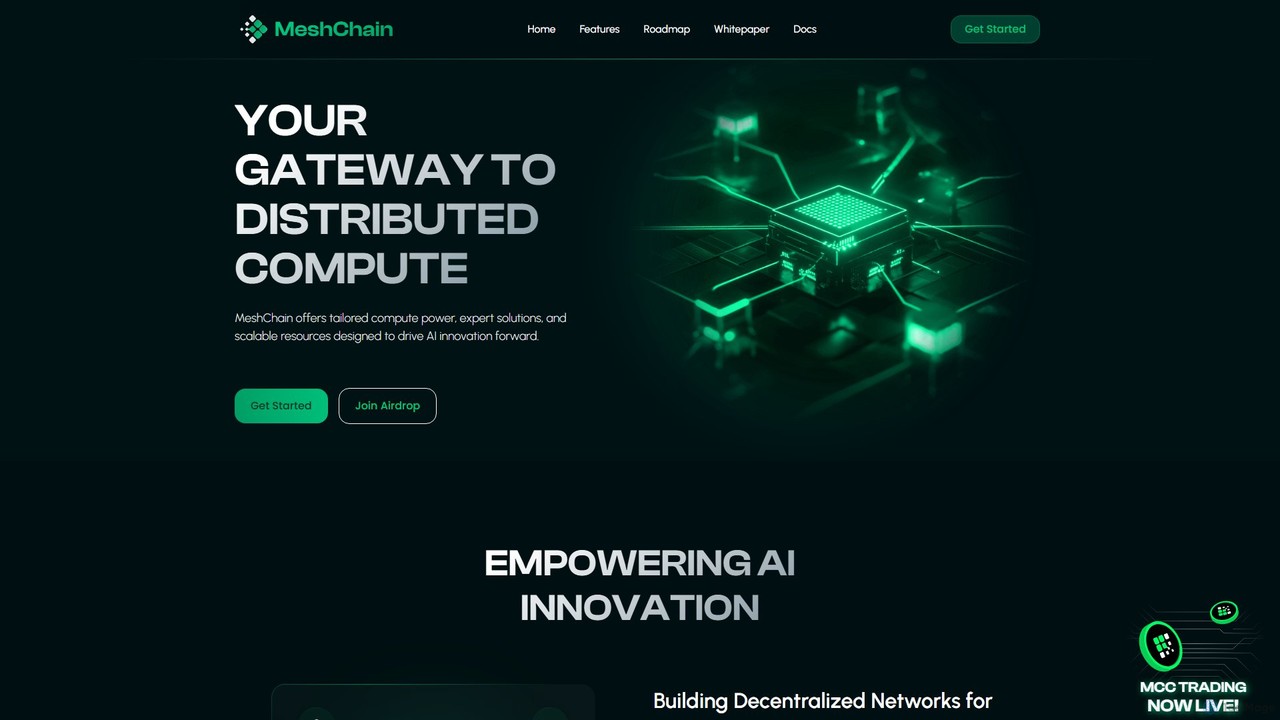
Decentralized Computing tools provide a framework for distributing computational tasks across a network of independent computers, rather than relying on a single, centralized server. As a key part of AI infrastructure, these platforms often leverage blockchain technology and cryptographic methods to ensure computations are secure, verifiable, and resistant to censorship. They are primarily used to run complex AI models, power decentralized applications (dApps), and create more open and resilient digital systems. This approach offers enhanced data sovereignty and can potentially reduce costs by utilizing a global pool of shared computing resources.
Core Features
- Distributed Processing: Breaks down and executes complex AI computations across multiple network nodes, enabling parallel processing.
- Verifiable Computation: Provides cryptographic proof that a task was executed correctly and without tampering, ensuring trust in a trustless environment.
- Censorship Resistance: Ensures applications and data remain accessible as there is no single point of failure or central authority.
- Token-based Incentives: Rewards network participants with cryptocurrency for contributing their computing power, creating a self-sustaining ecosystem.
- Data Sovereignty: Allows users and developers to maintain control over their data and applications, reducing reliance on centralized corporations.
Use Cases
This category is essential for Web3 developers, AI researchers, and organizations building censorship-resistant applications. Common scenarios include training large-scale AI models in a distributed manner, running AI inference for decentralized finance (DeFi) protocols, and creating decentralized marketplaces for AI services where transactions are governed by smart contracts.
How to Choose
When selecting a Decentralized Computing tool, consider the network's performance, latency, and scalability for your AI workload. Evaluate the supported programming languages and the maturity of the developer ecosystem. Also, analyze the cost structure, which is often based on tokenomics, and compare it to traditional cloud services. Finally, assess the level of decentralization and the security guarantees the platform provides.