ToolMage
Sign in

Best 29 Conversion Rate Optimization AI tools for Marketing

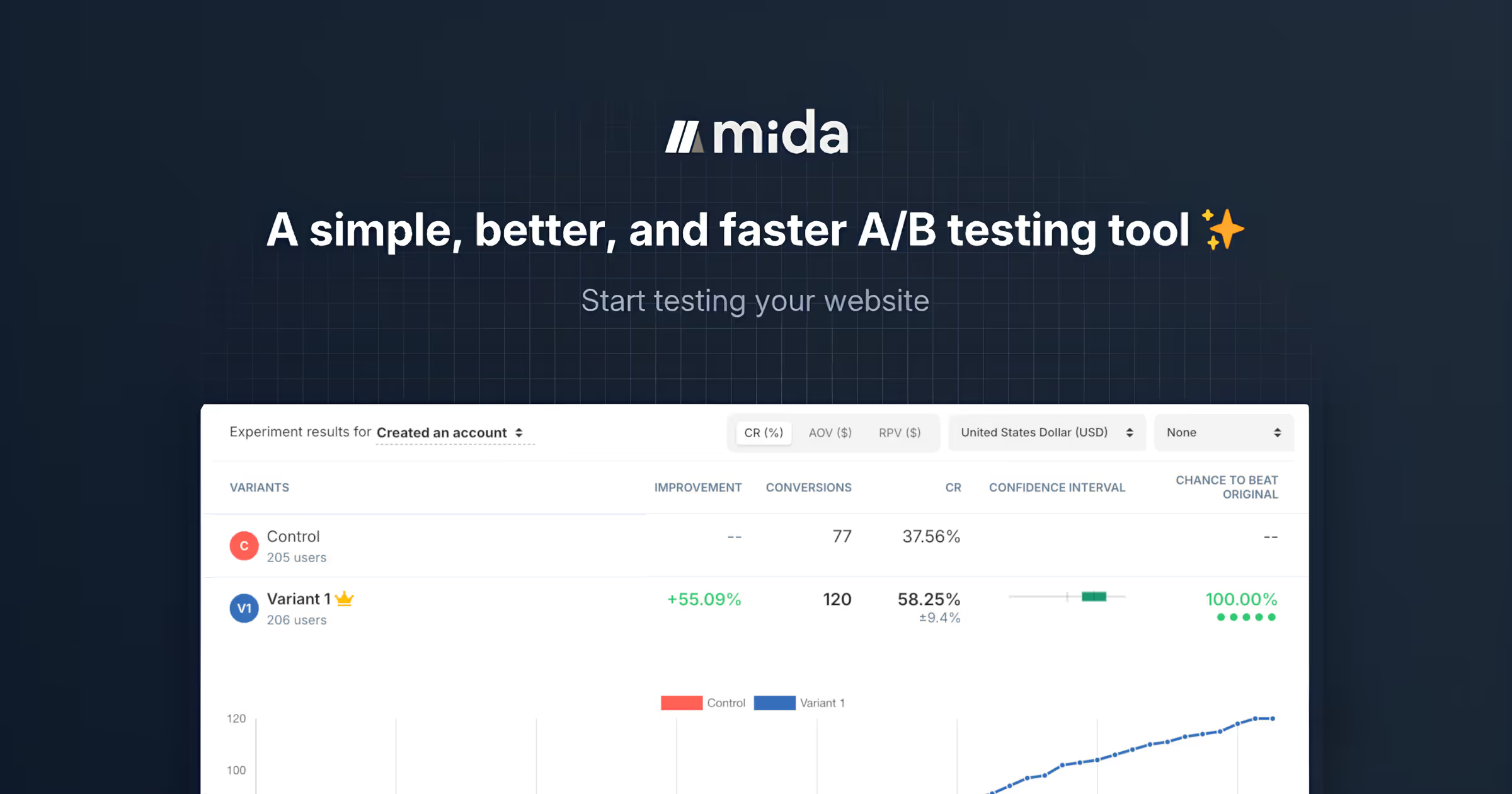
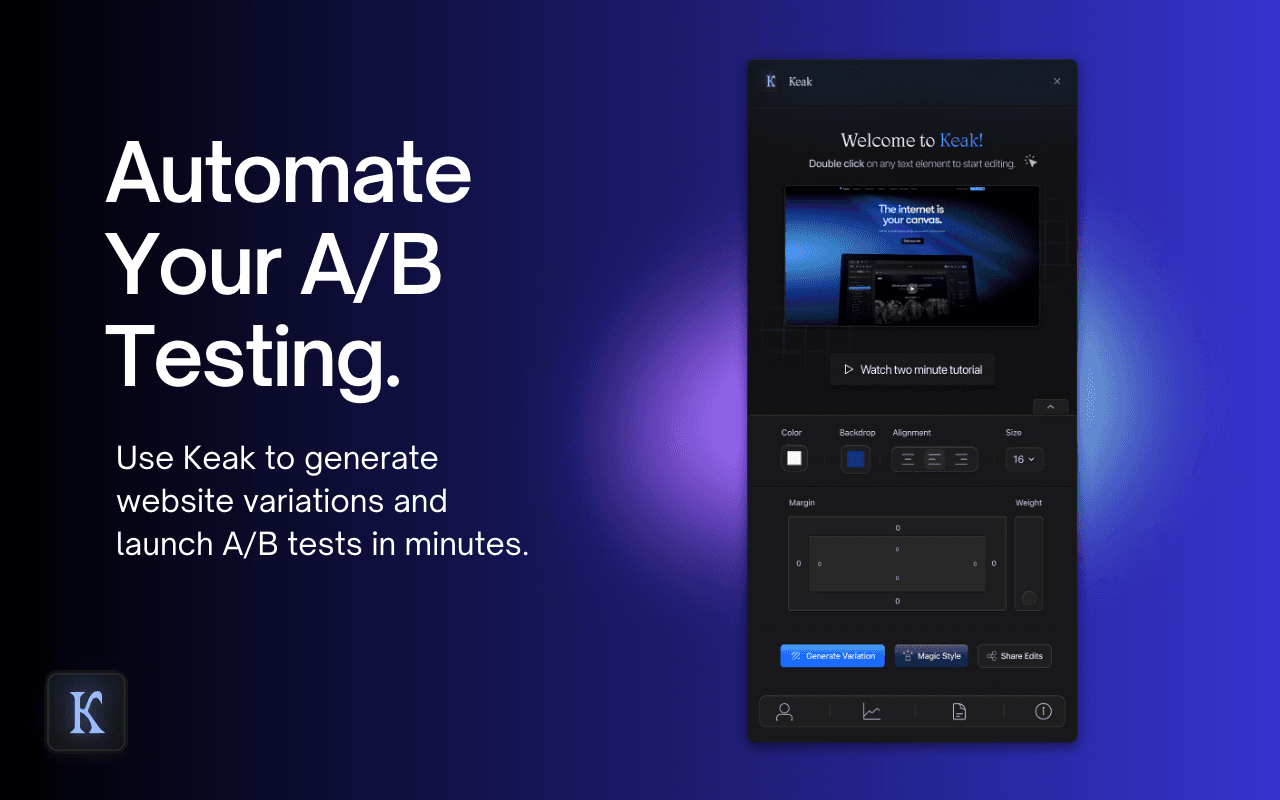
Popular Conversion Rate Optimization AI tools in Marketing include Hotjar, VWO, AB Tasty, Mida.so, Keak, Nudge, WEVO, Coframe, withsurface, and Evolv AI, helping you work more efficiently.

Cline
Freemium

Cline

Cline is a lightweight, AI-powered A/B and split testing software designed to help businesses optimize their websites for higher conversion rates. It simplifies the process of creating, running, and analyzing experiments, providing actionable insights to improve user experience and marketing effectiveness without slowing down your site. (Note: Cline has been acquired by Strictly AI).

Analytics
Visits 8.7KFavorites 113Likes 117
Evolv AI
Freemium

Evolv AI

Evolv AI is an AI-led experience optimization platform that accelerates digital growth. It uses machine learning and active learning to automatically identify conversion blockers, generate high-impact UX improvements, and deploy real-time personalization. By moving beyond traditional A/B testing, Evolv AI helps businesses scale their optimization efforts, adapt to user behavior instantly, and confidently improve customer journeys to maximize revenue and engagement.

B Testing
Visits 12.8KFavorites 137Likes 125
sitelifter
Freemium

sitelifter

sitelifter is an AI-powered platform that analyzes your website and landing pages to provide expert-backed, actionable insights for optimization. It helps improve design, messaging, and user flow to maximize conversions and revenue, eliminating guesswork and costly revisions. Ideal for startups, marketers, and agencies.

Conversion Rate Optimization
Visits 5.6KFavorites 169Likes 143
AB Tasty
Paid

AB Tasty

AB Tasty is an AI-powered experience optimization platform that helps businesses increase conversions through A/B testing, personalization, and feature management. It enables marketing, product, and tech teams to create seamless user experiences across web and server-side applications.

Feature Management
Visits 149.5KFavorites 129Likes 125
Overhyped AI
Freemium

Overhyped AI

Overhyped AI is an intelligent voice agent designed to automate and scale user onboarding and product adoption. It provides a proactive, human-like voice guide directly within your application, helping users reach their 'aha moment' faster, boosting activation rates, and increasing customer retention.

User Onboarding
Visits 8.7KFavorites 143Likes 141

About Conversion Rate Optimization

AI Conversion Rate Optimization (CRO) tools are a specialized category of marketing software designed to systematically increase the percentage of website visitors who complete a desired action. These tools leverage machine learning to analyze user behavior, automate A/B testing, and deliver personalized experiences at scale. By identifying friction points in the user journey and testing potential improvements, they help businesses maximize the value of their existing traffic, turning more visitors into customers, leads, or subscribers. This data-driven approach is a critical component of modern digital marketing strategies.

Core Features

  • A/B & Multivariate Testing: Systematically compare different versions of web pages, headlines, or calls-to-action to determine which performs best.
  • Heatmaps & Session Replays: Visually analyze where users click, scroll, and move their mouse, and watch recordings of their sessions to understand behavior.
  • AI-Powered Personalization: Dynamically tailor website content, offers, and recommendations to individual user segments based on their behavior and attributes.
  • User Feedback & Surveys: Collect qualitative insights directly from visitors through targeted pop-ups, polls, and feedback widgets.
  • Predictive Analytics: Use AI models to forecast conversion likelihood and identify user segments with the highest potential.

Use Cases

These tools are essential for e-commerce managers aiming to reduce cart abandonment, SaaS product managers looking to improve user onboarding, and digital marketers focused on optimizing landing page performance for paid campaigns. UX/UI designers also use them to validate design changes with real user data, while content strategists test headlines and content formats to increase engagement.

How to Choose

When selecting a CRO tool, consider the scope of its testing capabilities (A/B, multivariate, server-side). Evaluate the depth of its analytics, including heatmaps, session replays, and form analytics. Check for seamless integration with your existing tech stack, such as Google Analytics, CRMs, and e-commerce platforms. Finally, assess the balance between ease of use (e.g., a visual editor) and the need for developer resources for advanced implementations.

Featured tool rankings

Conversion Rate Optimization use cases

1

Optimize E-commerce Checkout Funnels

An e-commerce manager notices a high cart abandonment rate on their analytics dashboard. Using a CRO tool, they implement session replays specifically for users who drop off during checkout. They discover that a confusing shipping form is the primary issue. The manager then sets up an A/B test with a simplified, single-page checkout form versus the original multi-step process. The AI-powered tool automatically allocates traffic and, after a week, declares the new form a winner, resulting in a 15% reduction in cart abandonment and a significant uplift in revenue.

2

Personalize Homepage for Different Visitor Segments

A SaaS company's digital marketer wants to increase free trial sign-ups. They use a CRO tool's personalization feature to target different visitor segments. For visitors arriving from a Google ad about 'small business accounting', the homepage headline is dynamically changed to 'The Easiest Accounting Software for Small Businesses'. For returning visitors who previously viewed the pricing page, a banner appears offering a 10% discount on the first year. This targeted approach significantly increases the relevance of the homepage for each segment, leading to a 25% increase in trial sign-ups without changing the core page design.

3

A/B Test Landing Page Copy and CTAs

A PPC specialist is running a campaign driving traffic to a new landing page, but the conversion rate is below expectations. Using a CRO tool's visual editor, they create three variations of the page without writing any code. Variation A tests a new headline focused on benefits instead of features. Variation B tests changing the call-to-action (CTA) button color from blue to orange and the text from 'Submit' to 'Get My Free Quote'. Variation C combines both changes. The tool runs a multivariate test, distributing traffic evenly. Data reveals that Variation C performs best, increasing lead submissions by 40% and significantly improving the campaign's ROI.

4

Improve User Onboarding in a SaaS Product

A product manager for a SaaS application wants to increase the user activation rate. They use a CRO tool that supports in-app analysis to create a funnel report of the onboarding process. The data shows a significant drop-off after the 'connect your data source' step. They deploy a targeted, in-app survey on that screen asking users if they are facing any issues. Feedback reveals that users are unsure which data source to connect first. The team then A/B tests a revised UI that includes clearer instructions and a 'recommended' tag on the most common option. The new design increases progression through this step by 30%, boosting overall activation.

5

Gather Qualitative Feedback with On-site Surveys

A UX researcher for a content-heavy website wants to understand why the bounce rate on blog articles is high. Instead of just relying on quantitative data, they use a CRO tool to deploy an exit-intent survey. When a user moves their cursor to leave the page, a small pop-up appears asking, 'Before you go, could you tell us if you found the information you were looking for?'. The open-ended responses reveal a common theme: readers find the articles too long and difficult to scan. Based on this direct feedback, the content team experiments with adding a table of contents, using more subheadings, and bolding key takeaways, which successfully reduces the bounce rate.

6

Predictive Lead Scoring to Prioritize Sales Efforts

A B2B company's marketing team generates hundreds of leads per week, but the sales team struggles to identify the most promising ones. They integrate their CRO and CRM tools. The CRO tool's AI analyzes the on-site behavior of new leads, such as pages visited, time on site, and resources downloaded. It builds a predictive model based on the behavior of past leads who became customers. Each new lead is then automatically assigned a 'conversion likelihood' score. The sales team can now filter and prioritize leads with a score above 80%, focusing their efforts on prospects most likely to close and increasing their overall efficiency.

Conversion Rate Optimization FAQ

What are AI Conversion Rate Optimization (CRO) tools?

AI Conversion Rate Optimization (CRO) tools are software platforms that use artificial intelligence to help businesses improve their website's effectiveness. They go beyond traditional analytics by not just reporting on user behavior, but by providing actionable insights and automation. Key functions include running A/B tests to find the best-performing page designs, personalizing content for different visitor segments, and using heatmaps to visualize user engagement. Ultimately, their goal is to systematically increase the percentage of visitors who take a desired action, such as making a purchase or filling out a form.

How do AI CRO tools differ from traditional analytics tools like Google Analytics?

Traditional analytics tools like Google Analytics are excellent at showing you *what* is happening on your site (e.g., '20% of users drop off at the payment page'). AI CRO tools are designed to help you understand *why* it's happening and *how* to fix it. They provide qualitative insights through features like session replays and heatmaps. More importantly, they include the tools to act on these insights, such as A/B testing and personalization engines. While analytics tools are for measurement, CRO tools are for experimentation and optimization, with AI adding a layer of automation and predictive insight to the process.

What are the key features to look for in a CRO tool?

When choosing a Conversion Rate Optimization tool, look for a comprehensive feature set that supports the entire optimization cycle. Key features include:

  • Testing Capabilities: Support for A/B testing, split URL testing, and multivariate testing is essential for comparing variations.
  • Behavioral Analytics: Features like heatmaps, scroll maps, and session replays are crucial for understanding user behavior.
  • Personalization Engine: The ability to show different content to different user segments based on their attributes or behavior.
  • User Feedback Mechanisms: Tools for creating and deploying on-site surveys, polls, and feedback forms.
  • Integration: Seamless connection with your existing analytics, CRM, e-commerce, and marketing automation platforms.
Who should use Conversion Rate Optimization tools?

Conversion Rate Optimization tools are valuable for a wide range of roles focused on digital growth. This includes:

  • Digital Marketers: To optimize landing pages, improve campaign ROI, and personalize user journeys.
  • E-commerce Managers: To reduce cart abandonment, increase average order value, and improve the overall shopping experience.
  • Product Managers: To enhance user onboarding, increase feature adoption, and gather user feedback within SaaS applications.
  • UX/UI Designers: To validate design hypotheses with real data and understand how users interact with their interfaces.
  • Web Analysts: To move beyond data reporting to active experimentation and optimization.
Do I need technical skills to use AI CRO tools?

It varies, but many modern AI CRO tools are designed to be user-friendly for marketers and non-developers. Most offer visual editors that allow you to create A/B tests and personalization campaigns using a point-and-click interface, requiring no code. However, more advanced implementations, such as server-side testing (testing changes in the back-end) or complex integrations with other platforms, will likely require assistance from a developer. The basic features for on-page optimization are generally accessible to anyone with a basic understanding of web marketing.