ToolMage
Sign in

Best 1 App Builder AI tools for Mobile

Popular App Builder AI tools in Mobile include iswift, helping you work more efficiently.

Freemium

iswift

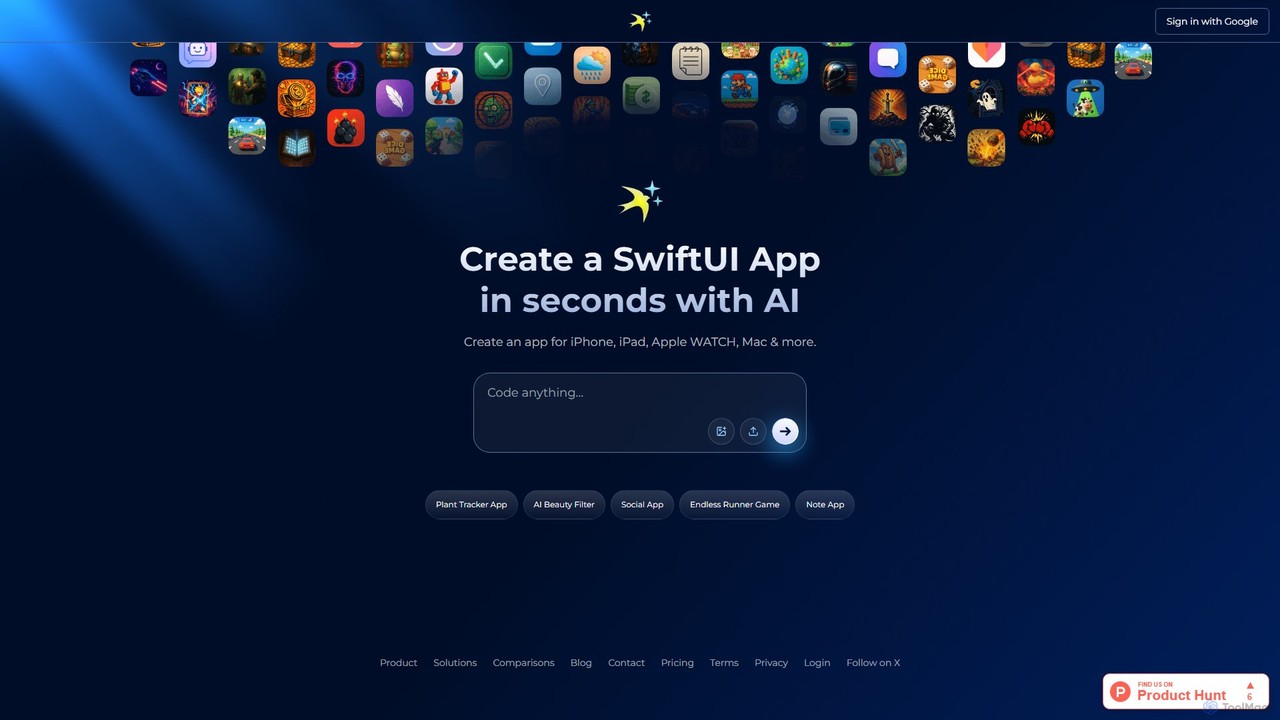
iSwift is an AI-powered development platform that transforms natural language app ideas into production-ready SwiftUI code. It accelerates the creation of native apps for iOS, iPadOS, macOS, and watchOS by generating clean, maintainable code and providing an interactive chat interface for real-time refinement.

Low Code No Code
Visits 10.4KFavorites 130Likes 108

About App Builder

App Builder tools are AI-powered platforms that enable users to create mobile and web applications with minimal to no coding. These tools leverage visual development environments, drag-and-drop interfaces, and pre-built components, often enhanced by AI for design suggestions, code generation, and workflow automation. They empower individuals and businesses to rapidly prototype, develop, and deploy functional applications across various platforms, significantly reducing development time and costs.

Core Features

  • Visual Development Interface: Intuitive drag-and-drop editors for designing app layouts and user interfaces without writing code.
  • Pre-built Templates & Components: A library of ready-to-use modules, screens, and functionalities to accelerate app creation.
  • Backend Integration: Seamless connectivity with databases, APIs, and cloud services for data management and external functionality.
  • Cross-Platform Deployment: Ability to publish applications to multiple platforms like iOS, Android, and web from a single codebase.
  • AI-Powered Assistance: Intelligent suggestions for design elements, code snippets, feature implementation, and optimization.

Applicable Scenarios

App Builders are widely used by small businesses to create customer engagement apps, by entrepreneurs to launch Minimum Viable Products (MVPs), and by internal corporate teams to develop custom tools for operational efficiency. They are also popular among educators for interactive learning apps and content creators for personal portfolio showcases.

How to Choose

When selecting an App Builder, consider its ease of use, the range of platforms it supports (iOS, Android, web), its integration capabilities with other services, and its scalability options for future growth. Evaluate the available AI features for design and development assistance, the pricing model, and the level of community support or learning resources provided.

Featured tool rankings

App Builder use cases

1

Creating a Customer Loyalty App for Small Businesses

Small business owners, such as café or boutique proprietors, can utilize App Builders to design and launch a branded customer loyalty program app. This allows them to offer digital punch cards, exclusive deals, and direct communication channels to their customers, fostering repeat business and enhancing customer engagement without the need for extensive development resources.

2

Developing Internal Tools for Enterprises

Large organizations and enterprises can leverage App Builders to quickly create custom internal applications for specific operational needs. Examples include inventory management systems, project tracking dashboards, or employee onboarding portals. This streamlines internal workflows, reduces reliance on generic software, and empowers departments to build tailored solutions efficiently, improving overall productivity.

3

Prototyping and Validating Startup MVPs

Entrepreneurs and startup founders can use App Builders to rapidly develop a Minimum Viable Product (MVP) for their business ideas. This allows them to test market demand, gather early user feedback, and iterate on features without significant upfront investment in traditional coding. The speed of development helps validate concepts quickly, reducing time-to-market and potential risks.

4

Building Event Registration and Management Apps

Event organizers can create custom mobile applications for conferences, workshops, or festivals using App Builders. These apps can handle ticket sales, attendee registration and check-in, provide real-time schedules, speaker information, and venue maps. This enhances the participant experience, streamlines event logistics, and offers organizers valuable data insights without complex coding.

5

Educational Content Delivery Apps

Educators and training institutions can design interactive learning applications using App Builders to deliver course content, quizzes, and multimedia resources. These apps can offer personalized learning paths, track student progress, and facilitate communication between instructors and learners. This provides an engaging and accessible platform for education, complementing traditional teaching methods.

6

Personal Portfolio or Brand Showcase Apps

Freelancers, artists, designers, and content creators can build professional mobile portfolio or brand showcase apps using App Builders. These apps allow them to present their work, projects, and services in an engaging format, connect with potential clients, and expand their digital presence. It offers a unique and interactive way to stand out from competitors and attract new opportunities.

App Builder FAQ

What are App Builders?

App Builders are platforms that enable users to create mobile or web applications with minimal to no coding. They typically feature visual development environments, drag-and-drop interfaces, and pre-built components. Many modern App Builders also integrate AI to assist with design, code generation, and feature suggestions, accelerating the development process and making app creation accessible to a wider audience. They bridge the gap between an idea and a functional application, often supporting cross-platform deployment.

How do AI App Builders differ from traditional app development?

AI App Builders significantly reduce the need for manual coding, relying on visual interfaces and AI assistance for tasks like UI design, logic generation, and data integration. Traditional development requires deep programming knowledge, extensive coding, and often separate codebases for different platforms (iOS, Android). App Builders offer faster development cycles, lower costs, and empower non-developers, while traditional methods provide maximum customization and performance control for highly complex or unique applications.

Who can benefit most from using App Builders?

App Builders are ideal for small business owners, entrepreneurs, marketers, educators, and internal corporate teams. Small businesses can create customer-facing apps without large investments. Entrepreneurs can quickly validate ideas with MVPs. Marketers can build campaign-specific apps. Educators can develop interactive learning tools. Internal teams can create custom solutions for operational efficiency. Essentially, anyone needing a functional application quickly and cost-effectively, without extensive coding skills, benefits greatly.

What key features should I look for when choosing an App Builder?

When selecting an App Builder, consider its ease of use (intuitive drag-and-drop interface), platform compatibility (iOS, Android, Web), integration capabilities (APIs, databases, third-party services), scalability (ability to grow with your needs), AI assistance features (design suggestions, code generation), template library, and cost-effectiveness. Also, evaluate the community support and available learning resources to ensure a smooth development journey.

Can App Builders create complex and scalable applications?

Yes, many modern App Builders are capable of creating surprisingly complex and scalable applications. While they might not be suitable for highly specialized, performance-critical, or graphically intensive applications like advanced 3D games, they can handle intricate business logic, integrate with various external services, and manage large user bases. Their scalability often depends on the underlying cloud infrastructure they utilize, allowing applications to grow from simple prototypes to robust, enterprise-level solutions.