ToolMage
Sign in

Best 2 Assistant for Mobile

Popular Assistant in Mobile include shopwithkate and Telepati, helping you work more efficiently.

shopwithkate
Freemium

shopwithkate

shopwithkate is your personal AI fashion assistant designed to revolutionize your shopping experience. Get personalized style recommendations, outfit ideas from your own wardrobe, and a curated shopping feed from top brands. Kate makes fashion fun, personal, and effortless.

Personal Shopper
Visits 4KFavorites 120Likes 116
Telepati
Freemium

Telepati

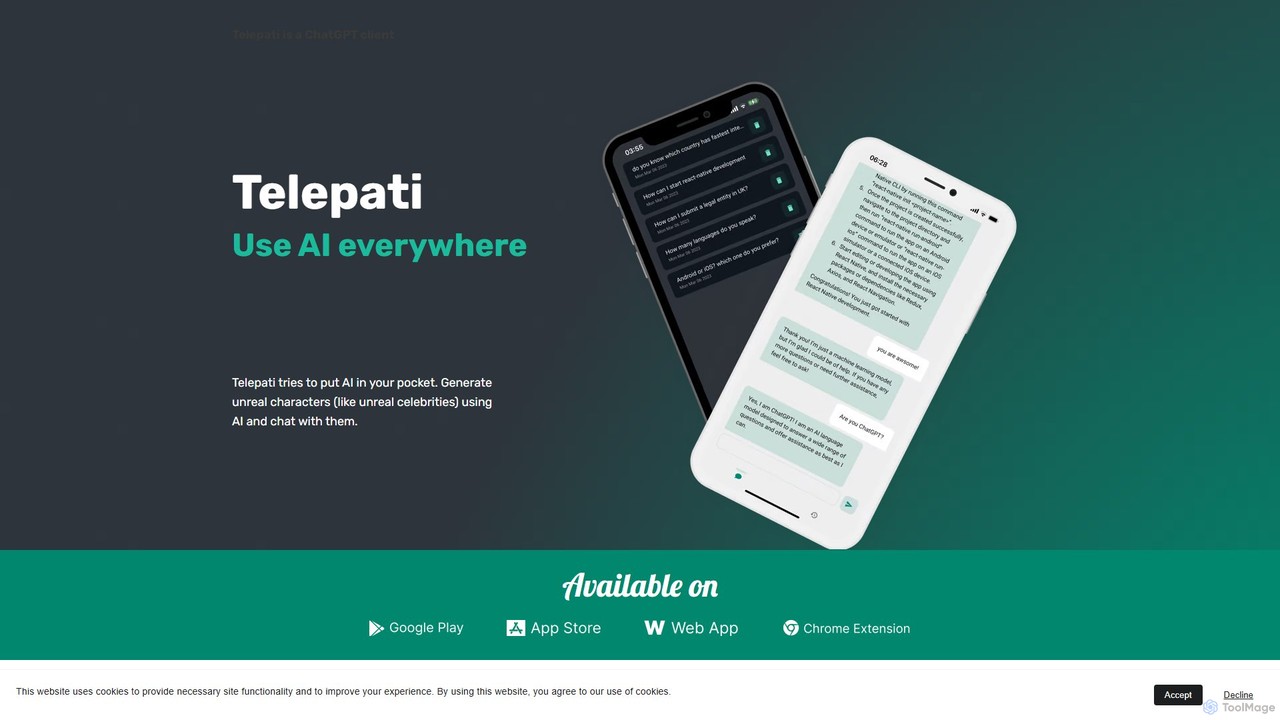
Telepati is a mobile ChatGPT client for iOS and Android that puts a powerful AI in your pocket. It allows you to chat with an advanced AI, generate and interact with unique AI characters, and get answers in multiple languages. All your conversations are saved for easy access and continuation.

Character Chat
Visits 3.8KFavorites 88Likes 90

About Assistant

Assistant tools are AI-powered software designed to help users perform various tasks efficiently, often through natural language interaction. Leveraging advanced technologies like Natural Language Processing (NLP) and machine learning, these tools understand commands, provide information, automate routines, and manage schedules. In the context of mobile, AI Assistants enhance smartphone, tablet, and wearable device functionality, offering on-the-go support for productivity, communication, and daily organization, making mobile interactions more intuitive and hands-free.

Core Features

  • Voice Command & NLP: Understands spoken language and executes complex commands, facilitating hands-free operation.
  • Task Automation: Automates routine tasks such as scheduling appointments, setting reminders, and sending messages.
  • Information Retrieval: Provides instant answers to questions, delivers real-time updates on weather, news, traffic, and more.
  • Smart Home Integration: Seamlessly controls connected smart home devices directly from a mobile device.
  • Personalized Recommendations: Offers tailored suggestions for content, routes, or products based on user preferences and historical data.

Use Cases

Mobile AI Assistants are invaluable for individuals seeking to optimize their daily routines and enhance device accessibility. They are widely used by busy professionals for managing schedules on the go, by drivers for hands-free navigation and communication, and by smart home enthusiasts for controlling devices remotely. These tools streamline information access and task execution, making mobile devices more powerful and user-friendly.

How to Choose

When selecting a mobile AI Assistant, consider its integration with your existing device ecosystem (e.g., iOS, Android) and its compatibility with other apps and smart home devices. Evaluate the breadth of its feature set, including voice command accuracy, task automation capabilities, and personalized services. Additionally, assess its privacy policies regarding data handling and the level of customization it offers to tailor the experience to your specific needs.


Featured tool rankings

Assistant use cases

1

Hands-Free Navigation & Communication

A driver uses voice commands to get real-time directions, send text messages, and make calls without physically interacting with their smartphone. This enhances road safety and allows the driver to stay focused on the journey, leveraging the mobile assistant for essential communication and navigation tasks.

2

Smart Home Control On-the-Go

A user remotely adjusts their home's thermostat, turns off lights, or checks security camera feeds using their mobile AI assistant while commuting or traveling. This provides convenience and peace of mind, allowing for seamless management of home environments from anywhere.

3

Personalized Daily Briefings

A busy professional receives a customized morning summary on their mobile device, including calendar appointments, top news headlines, and traffic updates for their commute. The assistant compiles and delivers this information proactively, saving time and ensuring the user starts their day well-informed.

4

Quick Information Retrieval During Travel

A tourist asks their mobile assistant for nearby restaurant recommendations, currency exchange rates, or historical facts about a landmark they are visiting. This provides instant, context-aware information, enriching their travel experience without needing to type or search manually.

5

Automated Reminders & Task Management

A student sets voice reminders for upcoming assignments, schedules study group meetings, and adds items to their grocery list using their mobile AI assistant. This helps them stay organized, manage their academic workload, and keep track of personal errands efficiently.

6

Accessibility Support for Visually Impaired Users

A visually impaired individual utilizes voice commands to read out emails, navigate through mobile applications, and identify objects around them. The mobile assistant acts as a crucial interface, making smartphone technology fully accessible and empowering independent use.

Assistant FAQ

What are Mobile AI Assistants?

Mobile AI Assistants are intelligent software programs integrated into smartphones, tablets, and wearable devices, designed to help users perform tasks and access information using natural language. They leverage AI technologies like voice recognition and NLP to understand commands, automate daily routines, and provide personalized support, making mobile interactions more intuitive and efficient.

How do Mobile AI Assistants work?

Mobile AI Assistants primarily work by processing user input, typically voice commands, through Natural Language Processing (NLP) to understand intent. They then use machine learning algorithms to access relevant data from local device information or cloud services, execute tasks, or retrieve information. The results are delivered back to the user, often audibly, providing a seamless conversational experience.

What are the main benefits of using a Mobile AI Assistant?

The main benefits of using a Mobile AI Assistant include enhanced productivity through task automation and quick information access, improved convenience with hands-free operation, and greater accessibility for users with diverse needs. They streamline daily routines, simplify device interaction, and provide personalized support, ultimately saving time and effort.

How do Mobile AI Assistants differ from traditional mobile apps?

Mobile AI Assistants differ from traditional mobile apps primarily in their interaction model and intelligence. While traditional apps require direct user input (taps, swipes) for specific functions, AI assistants understand and respond to natural language, often across multiple apps and services. They offer proactive suggestions, contextual awareness, and a more integrated, conversational user experience, acting as a central intelligent hub.

What should I consider when choosing a Mobile AI Assistant?

When choosing a Mobile AI Assistant, consider its compatibility with your device ecosystem (e.g., iOS, Android), the range and accuracy of its voice recognition and NLP capabilities, and its integration with other services you use (e.g., calendar, email, smart home devices). Also, evaluate its privacy policies, customization options, and the overall user experience it offers in terms of responsiveness and helpfulness.