TestLabs
TestLabs is an AI-powered platform that automates app testing on real devices to ensure compliance with Google Play …
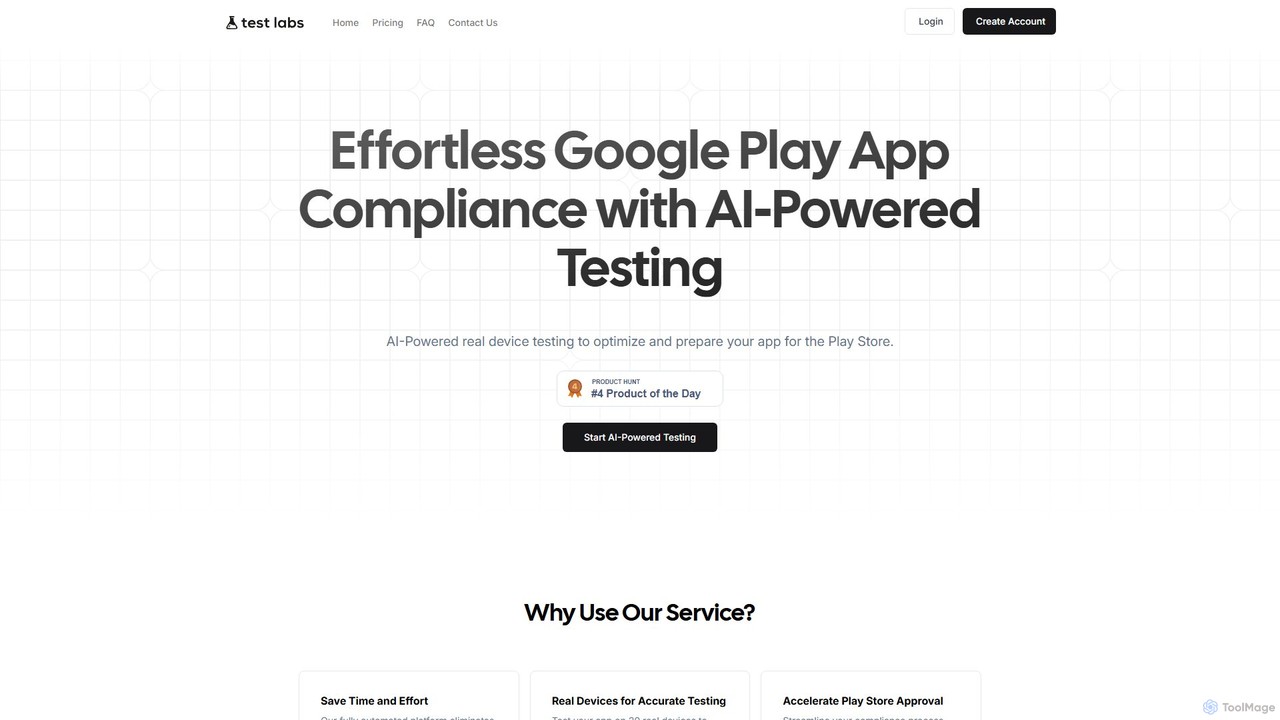
TestLabs is an AI-powered platform that automates app testing on real devices to ensure compliance with Google Play Store policies. It simplifies the mandatory 14-day, 20-tester process, saving developers time and resources. The service provides detailed daily reports, device logs, and screenshots, helping developers accelerate their app's launch and approval. It's a cost-effective solution for startups, freelancers, and businesses to streamline their testing workflow and deliver high-quality, compliant applications.
About App Development
AI App Development tools are a class of software that leverages artificial intelligence to automate and accelerate the creation of mobile and web applications. These platforms use technologies like machine learning and natural language processing to translate text prompts, design mockups, or business logic into functional code and user interfaces. They significantly lower the technical barrier to entry, enabling faster prototyping, development, and deployment for both developers and non-developers. This approach streamlines the entire development lifecycle, from initial concept to final product.
Core Features
- Natural Language to Code Generation: Converts plain text descriptions of features or logic into source code for platforms like iOS, Android, or web.
- AI-Powered UI/UX Design: Automatically generates user interface layouts, color palettes, and components from simple inputs or wireframes.
- Automated Testing and Debugging: Intelligently creates test cases, identifies potential bugs in the code, and suggests corrections to improve app stability.
- Predictive Logic Implementation: Simplifies the integration of complex features like recommendation engines or data analysis by generating the necessary backend logic.
- No-Code/Low-Code Interfaces: Provides visual, drag-and-drop environments where users can build applications with minimal or no manual coding.
Use Cases
These tools are widely used by startups and entrepreneurs to quickly build and test Minimum Viable Products (MVPs) without large engineering teams. Product managers and designers use them to create interactive prototypes that are closer to the final product. In large enterprises, development teams leverage these tools to automate repetitive coding tasks and build internal applications for specific business needs, such as data dashboards or workflow management tools.
How to Choose
When selecting an AI App Development tool, first consider the target platform (iOS, Android, web, or cross-platform). Evaluate the balance between no-code (for non-technical users) and low-code (for developers seeking acceleration) capabilities. Assess its integration options with third-party services, databases, and APIs. Finally, examine the scalability of the platform to ensure it can support your app's growth in terms of users and feature complexity.

App DevelopmentUse Cases
Rapid MVP Prototyping for Startups
An entrepreneur with a new app idea but limited coding knowledge needs to create a functional prototype to present to potential investors. Using an AI app development platform, they describe the core features in natural language, such as 'a user login screen with email and Google sign-in' and 'a dashboard to display user data'. The AI generates the corresponding screens, user flows, and basic backend logic. This allows the founder to build a testable Minimum Viable Product (MVP) in a matter of days instead of months, significantly reducing time-to-market and initial development costs.
Automating UI Component Generation
A UI/UX designer is working on a complex mobile application and needs to create dozens of standard components like forms, cards, and navigation bars. Instead of designing each one manually and waiting for a developer to code it, the designer uploads a wireframe or a sketch to an AI app development tool. The AI analyzes the design, identifies the components, and generates production-ready code in the desired framework (e.g., Swift for iOS, React Native for cross-platform). This process bridges the gap between design and development, ensuring visual consistency and freeing up developer time for more complex logic.
Building Internal Business Tools without IT
A project manager in a marketing department needs a custom application to track campaign progress and budget allocation. The internal IT department has a long backlog. Using a no-code AI app builder, the project manager describes the required data fields (Campaign Name, Budget, Status) and the desired views (a table view and a chart view). The AI platform generates a fully functional web and mobile app that connects to a Google Sheet or another data source. This empowers non-technical employees to solve their own operational challenges and create bespoke tools without relying on limited developer resources.
AI-Assisted Code Refactoring and Optimization
A software developer is tasked with improving the performance of a legacy mobile app. The codebase is large and complex. The developer uses an AI development tool that integrates with their IDE. They feed sections of the old code into the AI, which analyzes it for inefficiencies, potential bugs, and outdated practices. The tool then suggests refactored code snippets that are more performant, readable, and adhere to modern coding standards. This accelerates the modernization process, improves code quality, and reduces the risk of introducing new bugs during manual refactoring.
Generating Automated Test Cases from User Stories
A Quality Assurance (QA) team needs to ensure comprehensive test coverage for a new feature. Instead of manually writing hundreds of test cases, a QA engineer provides the AI tool with the user story or feature description, such as 'As a user, I want to be able to reset my password via email'. The AI analyzes the requirements and automatically generates a suite of test cases, including positive scenarios (correct email), negative scenarios (incorrect email, expired link), and edge cases (network failure). This not only saves significant time but also helps identify scenarios the human team might have overlooked.
Building a Data-Driven E-commerce App
An online retail business wants to create a mobile app with a personalized shopping experience. Using an AI app builder, they can easily integrate their product catalog from a platform like Shopify. The AI tool helps them build features like an AI-powered product recommendation engine based on user browsing history and purchase patterns. It can also generate the logic for dynamic pricing or personalized promotions. This allows the business to create a sophisticated, data-driven application that increases user engagement and sales, without needing a dedicated team of data scientists and machine learning engineers.