ToolMage
Sign in

Best 3 Personal Shopper AI tools for Ecommerce

Popular Personal Shopper AI tools in Ecommerce include drezily, HiSanta, and shopwithkate, helping you work more efficiently.

HiSanta
Free

HiSanta

HiSanta is an AI-powered gift finder that eliminates the stress of shopping. By answering a few simple questions about the recipient's interests, personality, and the occasion, HiSanta generates a curated list of unique and thoughtful gift ideas, complete with purchase links. Find the perfect present for anyone, for any event, in minutes.

Personal Shopper
Visits 6.1KFavorites 147Likes 142
shopwithkate
Freemium

shopwithkate

shopwithkate is your personal AI fashion assistant designed to revolutionize your shopping experience. Get personalized style recommendations, outfit ideas from your own wardrobe, and a curated shopping feed from top brands. Kate makes fashion fun, personal, and effortless.

Personal Shopper
Visits 5.9KFavorites 135Likes 127
drezily
Free

drezily

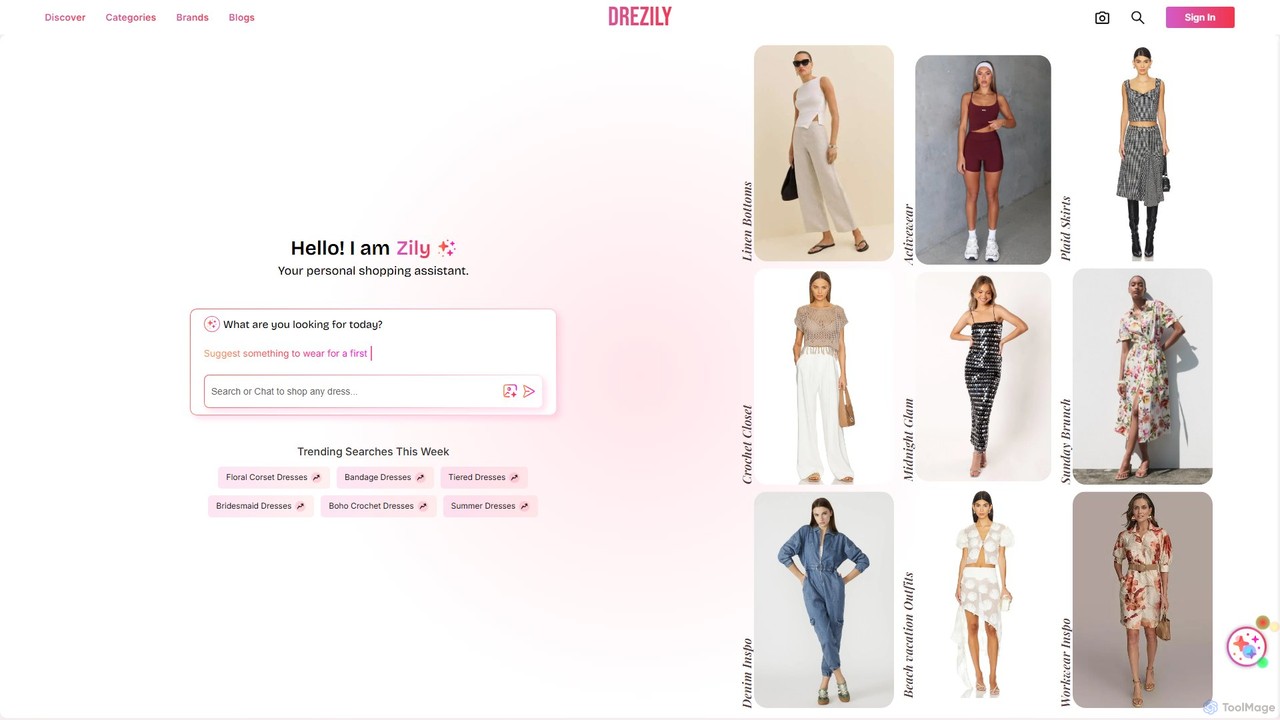
Drezily is an AI-powered fashion shopping assistant that simplifies your search for the perfect outfit. Through its chatbot, Zily.AI, it scours multiple online stores to provide personalized recommendations, discover the latest trends, and find the best deals, all in one place.

Personal Shopper
Visits 16.4KFavorites 102Likes 105

About Personal Shopper

AI Personal Shopper tools are a specialized type of e-commerce software that provides personalized product recommendations through conversational interactions. They utilize Natural Language Processing (NLP) and machine learning to understand a user's style, needs, and preferences in real-time, much like a human sales assistant. These tools go beyond basic filters by curating unique selections, suggesting outfits, and guiding customers through large product catalogs. The primary value is in creating a highly engaging, tailored shopping experience that increases conversion rates and customer loyalty.

Core Features

  • Conversational Guidance: Engages users in a natural dialogue to uncover their specific needs and preferences.
  • Style Profile Analysis: Builds a dynamic user profile based on interactions, purchase history, and visual preferences.
  • Personalized Curation: Generates tailored collections and outfit suggestions instead of just filtering existing categories.
  • Visual Search Compatibility: Allows users to find similar items by uploading a photo or image link.

Use Cases

These tools are most effective in industries with high aesthetic consideration and large inventories, such as fashion apparel, beauty, home decor, and jewelry. They are used by online retailers to reduce choice paralysis, increase average order value through intelligent cross-selling, and provide a premium, guided shopping experience 24/7.

How to Choose

When selecting an AI Personal Shopper, evaluate the sophistication of its recommendation algorithm and its ability to learn from user behavior. Consider its integration capabilities with your e-commerce platform (e.g., Shopify, Magento), the level of customization available for the chat interface and brand voice, and its data privacy and security policies.

Personal Shopper use cases

1

Personalized Style Discovery for Fashion Retail

An online fashion retailer wants to help customers find the perfect outfit for a specific event, like a 'summer wedding'. A customer interacts with the AI Personal Shopper, describing the event, their preferred style (e.g., 'bohemian', 'classic'), color choices, and budget. The AI processes this information, asks clarifying questions like 'Indoors or outdoors?', and then presents a curated collection of 5-7 suitable dresses, along with suggested shoes and accessories. This guided process significantly reduces browsing time and increases the likelihood of a confident purchase.

2

Virtual Room Stylist for Home Decor

A user redecorating their living room feels overwhelmed by choices on a large furniture website. They use the AI Personal Shopper and upload a photo of their current room. The AI analyzes the image to identify the existing style (e.g., 'mid-century modern'), color scheme, and available space. The user then specifies they are looking for a 'comfortable sofa' and a 'coffee table'. The AI provides a curated list of products that aesthetically match the room and fit the spatial constraints, helping the user visualize the new setup and make a faster, more informed decision.

3

Tailored Skincare Routine Recommendations

A customer on a cosmetics website is unsure which products are right for their skin. They engage with the AI Personal Shopper, which initiates a quiz-like conversation. It asks about their skin type ('oily', 'dry', 'combination'), primary concerns ('acne', 'wrinkles', 'dark spots'), and current routine. Based on the answers, the AI recommends a complete, multi-step skincare regimen—from cleanser to sunscreen—with specific products from the store's catalog. This personalized advice builds trust and guides the customer toward a larger, more effective purchase than they might have made on their own.

4

Intelligent Gifting Assistant for Special Occasions

Finding the right gift can be stressful. An e-commerce site deploys an AI Personal Shopper as a 'Gifting Assistant'. A user looking for a birthday present for their partner is prompted with questions like 'Who is the gift for?', 'What are their hobbies (e.g., reading, gaming, hiking)?', and 'What is your budget?'. If the user says 'gaming', the AI might follow up with 'PC or console?'. Based on this dialogue, the assistant suggests a curated list of items, from high-tech headsets to gaming-themed merchandise, turning a potentially frustrating search into a simple, guided experience.

5

Automating Upsells and Outfit Completion

A customer adds a pair of running shoes to their cart. Instead of a generic 'You might also like' section, the AI Personal Shopper initiates a contextual chat. It says, 'Great choice on the shoes! To complete your running kit, many athletes also purchase our moisture-wicking socks and a lightweight running belt.' It then displays these specific, highly relevant items. This approach feels more like helpful advice than a pushy sales tactic. It effectively increases the average order value by suggesting items that genuinely complement the initial purchase in a personalized, timely manner.

6

Navigating Large Electronics Catalogs

A customer needs a new laptop but is faced with hundreds of options on an electronics store website. They use the AI Personal Shopper, which asks targeted questions to narrow the field: 'What is your primary use? (e.g., work, gaming, general browsing)', 'What is your budget?', and 'Any preference for screen size?'. Within a minute, the AI filters the vast catalog down to the top three most suitable laptops, presenting them with a side-by-side comparison of key specs. This prevents choice overload and guides the customer to a confident decision, improving the user experience on sites with extensive inventories.

Personal Shopper FAQ

What is an AI Personal Shopper?

An AI Personal Shopper is a tool that uses artificial intelligence, particularly Natural Language Processing (NLP), to simulate the experience of shopping with a human expert. It engages customers in a conversation to understand their needs, preferences, and context (like an event or a problem to solve). Based on this dialogue, it provides highly personalized product recommendations, style advice, and curated selections, going far beyond the capabilities of a simple search bar or filter system.

How does an AI Personal Shopper differ from a standard product recommendation engine?

The key difference lies in the method of interaction and the depth of personalization. A standard recommendation engine typically works passively, using collaborative filtering ('users who bought this also bought...') or content-based filtering based on browsing history. An AI Personal Shopper is interactive and conversational. It actively asks questions to build a deep, real-time understanding of a user's specific intent, style, and constraints, allowing it to provide more nuanced and context-aware suggestions, much like a human consultant.

What are the key benefits of using an AI Personal Shopper for an e-commerce store?

Implementing an AI Personal Shopper offers several significant benefits for online retailers. Key advantages include:

  • Increased Conversion Rates: By guiding users directly to products they love, it reduces friction and increases the likelihood of a purchase.
  • Higher Average Order Value: It can intelligently suggest complementary items for upselling and cross-selling.
  • Enhanced Customer Engagement: The interactive, conversational experience keeps users on the site longer and builds a stronger brand connection.
  • Reduced Choice Overload: It helps customers navigate large catalogs, preventing the frustration that leads to site abandonment.
How do I choose the right AI Personal Shopper tool?

When selecting an AI Personal Shopper, consider these factors:

  • Quality of AI: Evaluate the sophistication of its Natural Language Processing (NLP). Can it understand complex queries, slang, and typos? How well does its recommendation algorithm learn and adapt?
  • Integration: Ensure it integrates smoothly with your existing e-commerce platform (e.g., Shopify, BigCommerce, Magento) and other marketing tools.
  • Customization: Look for a tool that allows you to customize the chatbot's appearance, personality, and conversational flows to match your brand's voice.
  • Analytics: The tool should provide clear analytics on user interactions, conversion rates, and popular queries to help you refine your strategy.
What kind of data does an AI Personal Shopper use?

An AI Personal Shopper leverages multiple data sources to provide accurate recommendations. This includes:

  • Explicit Data: Direct information provided by the user during the conversation, such as their budget, preferred colors, size, and specific needs.
  • Implicit Data: Behavioral data collected during the session, like products clicked on, items added to the cart, and time spent on certain pages.
  • Historical Data: Past purchase history and browsing behavior of the user, if available and consented to.
  • Product Catalog Data: Detailed information about the products, including attributes, descriptions, and images, which the AI uses to match with user preferences.