Cloudfit
Cloudfit is an AI-powered wellbeing platform for holistic health, covering body, mind, and performance. It combines a 24/7 …
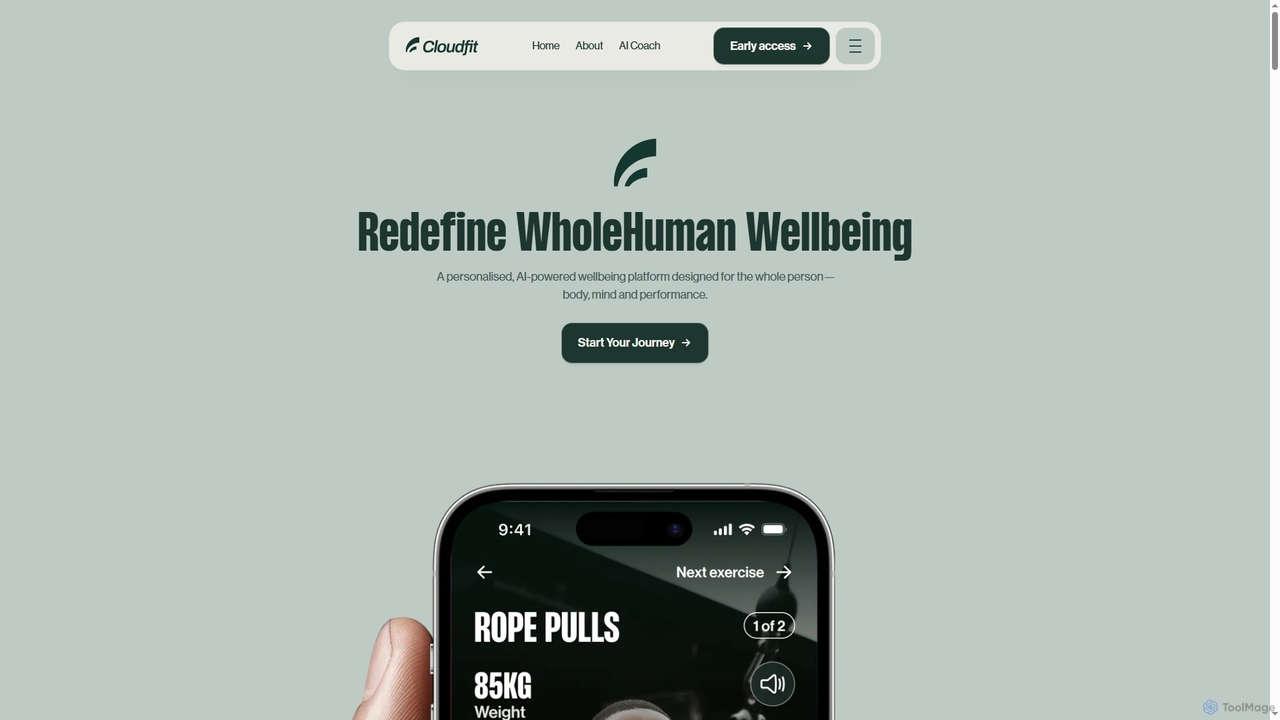
Cloudfit is an AI-powered wellbeing platform for holistic health, covering body, mind, and performance. It combines a 24/7 AI coach with certified human experts to deliver personalized fitness, nutrition, and wellness plans that adapt to your goals, progress, and daily life. Track trends, get data-driven insights, and receive real-time support to unlock your full potential.
About Wellness
AI Wellness apps are mobile applications that use artificial intelligence to provide personalized health, fitness, and mental well-being guidance. They analyze user data such as activity levels, sleep patterns, and mood logs to offer adaptive recommendations and real-time feedback. These apps function as intelligent personal coaches, helping users build healthier habits, manage stress, and achieve fitness goals more effectively. Their key advantage lies in moving beyond static plans to offer a dynamic and responsive wellness journey directly from a smartphone.
Core Features
- Personalized Plans: AI creates dynamic workout, nutrition, or meditation plans based on user progress and goals.
- AI Coaching & Chatbots: Provides motivational support and answers to health questions through conversational AI.
- Intelligent Tracking & Analysis: Identifies patterns in sleep, mood, or symptoms to offer actionable insights.
- Computer Vision for Nutrition: Instantly logs meals and analyzes nutritional content by taking a photo of the food.
- Biometric Data Integration: Syncs with wearables to analyze heart rate, HRV, and sleep stages for deeper health understanding.
Use Cases
These apps are ideal for individuals seeking structured, data-driven support for their health goals, from fitness enthusiasts wanting adaptive training to people managing stress or seeking mental clarity. They are also used within corporate wellness programs to provide scalable health resources to employees, promoting a healthier workforce.
How to Choose
When selecting an AI Wellness app, consider its primary focus (e.g., fitness, mental health, nutrition). Evaluate the quality of its AI-driven insights, its compatibility with your wearable devices, the privacy policy regarding your health data, and whether its subscription model aligns with your budget and long-term goals.

WellnessUse Cases
Personalized Mental Health Support
A professional experiencing work-related stress uses an AI Wellness app for daily mental health check-ins. The app's conversational AI guides them through short Cognitive Behavioral Therapy (CBT) exercises and mindfulness sessions tailored to their logged mood. By analyzing patterns in their journal entries, the AI helps identify stress triggers and suggests personalized coping strategies, such as a 5-minute breathing exercise before an important meeting. This provides accessible, on-demand mental support without the need to schedule appointments.
Adaptive Fitness Training at Home
A fitness enthusiast who works out at home uses an AI wellness app to generate daily routines. The user inputs their goals, available equipment, and time constraints. The AI then creates a personalized workout plan. After each session, the user provides feedback on the difficulty. The AI uses this feedback, along with performance data like reps completed and heart rate from a connected watch, to adjust the intensity and exercises for the next day's workout, ensuring continuous and optimal progress.
Intelligent Sleep Quality Coaching
An individual struggling with inconsistent sleep uses an AI app connected to their smartwatch. The app analyzes sleep stages, heart rate variability (HRV), and overnight movements. In the morning, it provides a sleep score and detailed insights, such as 'Your deep sleep was interrupted at 2 AM, possibly due to late-night caffeine.' The AI coach then suggests actionable tips, like setting a consistent bedtime or trying a guided meditation from the app before sleep, to improve sleep quality over time.
Automated Nutrition and Meal Planning
A user aiming for a healthier diet uses an AI wellness app with computer vision. They take a photo of their meal, and the AI instantly identifies the food items, estimates portion sizes, and logs the calories and macronutrients. Based on the user's dietary goals and logged meals, the AI generates a weekly meal plan complete with recipes and a shopping list, simplifying the process of healthy eating and removing the guesswork from calorie counting.
Guided Mindfulness and Meditation
A beginner looking to start a meditation practice uses an AI wellness app. The app offers a foundational course where an AI voice guide leads them through basic techniques. The app can use the phone's microphone to listen for ambient noise or the camera to track subtle movements, providing gentle feedback like 'It seems a bit noisy, try finding a quieter space.' As the user progresses, the AI suggests more advanced meditation techniques tailored to their logged stress levels and goals.
Predictive Insights for Chronic Condition Management
A person with Type 2 diabetes uses an AI wellness app to log blood glucose levels, meals, and physical activity. The AI analyzes this data over time to identify correlations, presenting insights like 'Your glucose levels tend to spike after meals containing white rice.' It can also provide predictive alerts, such as 'Based on your current activity and recent meal, your blood sugar may drop in the next hour. Consider having a small snack.' This empowers users to take proactive steps in managing their condition.