ToolMage
Sign in

Best 1 Navigation AI tools for Mobile Apps

Popular Navigation AI tools in Mobile Apps include Freeaiwalkingtour, helping you work more efficiently.

Freeaiwalkingtour
Free

Freeaiwalkingtour

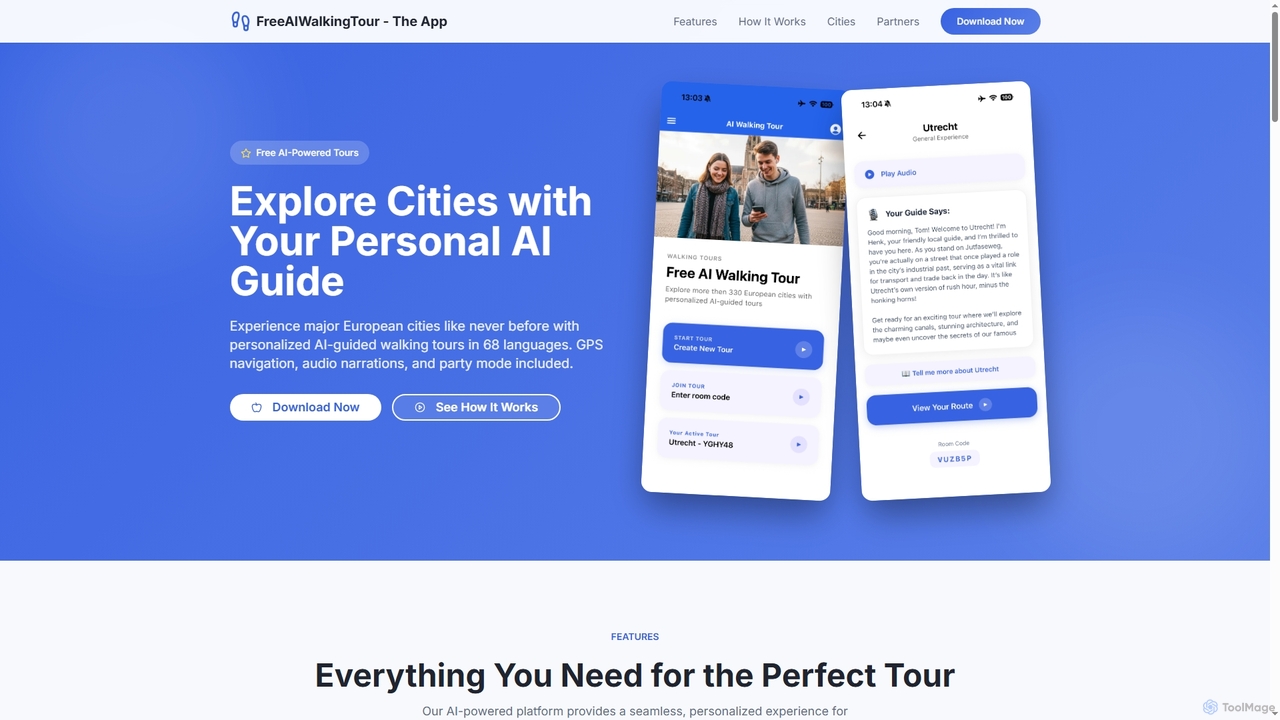
An AI-powered mobile application that creates personalized, free walking tours in major European cities. It features GPS navigation, audio narrations, offline support, and a unique 'Party Mode' for group exploration, all available in 68 languages.

Personalization
Visits 3.5KFavorites 116Likes 119

About Navigation

AI Navigation tools are a specialized category of mobile apps that leverage artificial intelligence to provide highly accurate, predictive, and personalized routing. These applications go beyond traditional GPS by using machine learning algorithms to analyze real-time traffic, historical data, and user behavior for superior route optimization. The primary value lies in their ability to offer smarter, faster, and more efficient travel planning, dynamically adapting to changing conditions. Many also integrate advanced features like augmented reality overlays and voice-controlled natural language interaction for a safer and more intuitive user experience.

Core Features

  • Predictive Traffic Analysis: Utilizes machine learning to forecast traffic conditions and suggest optimal departure times.
  • Dynamic Rerouting: Automatically finds faster alternative routes in real-time based on accidents, congestion, or road closures.
  • Augmented Reality (AR) View: Overlays directional arrows and information directly onto the live camera view of the street.
  • Personalized Recommendations: Learns user preferences to suggest relevant points of interest, such as fuel stations or restaurants.
  • Natural Language Voice Control: Allows users to control the app and input destinations using conversational voice commands.

Use Cases

AI Navigation tools are essential for logistics and delivery companies to optimize multi-stop routes, saving fuel and time. Daily commuters rely on them for intelligent planning that adapts to fluctuating traffic patterns. They are also invaluable for ride-sharing drivers who need the most efficient path to a destination and for travelers exploring unfamiliar cities, especially with AR features enhancing discovery.

How to Choose

When selecting an AI Navigation tool, consider the accuracy and frequency of its real-time data updates. Evaluate the sophistication of its predictive features and whether it offers specialized routing modes (e.g., for trucks, motorcycles, or eco-friendly travel). Also, assess the quality of its user interface, particularly the clarity of AR overlays and the responsiveness of voice commands. Finally, check its integration capabilities with other apps like calendars or music services.

Featured tool rankings

Navigation use cases

1

Optimizing Multi-Stop Delivery Routes

A logistics coordinator for a local delivery service needs to plan the most efficient route for a driver with 15 stops. Instead of manually sequencing the addresses, they use an AI Navigation app. The app's algorithm analyzes all destinations, considers real-time traffic data, predicted congestion, and delivery time windows. It then calculates the optimal sequence and route, reducing total travel time by up to 30% and significantly lowering fuel costs. The driver receives turn-by-turn directions that dynamically update if conditions change, ensuring all packages are delivered on time.

2

Intelligent Daily Commute Planning

A daily commuter uses an AI Navigation app to plan their trip to work. The app has learned their typical departure times and route preferences. Each morning, it proactively analyzes current traffic, road closures, and even public transport delays. Based on this analysis, it sends a notification suggesting the optimal time to leave and the best route for that specific day, which might be different from the usual one. This predictive capability helps the commuter consistently avoid unexpected traffic jams and arrive at work on time, reducing daily travel stress.

3

Exploring a New City with AR Navigation

A tourist visiting a historic city for the first time uses an AI Navigation app with an AR feature. Instead of constantly looking down at a 2D map, they hold up their phone and see navigational arrows and points of interest overlaid directly onto the real-world view through their camera. The app identifies landmarks, displays historical facts as they walk past, and points out hidden cafes that match their saved preferences. This creates a more immersive and safer walking experience, allowing the tourist to stay aware of their surroundings while easily finding their way.

4

Finding Eco-Friendly Driving Routes

An environmentally conscious driver wants to minimize their carbon footprint. They use an AI Navigation app that offers an 'eco-friendly' routing option. This feature's algorithm prioritizes routes with fewer hills, less stop-and-go traffic, and more consistent speeds, even if it's not the absolute fastest path. The app provides real-time feedback on driving habits like acceleration and braking to further improve fuel efficiency. Over time, the driver can track their fuel savings and CO2 reduction, making a tangible contribution to sustainability through their daily travel choices.

5

Personalized Pit Stop Recommendations

During a long road trip, a family needs to stop for gas and food. Their AI Navigation app, which has learned their preferences from past trips, proactively suggests a stop ahead. It doesn't just find the nearest gas station; it finds one from their preferred brand that also has a highly-rated, family-friendly restaurant and clean restrooms, located just a short detour off the highway. The recommendation is timed perfectly with their fuel level and typical break schedule, making the journey smoother and more enjoyable without the need to manually search for suitable stops.

6

Hands-Free Control in Heavy Traffic

A driver is navigating through dense, slow-moving city traffic. Instead of dangerously tapping on the screen to change their destination or find a nearby parking garage, they use the AI Navigation app's natural language voice control. They say, "Hey Navi, find the nearest public parking and take me there." The AI understands the conversational command, cancels the current route, finds a suitable parking garage with available spots, and seamlessly starts new directions. This allows the driver to keep their hands on the wheel and eyes on the road, significantly improving safety in a stressful driving situation.

Navigation FAQ

What are AI Navigation apps?

AI Navigation apps are advanced mobile applications that use artificial intelligence, particularly machine learning, to provide smarter and more efficient route planning than traditional GPS systems. They analyze vast amounts of data, including real-time traffic, historical patterns, and user preferences, to predict conditions and offer optimized routes. Key features often include predictive traffic analysis, dynamic rerouting, AR overlays, and natural language voice commands.

How do AI Navigation apps differ from standard GPS apps?

The main difference lies in their intelligence and predictive capabilities. Standard GPS apps typically rely on static map data and basic real-time traffic to find the shortest or fastest route at a given moment. AI Navigation apps go further by:

  • Predicting future traffic: They use historical data to forecast congestion before it happens.
  • Learning user behavior: They personalize routes and recommendations based on your habits.
  • Optimizing complex routes: They can calculate the most efficient sequence for multiple stops.
  • Offering advanced interfaces: They often include features like AR and superior voice control.
In essence, AI makes navigation proactive and personalized, rather than just reactive.

What is AR Navigation and how does it work?

Augmented Reality (AR) Navigation is a feature in some advanced navigation apps that overlays digital information, like directional arrows and street names, onto a live view of the real world through your phone's camera. It works by using a combination of GPS to determine your location, the phone's compass and accelerometer to understand its orientation, and computer vision to recognize the surrounding environment. This creates a more intuitive and immersive way to navigate, especially for pedestrians, as you can see exactly where to turn in the context of your actual surroundings.

Who can benefit most from using AI Navigation tools?

While almost any driver or traveler can benefit, certain groups find AI Navigation tools particularly valuable:

  • Professional Drivers: Delivery, ride-share, and truck drivers who rely on route efficiency for their income.
  • Daily Commuters: Individuals who travel the same route daily and want to avoid unpredictable delays.
  • Logistics Planners: Professionals who need to optimize complex, multi-stop routes for a fleet of vehicles.
  • Tourists and Explorers: People in unfamiliar locations who can use features like AR and personalized recommendations to discover new places safely.

How do I choose the right AI Navigation app?

To choose the best AI Navigation app for your needs, consider the following factors:

  • Data Accuracy: Look for apps known for reliable, frequently updated real-time traffic and map data.
  • Feature Set: Do you need advanced features like multi-stop route optimization, AR, or eco-friendly routing? Choose an app that offers what you'll actually use.
  • User Interface: The app should be easy to use while driving, with clear instructions and a responsive interface. Test the voice command functionality.
  • Platform Integration: Check if it integrates well with your car's infotainment system (e.g., Apple CarPlay, Android Auto) or other apps you use.
  • Privacy Policy: Since these apps collect location data, review their privacy policy to understand how your data is used.