ToolMage
Sign in

Best 2 Personalization AI tools for Ai Tools

Popular Personalization AI tools in Ai Tools include Freeaiwalkingtour and Epigram, helping you work more efficiently.

Freeaiwalkingtour
Free

Freeaiwalkingtour

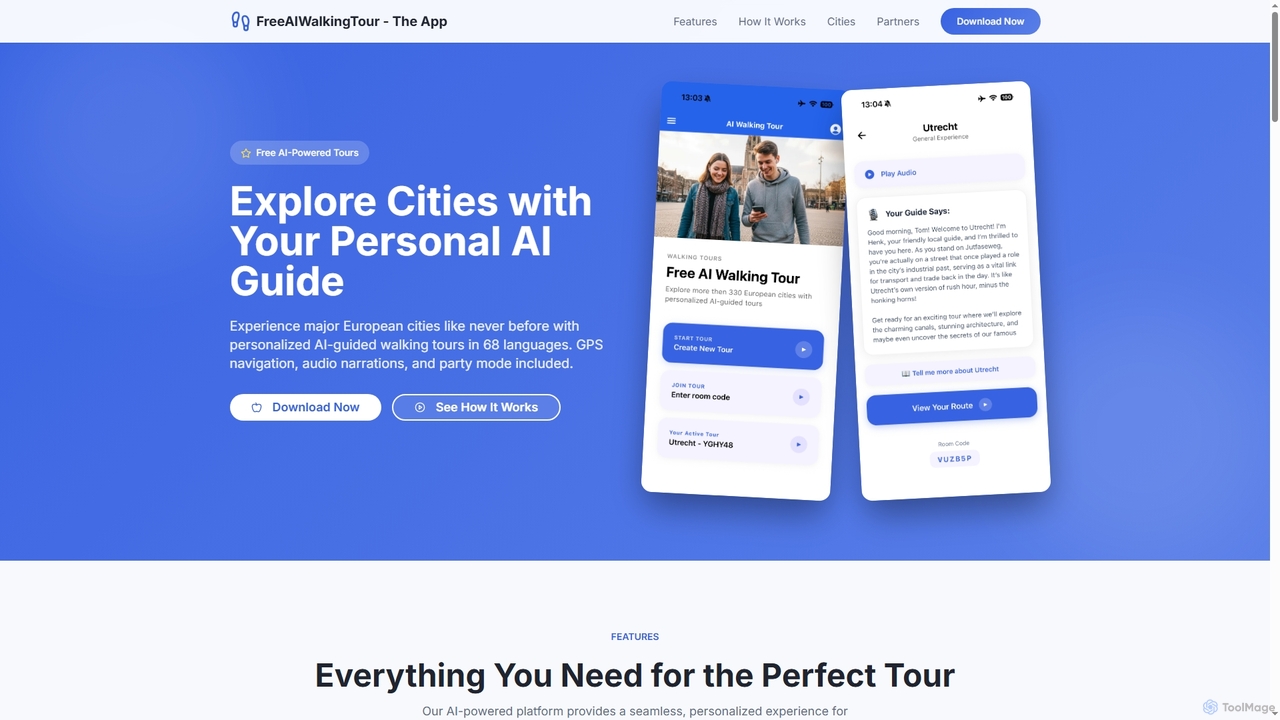
An AI-powered mobile application that creates personalized, free walking tours in major European cities. It features GPS navigation, audio narrations, offline support, and a unique 'Party Mode' for group exploration, all available in 68 languages.

Personalization
Visits 7.5KFavorites 148Likes 150
Epigram
Free

Epigram

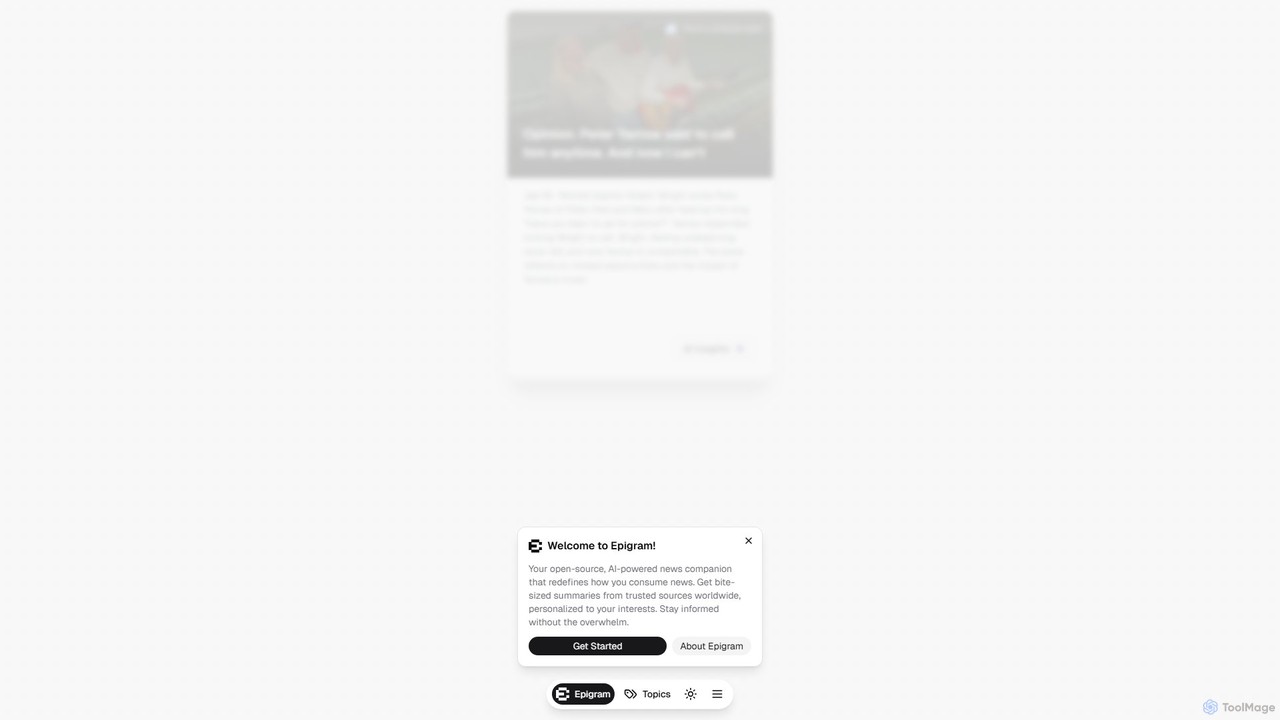
Epigram is a free, open-source AI news companion that delivers bite-sized summaries from trusted global sources. It personalizes your news feed, provides deep AI analysis, and helps you stay informed without information overload, all through an intuitive card-swiping interface.

Personalization
Visits 7.4KFavorites 143Likes 130

About Personalization

Personalization AI tools are designed to tailor experiences, content, and recommendations to individual users based on their unique preferences, behaviors, and data. These tools leverage machine learning algorithms to analyze vast datasets, identify patterns, and predict user needs, enabling highly relevant and engaging interactions. They enhance user satisfaction, drive engagement, and optimize conversion rates across various digital touchpoints, from e-commerce to content delivery.

Core Features

  • Behavioral Analysis: Tracks and interprets user actions (clicks, views, purchases) to build comprehensive profiles.
  • Content Recommendation Engines: Suggests relevant articles, products, or media based on past interactions and similar user profiles.
  • Dynamic UI/UX Adaptation: Modifies website layouts, app interfaces, or messaging in real-time to suit individual user preferences.
  • Predictive Analytics for User Needs: Forecasts future user actions or requirements, enabling proactive and targeted interventions.
  • A/B Testing & Optimization: Facilitates testing different personalized strategies to identify the most effective approaches.

Use Cases

Personalization AI tools are crucial for businesses aiming to create a unique journey for each customer. E-commerce platforms use them to recommend products, increasing average order value. Media companies apply them to curate news feeds or streaming content, boosting viewer retention. Marketing teams leverage them for targeted ad campaigns and email segmentation, improving engagement and ROI.

How to Choose

When selecting Personalization AI tools, consider the depth of behavioral data analysis, the range of integration capabilities with existing platforms (CRM, CMS), and the flexibility of customization options for different user segments. Evaluate the accuracy of recommendation algorithms, the ease of A/B testing, and the scalability to handle growing user bases and data volumes. Also, assess data privacy compliance and the level of technical expertise required for implementation and ongoing management.

Personalization use cases

1

Enhancing E-commerce Product Recommendations

E-commerce managers utilize personalization AI to analyze customer browsing history, purchase patterns, and demographic data. The AI then dynamically recommends products tailored to each individual shopper, such as 'customers who bought this also bought...' or 'personalized picks for you.' This significantly increases conversion rates, average order value, and customer loyalty by presenting highly relevant items at the right time.

2

Tailoring Content Feeds for Media Platforms

Content creators and media platforms deploy personalization AI to curate unique news feeds, article suggestions, or video playlists for each user. By understanding consumption habits, preferred topics, and engagement metrics, the AI ensures users see content most relevant to their interests. This boosts user engagement, extends session duration, and reduces churn by making the platform feel uniquely theirs.

3

Optimizing Marketing Email Campaigns

Marketing specialists leverage personalization AI to segment email lists and craft highly targeted messages. Instead of generic newsletters, the AI generates personalized subject lines, product offers, or content based on individual subscriber behavior, past interactions, and lifecycle stage. This dramatically improves open rates, click-through rates, and ultimately, campaign ROI, making each email feel like a one-on-one conversation.

4

Dynamic Website Experience Adaptation

Webmasters and UX designers use personalization AI to dynamically adjust website layouts, call-to-actions, and visual elements based on visitor behavior, location, and device. For instance, a first-time visitor might see a 'welcome offer,' while a returning customer sees 'recently viewed items.' This creates a more intuitive and efficient user journey, reducing bounce rates and guiding users towards conversion goals.

5

Personalized Customer Service Interactions

Customer service teams integrate personalization AI into chatbots and support systems to provide more relevant and efficient assistance. The AI accesses customer history, previous inquiries, and product usage data to offer tailored solutions, anticipate needs, and route complex issues to the most appropriate agent. This enhances customer satisfaction, reduces resolution times, and builds stronger customer relationships.

6

Adaptive Learning Paths in Educational Platforms

Educators and e-learning platforms employ personalization AI to create adaptive learning paths for students. The AI assesses a student's progress, learning style, and knowledge gaps, then recommends specific modules, exercises, or resources. This ensures each student receives a customized educational experience, maximizing learning effectiveness and engagement, and helping them master concepts at their own pace.

Personalization FAQ

What are Personalization AI tools?

Personalization AI tools are software solutions that use artificial intelligence, primarily machine learning, to deliver tailored experiences to individual users. They analyze data like behavior, preferences, and demographics to predict needs and customize content, recommendations, or interfaces. Their core aim is to enhance user engagement, satisfaction, and conversion rates by making interactions highly relevant.

How do Personalization AI tools work?

Personalization AI tools typically work by collecting and analyzing vast amounts of user data, including browsing history, purchase records, demographics, and real-time interactions. Machine learning algorithms, such as collaborative filtering or content-based filtering, then identify patterns and build individual user profiles. Based on these profiles, the AI generates and delivers customized content, product recommendations, or dynamic website adjustments in real-time, continuously learning and refining its suggestions.

What is the difference between Personalization and Segmentation?

Personalization focuses on tailoring experiences to individual users, treating each person uniquely based on their specific data and behavior. Segmentation, on the other hand, groups users into broader categories based on shared characteristics (e.g., age, location, purchase history) and then targets these groups with relevant content. While segmentation is a foundational step, personalization takes it further by offering a one-to-one, dynamic experience, often leveraging AI to achieve this at scale.

Who benefits most from using Personalization AI?

Businesses across various sectors benefit significantly from Personalization AI. E-commerce platforms see increased sales and customer loyalty through tailored product recommendations. Media and entertainment companies improve user retention by curating personalized content feeds. Marketing teams achieve higher engagement and ROI with targeted campaigns. Any organization aiming to deepen customer relationships, optimize user experience, and drive conversions through highly relevant interactions will find immense value in these tools.

What are the key challenges in implementing Personalization AI?

Implementing Personalization AI can present several challenges. Data quality and availability are crucial; insufficient or inaccurate data can lead to poor recommendations. Ensuring data privacy and compliance with regulations like GDPR or CCPA is paramount. Technical integration with existing systems can be complex. Additionally, avoiding over-personalization, which can feel intrusive, and continuously refining algorithms to adapt to changing user behaviors are ongoing challenges that require careful management.