dicelacancion
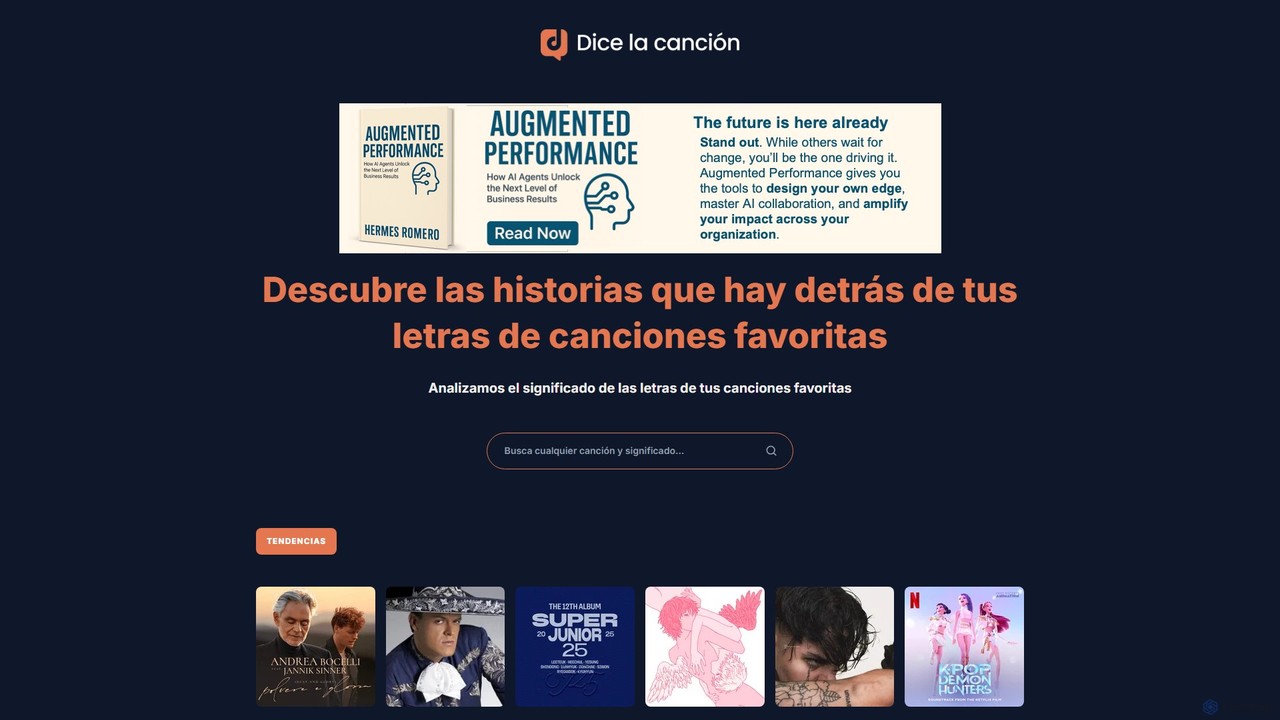
An AI-powered platform dedicated to uncovering the deeper meaning behind song lyrics. It provides a vast database of …
An AI-powered platform dedicated to uncovering the deeper meaning behind song lyrics. It provides a vast database of songs with detailed interpretations, translations, and thematic analyses, helping music lovers connect with their favorite artists on a new level.
About Lyrical Analysis
Lyrical Analysis tools are a specialized category of AI that use natural language processing (NLP) to dissect the meaning, structure, and emotional tone of song lyrics. These tools go beyond simple word counting, leveraging algorithms to identify complex themes, sentiment shifts, and literary devices. They provide objective, data-driven insights into the artistic and narrative components of music, enabling a deeper understanding of songwriting. This empowers creators, researchers, and industry professionals to analyze lyrical content at scale.
Core Features
- Sentiment Analysis: Detects the emotional trajectory of a song, identifying tones like joy, sadness, anger, or hope within the lyrics.
- Thematic Extraction: Automatically identifies and categorizes the main subjects and recurring motifs, such as love, loss, social commentary, or celebration.
- Rhetorical Device Identification: Pinpoints literary techniques like metaphors, similes, alliteration, and complex rhyme schemes.
- Structural Analysis: Maps out the song's narrative structure, including verses, choruses, bridges, and lyrical progression.
- Vocabulary Complexity Scoring: Assesses the lexical richness and readability of lyrics, providing a quantitative measure of linguistic sophistication.
Use Cases
These tools are valuable for musicologists studying lyrical trends across genres or eras, songwriters seeking inspiration by deconstructing successful songs, and A&R professionals evaluating the lyrical depth of new artists. Music streaming services also use this technology to create highly specific, mood-based playlists driven by lyrical content rather than just musical genre.
How to Choose
When selecting a Lyrical Analysis tool, consider the depth of its analytical capabilities—does it only offer sentiment analysis or also identify complex literary devices? Evaluate its language support for analyzing songs from different cultures. For developers, API availability and documentation are crucial for integration. Finally, assess the quality of its data visualization for interpreting the results effectively.

Lyrical AnalysisUse Cases
Academic Research on Lyrical Trends
A musicologist or cultural studies researcher uses a lyrical analysis tool to process a large corpus of songs from a specific decade, such as the 1960s. The tool automatically extracts dominant themes like 'protest,' 'love,' and 'freedom,' and tracks the sentiment arc across popular genres. This allows the researcher to publish a data-driven paper on how societal changes were reflected in popular music lyrics, replacing months of manual reading with a few hours of automated analysis and providing quantitative evidence for their thesis.
Enhancing Songwriting and Composition
A songwriter experiencing writer's block inputs the lyrics of a classic hit song into an analysis tool. The tool visualizes the song's emotional journey, highlighting the shift from a melancholic verse to a hopeful chorus. It also identifies a complex internal rhyme scheme the writer hadn't noticed. Inspired by this structural and emotional blueprint, the songwriter experiments with similar emotional transitions and rhyming patterns in their own work, helping them overcome the creative hurdle and add new depth to their lyrics.
A&R and Talent Scouting Analysis
An A&R representative at a record label receives hundreds of demo submissions weekly. To streamline the process, they use a lyrical analysis tool to quickly screen the lyrical quality. The tool flags songs with high vocabulary complexity, unique thematic combinations, and consistent emotional storytelling. This allows the representative to prioritize listening to artists who demonstrate sophisticated songwriting skills, making the scouting process more efficient and data-informed.
Curating Thematic Music Playlists
A curator for a music streaming service needs to create a new playlist called 'Songs of Resilience'. Instead of manually searching for songs, they use a lyrical analysis tool to scan their catalog for lyrics containing themes of 'overcoming adversity,' 'strength,' and 'hope.' The tool returns a ranked list of songs, allowing the curator to build a high-quality, thematically consistent playlist in a fraction of the time, improving user engagement and content discovery on the platform.
Data-Driven Music Journalism
A music critic is writing a feature article comparing the lyrical evolution of two major artists over their careers. They use a lyrical analysis tool to generate visualizations of each artist's vocabulary complexity over time and a comparison of their most frequently used themes. This provides objective data to support their critical observations, allowing them to state, for example, that 'Artist A's lyrics grew 40% more complex and shifted from themes of romance to social commentary,' adding a layer of empirical evidence to their journalism.
Selecting Music for Brand Campaigns
A marketing agency is looking for a song for a car commercial that evokes feelings of 'freedom' and 'adventure'. They use a lyrical analysis API to programmatically screen thousands of songs from a music licensing library. The API flags songs with high scores for the desired themes and positive sentiment. The marketing team can then review a pre-vetted shortlist of 20 songs instead of hundreds, ensuring the final choice has lyrics that perfectly align with the brand's message and saving significant time in the selection process.