
ToolMage
Sign in

Best 1 Singing Synthesis AI tools for Music

Popular Singing Synthesis AI tools in Music include MyVocal.ai, helping you work more efficiently.

MyVocal.ai
Freemium

MyVocal.ai

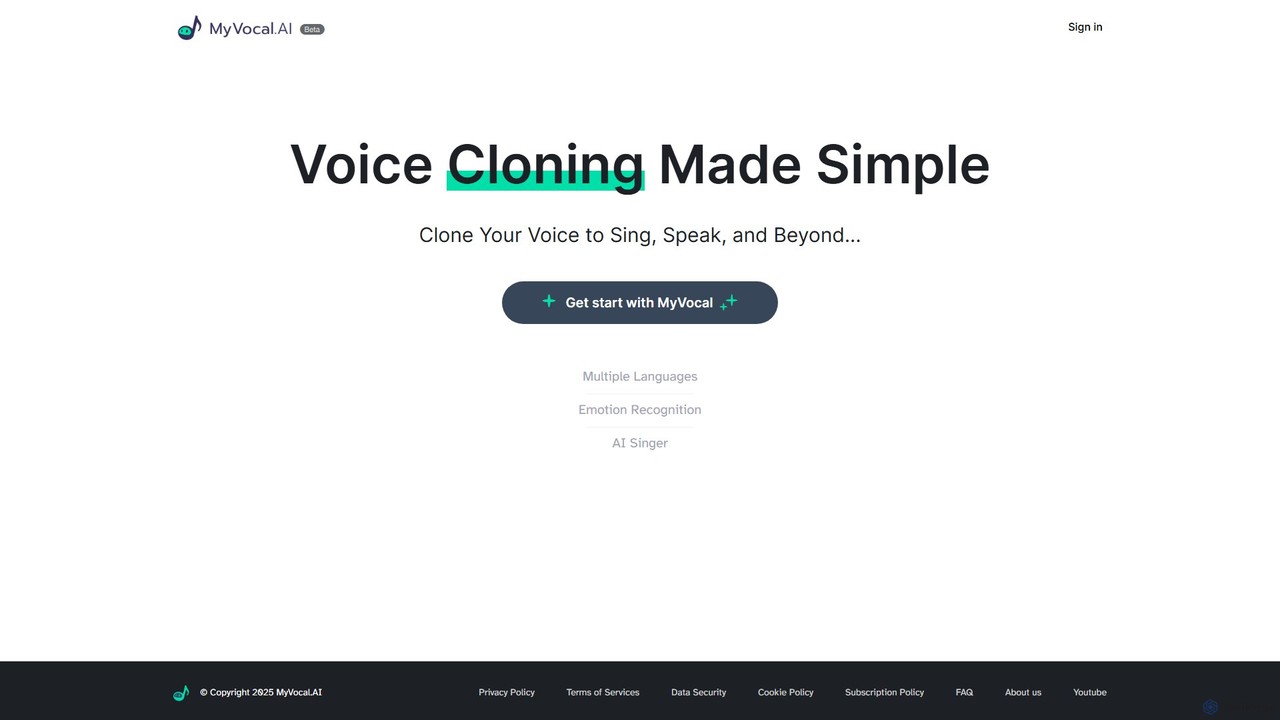
MyVocal.ai is a powerful AI voice platform for instant voice cloning, AI singing, and multi-language text-to-speech. Clone your voice in minutes to create realistic voiceovers, generate expressive song covers, and speak in multiple languages with emotional nuance.

Voice Cloning
Visits 57.8KFavorites 132Likes 125

About Singing Synthesis

Singing Synthesis tools are AI-powered applications that generate human-like singing voices from various inputs like text, MIDI data, or musical scores. These advanced systems leverage deep learning and neural networks to mimic the nuances of human vocal performance, including pitch, timbre, and emotional expression. They offer musicians, producers, and content creators a versatile way to add custom vocals to their projects without needing a human singer. This technology significantly expands creative possibilities within music production.

Core Features

  • Voice Generation: Create diverse singing voices, from realistic to stylized, based on user-defined parameters.
  • Pitch and Timing Control: Precisely adjust vocal melodies, rhythm, vibrato, and phrasing to match musical arrangements.
  • Lyric Synchronization: Automatically align generated vocals with provided lyrics, ensuring accurate pronunciation and timing.
  • Vocal Style and Emotion: Apply various singing styles (e.g., pop, opera, rock) and emotional inflections (e.g., happy, sad, powerful).
  • Parameter Editing: Fine-tune vocal characteristics like breathiness, vocal fry, and resonance for unique sonic textures.

Use Cases

Singing Synthesis is invaluable for music producers creating demos, game developers needing unique character voices, and virtual idol creators. It also assists composers in prototyping vocal lines and educators demonstrating vocal techniques.

How to Choose

When selecting a Singing Synthesis tool, consider the realism and naturalness of the generated voices, the range of vocal styles and emotional expressions available, and the ease of pitch and timing control. Evaluate its compatibility with your existing music production software and the flexibility of its parameter editing capabilities.

Singing Synthesis use cases

1

Creating Vocal Demos for Songwriters

Songwriters can quickly generate high-quality vocal tracks for their compositions, allowing them to hear how melodies and lyrics sound with a singing voice before hiring a human vocalist. This accelerates the songwriting process and helps refine arrangements.

2

Developing Virtual Idol Performances

Entertainment companies and content creators utilize singing synthesis to bring virtual idols to life, generating unique vocal performances for songs, concerts, and interactive experiences. This enables consistent vocal quality and diverse musical outputs.

3

Prototyping Game Character Songs

Game developers can use singing synthesis to create distinct singing voices for in-game characters or background music, experimenting with different vocal styles and emotional tones to enhance narrative and player immersion. It offers flexibility in character voice design.

4

Producing Background Vocals and Harmonies

Music producers can generate intricate background vocals and harmonies to enrich their tracks, experimenting with various vocal layers and textures without the need for multiple recording sessions or session singers. This adds depth and complexity to arrangements.

5

Educational Tools for Music Theory

Music educators can employ singing synthesis to demonstrate vocal melodies, harmonies, and counterpoint in real-time, helping students visualize and hear complex musical concepts. It provides an interactive way to teach vocal arrangement and composition.

6

Customizing Jingles and Advertisements

Marketing professionals and advertisers can create unique, memorable jingles and voiceovers with custom singing voices for commercials and branding campaigns. This allows for precise control over vocal delivery and brand identity.

Singing Synthesis FAQ

What is Singing Synthesis?

Singing Synthesis is a technology that uses artificial intelligence to generate singing voices. It takes inputs like text, MIDI, or musical notation and produces vocal performances that can mimic human singing, complete with pitch, rhythm, and expressive qualities. It's a specialized branch of speech synthesis focused on musical vocalization.

How do Singing Synthesis tools work?

Most Singing Synthesis tools operate using advanced deep learning models, often neural networks trained on vast datasets of human singing. Users input lyrics, melody (MIDI), and sometimes vocal style parameters. The AI then processes this information to generate an audio waveform that sounds like a human singing the specified song.

What are the key differences between Singing Synthesis and traditional vocal recording?

Singing Synthesis offers complete control over every vocal parameter, allowing for perfect pitch, timing, and endless stylistic variations without human limitations. Traditional recording captures a human performance, offering natural emotion and unique imperfections. Synthesis is ideal for prototyping, virtual characters, and specific stylistic needs, while recording is for authentic human expression.

Can Singing Synthesis tools create realistic human-like voices?

Modern Singing Synthesis tools have made significant strides in realism. While some still have a distinct "synthesized" quality, many can produce highly convincing and natural-sounding voices, especially when combined with careful parameter tuning and post-processing. The level of realism often depends on the specific tool and the complexity of the desired performance.

Who benefits most from using Singing Synthesis tools?

Singing Synthesis tools are particularly beneficial for music producers, songwriters, and composers who need flexible vocal options for demos, arrangements, or experimental tracks. Game developers, virtual idol creators, and multimedia artists also benefit from generating unique character voices. Educators can use them for demonstrating musical concepts.