
ToolMage
Sign in

Best 1 Song Recognition AI tools for Music

Popular Song Recognition AI tools in Music include Songifier, helping you work more efficiently.

Songifier
Free

Songifier

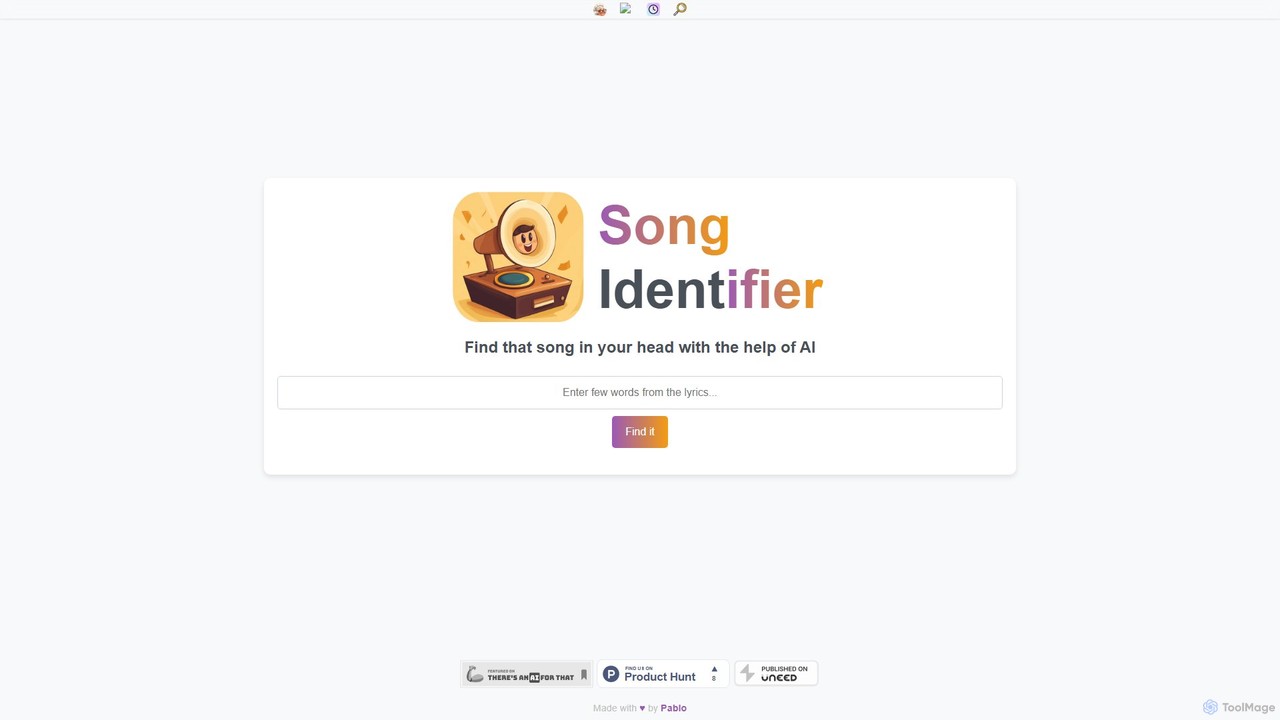
Songifier is an AI-powered song identifier that helps you find any song by simply typing in the lyrics you remember. Whether it's a full line or just a few words, its intelligent search engine quickly scans a vast music database to identify the track, artist, and provide listening links.

Music
Visits 6.9KFavorites 137Likes 136

About Song Recognition

AI Song Recognition tools are specialized applications designed to identify music from a short audio sample, such as a recording, humming, or singing. These tools utilize advanced audio fingerprinting algorithms to create a unique digital signature of the sound and match it against a vast database of known songs. They provide a quick and accurate way for users to discover song titles, artists, and other metadata from unknown audio sources. This technology is crucial for content creators avoiding copyright issues and for consumers instantly identifying catchy tunes.

Core Features

  • Audio Fingerprinting: Accurately matches a short audio clip to a specific song in a massive database.
  • Humming & Melody Recognition: Identifies songs based on a user humming, singing, or whistling the tune.
  • Background Music Identification: Detects and identifies music playing in noisy environments or within video files.
  • API for Integration: Provides developer access to integrate recognition features into third-party applications and services.
  • Metadata Retrieval: Delivers detailed information like song title, artist, album, release year, and links to streaming platforms.

Use Cases

These tools are widely used by consumers to identify songs heard on the radio or in public spaces. Content creators and social media managers use them to check for copyrighted music in their videos, while developers integrate the technology into apps for enhanced user engagement. Broadcasters and businesses also use them for monitoring music airplay for licensing compliance.

How to Choose

When selecting a song recognition tool, consider its database size and accuracy rate. Evaluate its ability to recognize various inputs like humming or noisy recordings. For developers, the quality of the API documentation and integration support is critical. Also, review the pricing model, whether it's based on usage volume, a monthly subscription, or a one-time fee.

Song Recognition use cases

1

Identify Copyrighted Music in Videos

For content creators and YouTubers, avoiding copyright infringement is critical. Before publishing a video, they use a song recognition tool to scan the entire audio track. The tool identifies any background music, providing the song title and artist. This allows the creator to verify if the music is royalty-free or requires a license, helping them prevent copyright strikes and potential demonetization. This automated process saves hours of manual searching and provides peace of mind.

2

Discover New Music On The Go

A casual user in a coffee shop or store hears a song they like. They open a song recognition app on their smartphone and let it listen for a few seconds. The app quickly identifies the track, displaying the artist and title. The user can then save the song to a playlist on their preferred streaming service, instantly capturing new music discoveries without missing a beat. This seamless experience turns passive listening into active music discovery.

3

Powering In-App Music Features

A mobile app developer wants to add an interactive music feature to their social media application. They integrate a song recognition API to allow users to tag the music playing in their video stories. When a user records a video, the app's backend sends the audio to the recognition service. The service returns the song's metadata, which is then automatically overlaid on the video, creating a richer, more engaging user experience similar to features on Instagram or TikTok.

4

Monitor Radio Airplay for Royalties

Music labels and royalty collection agencies need to track how often their artists' songs are played on radio stations. They employ automated song recognition systems that continuously monitor thousands of broadcast streams. The system identifies every song played, logs the time and station, and generates detailed reports. This data is crucial for ensuring accurate royalty distribution to artists and publishers and for analyzing market trends and promotional effectiveness.

5

Find a Song from a Faint Memory

A musician remembers a melody from years ago but can't recall the title or artist. They use a tool with humming recognition capabilities. By humming or singing the tune into their device's microphone, the AI analyzes the pitch and rhythm. It compares this melodic pattern against its database to suggest potential matches, helping the user rediscover a long-lost favorite song. This feature is invaluable for anyone trying to identify a song without an original audio recording.

6

Curate Playlists for DJs and Venues

A professional DJ hears a track in another DJ's live set or a retail store that would be perfect for their own mix. They discreetly use a song recognition tool to identify it instantly. This allows them to quickly build their music library, discover new artists, and curate fresh, dynamic playlists for events, clubs, or commercial venues. The immediate identification streamlines the music discovery process, which is essential for staying current in the fast-paced music industry.

Song Recognition FAQ

What is AI Song Recognition?

AI Song Recognition is a technology that uses artificial intelligence to identify a piece of music from an audio sample. These tools analyze an audio clip's unique characteristics, creating an 'acoustic fingerprint' which is then compared against a massive database of songs to find a match. They can identify music from recordings, live environments, and even user-generated inputs like humming or singing, answering the question 'What song is this?' in seconds.

How do I choose the right song recognition tool?

To choose the right tool, consider these key factors:

  • Accuracy & Database Size: A larger, more diverse database leads to higher identification accuracy for a wider range of music, including niche genres.
  • Input Types: Check if the tool supports the inputs you need, such as humming, singing, or identifying music in noisy backgrounds.
  • Speed: How quickly does the tool return a result? For real-time applications like live broadcasts or in-app features, speed is crucial.
  • Developer API: If you plan to integrate the technology, evaluate the API's ease of use, documentation, pricing, and scalability.
How does song recognition technology work?

Most song recognition tools work using a technique called acoustic fingerprinting. The software captures a short sample of audio and creates a digital summary of its key acoustic properties, like frequency peaks and tempo patterns. This 'fingerprint' is a unique identifier for that specific recording. The tool then searches a vast database of pre-computed fingerprints from millions of songs to find a match and returns the corresponding song information. It's similar to how a human fingerprint uniquely identifies a person.

Can these tools identify a song if I just hum it?

Yes, many advanced song recognition tools are equipped with 'query-by-humming' or melody recognition capabilities. Instead of matching an exact audio fingerprint from a studio recording, these systems analyze the pitch, tempo, and melodic contour of your humming or singing. They then compare this melodic pattern against their database to find songs with a similar tune. While generally less accurate than identifying an original recording, this technology is remarkably effective at finding a song from memory.

What's the difference between Song Recognition and AI Music Generation tools?

The key difference is their purpose: one is analytical, the other is creative.

  • Song Recognition tools identify existing music. They take an audio input and tell you what song it is. Their goal is to provide information about pre-existing content.
  • AI Music Generation tools create new, original music. They take a text prompt or set of parameters (like genre or mood) and generate a unique piece of music that did not exist before.
In short, recognition finds what's already there, while generation makes something new.