Music Best in category 3 results Vocal Synthesis AI Tool

Popular AI tools in the Vocal Synthesis field of Music include Applio、VOX Factory、Vagabond AI, etc., helping you quickly improve efficiency.

VOX Factory

VOX Factory

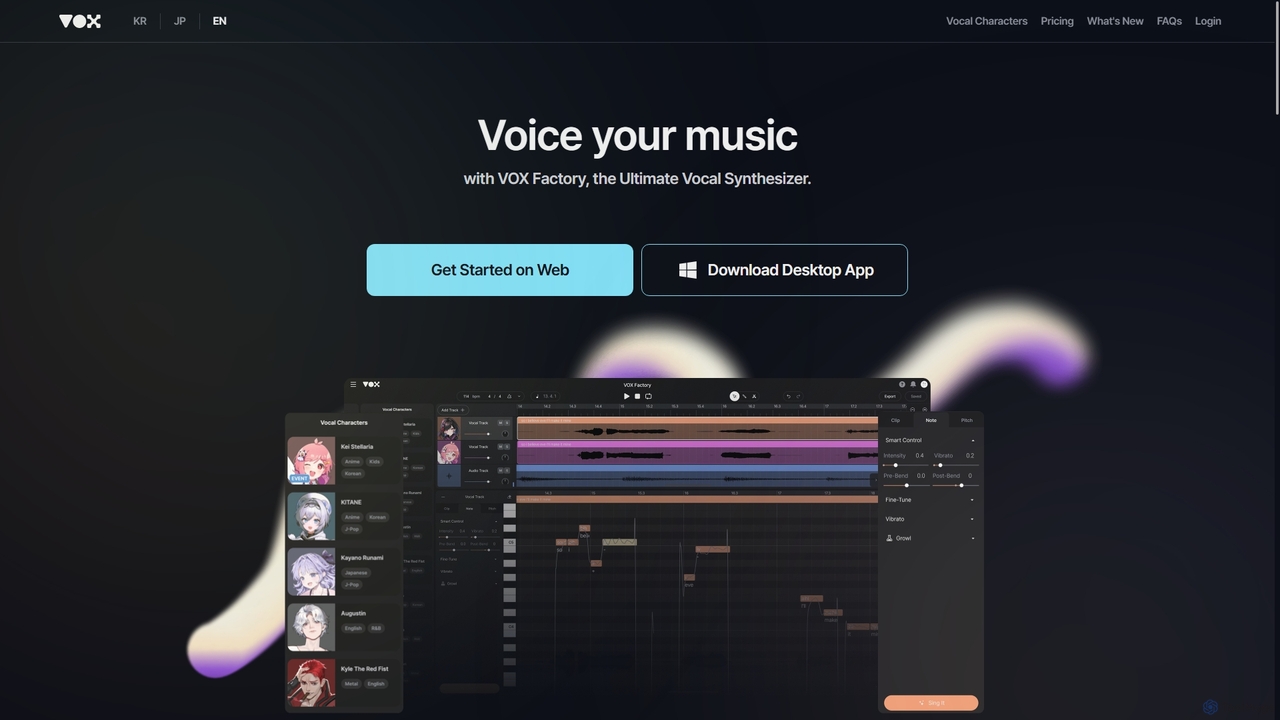
VOX Factory is an advanced AI vocal synthesizer that enables music producers and creators to generate high-quality, expressive …

19.9K
Free
Applio

Applio

Applio is a free, user-friendly desktop application for high-quality voice conversion. Designed for simplicity and performance, it allows …

112.9K
Vagabond AI

Vagabond AI

Vagabond AI is a cutting-edge marketplace for creating and sharing AI voice clones. It uniquely combines deep neural …

3.2K

About Vocal Synthesis

Vocal Synthesis tools are AI-powered applications that generate human-like singing or speaking voices from text, MIDI, or musical notation. Leveraging advanced deep learning and neural networks, these tools can create expressive and nuanced vocal performances, offering unprecedented control over pitch, timbre, and emotion. They empower musicians, content creators, and developers to produce high-quality vocal tracks without the need for human performers, revolutionizing audio production workflows within the broader music technology landscape.

Core Features

  • Text-to-Speech (TTS) for Singing: Converts written lyrics into sung vocals with customizable melodies and rhythms.
  • Voice Cloning & Customization: Replicates existing voices or creates unique synthetic voices with specific characteristics.
  • Expressive Control: Allows fine-tuning of vocal nuances like vibrato, dynamics, breath sounds, and emotional delivery.
  • Multi-language Support: Generates vocals in various languages, often with culturally appropriate intonation.
  • MIDI-to-Vocal Conversion: Transforms instrumental MIDI data into vocal lines, enabling melodic control.

Use Cases

Vocal Synthesis tools are invaluable for music producers, game developers, and multimedia artists. They enable the creation of demo tracks, background vocals, or even lead vocals for songs, providing a flexible and cost-effective alternative to hiring singers. In game development, they can generate unique character voices or dynamic in-game narration, while content creators use them for podcasts, audiobooks, and educational materials, ensuring consistent voiceovers.

How to Choose

When selecting a Vocal Synthesis tool, consider the desired vocal quality and realism, the range of expressive controls offered, and the availability of voice customization options. Evaluate the supported languages and integration capabilities with your existing digital audio workstation (DAW). Pricing models, ease of use, and the community support for specific voice libraries are also crucial factors for making an informed decision.

Vocal SynthesisUse Cases

1

Creating Demo Vocals for Songwriters

Songwriters can quickly generate realistic vocal tracks for their compositions using Vocal Synthesis tools. By inputting lyrics and a melody (via MIDI or notation), they can hear their songs with a human-like voice, allowing for rapid iteration and refinement of arrangements before involving a human singer or studio time. This significantly speeds up the songwriting and pre-production process.

2

Producing Virtual Idol Songs

Music producers for virtual idols or animated characters utilize Vocal Synthesis to create unique singing voices. These tools allow for consistent vocal performance across numerous songs and live performances, enabling the development of a distinct sonic identity for the virtual artist without relying on a single human performer, offering creative freedom and scalability.

3

Developing Game Character Voices

Game developers employ Vocal Synthesis to generate a diverse range of character voices, from protagonists to NPCs. This allows for rapid prototyping of dialogue, consistent voice acting across extensive game narratives, and the creation of unique, fantastical voices that might be difficult or impossible for human actors to produce, enhancing immersion and storytelling.

4

Narrating Audiobooks and Podcasts

Content creators and publishers use Vocal Synthesis for efficient narration of audiobooks, podcasts, and educational content. By converting scripts into natural-sounding speech, they can produce high-quality audio content quickly and cost-effectively, maintaining a consistent voice tone and style across long-form projects without the need for recording studios or voice actors.

5

Generating Background Vocals and Harmonies

Music producers can use Vocal Synthesis to add intricate background vocals, harmonies, and ad-libs to their tracks. This provides flexibility in experimenting with different vocal arrangements, creating complex layers, and filling out a song's sonic landscape without the logistical challenges or costs associated with recording multiple human vocalists, enriching the overall sound.

6

Localizing Multimedia Content

Multimedia companies leverage Vocal Synthesis to localize video games, films, and educational content into multiple languages. By synthesizing voices in various target languages, they can quickly adapt dialogue and narration, ensuring cultural appropriateness and consistent voice quality across different regions, significantly reducing localization time and expenses.

Vocal SynthesisFrequently Asked Questions