ToolMage
Sign in

Best 3 Voice Synthesis AI tools for Music

Popular Voice Synthesis AI tools in Music include Controlla Voice, Covers.ai, and coverartist.ai, helping you work more efficiently.

Covers.ai
Freemium

Covers.ai

Covers.ai is a powerful AI music platform for creating viral content. It allows users to generate AI song covers, create custom AI voices, swap lyrics and genres, and produce engaging videos for social media. Designed for artists, marketers, and creators, it simplifies the process of making high-quality, shareable music and voice content.

Meme Generator
Visits 221.2KFavorites 122Likes 130
coverartist.ai
Freemium

coverartist.ai

CoverArtist.AI is a revolutionary platform that uses artificial intelligence to create high-quality song covers. Replace the original vocals in any song with a voice from a vast library of AI models, or clone your own voice for a personalized touch. It's the ultimate tool for musicians, content creators, and music fans to reimagine their favorite tracks in minutes.

Audio Editing
Visits 5.8KFavorites 145Likes 133
Controlla Voice
Freemium

Controlla Voice

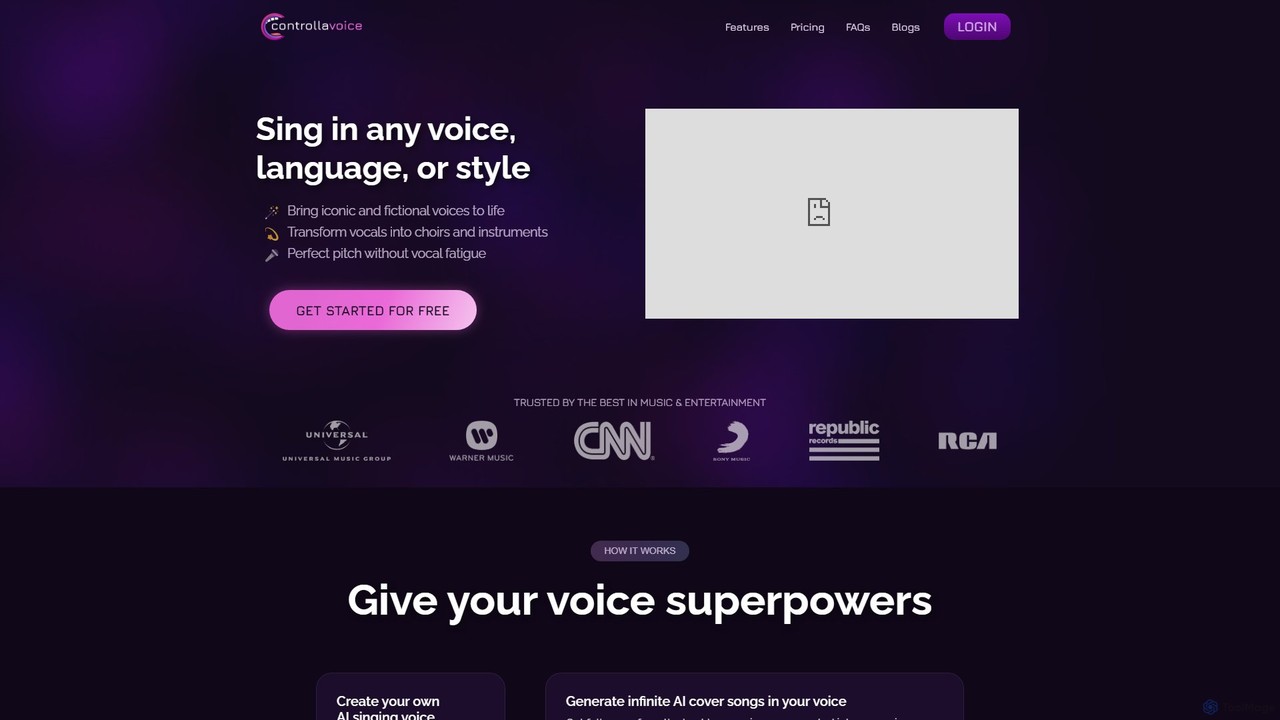
Controlla Voice is an advanced AI singing voice generator that allows users to clone their voice, create AI cover songs, transform vocals into instruments or choirs, and perform in any language. It's designed for musicians, producers, and creators to explore new sonic possibilities with ethically sourced, high-quality AI voices.

Voice Cloning
Visits 359.2KFavorites 102Likes 109

About Voice Synthesis

Voice Synthesis tools are AI-powered applications that generate human-like speech from written text. Utilizing advanced deep learning and neural networks, these tools transform textual input into natural-sounding audio, complete with varied tones, emotions, and linguistic nuances. Within the broader category of Music AI tools, voice synthesis specifically enables the creation of vocal elements, narration, and spoken word content, offering a versatile solution for audio production and accessibility.

Core Features

  • Natural Sounding Voices: Produces highly realistic and fluent human-like speech.
  • Multi-language & Accent Support: Offers a wide range of languages, dialects, and regional accents.
  • Emotion & Tone Control: Allows adjustment of speech emotion (e.g., happy, sad) and vocal tone.
  • Custom Voice Creation: Enables training AI models to generate unique, branded voices.
  • SSML (Speech Synthesis Markup Language) Support: Provides fine-grained control over pronunciation, pauses, and emphasis.

Applicable Scenarios

Content creators, educators, businesses, and developers leverage voice synthesis for diverse applications. This includes generating engaging audio for podcasts, video narrations, e-learning modules, and automated customer service interactions, significantly streamlining audio content production workflows.

How to Choose

When selecting a voice synthesis tool, consider the quality and naturalness of the generated voices, the breadth of language and accent support, and the available customization options for emotion and speaking style. Evaluate integration capabilities with existing platforms and compare pricing models, such as per-character or subscription-based plans, to find the best fit for your specific needs.


Voice Synthesis use cases

1

Audiobook Production

Audiobook creators and publishers utilize voice synthesis to efficiently convert text manuscripts into fully narrated audiobooks. By inputting written content, they can generate consistent, high-quality narration with chosen voices and styles, drastically reducing the time and cost associated with human voice actors and studio recordings, enabling faster market entry for new titles.

2

Podcast & Video Narration

Podcasters, YouTubers, and video content creators use voice synthesis to generate professional voiceovers for their episodes and visual content. This allows them to produce engaging narratives without needing to record their own voices, ensuring consistent audio quality, saving significant production time, and enabling content creation in multiple languages for a global audience.

3

E-learning Content Creation

Educators and instructional designers employ voice synthesis to develop interactive and accessible e-learning modules. They can convert lesson plans, quizzes, and explanatory texts into clear, engaging spoken content, providing auditory learning experiences for students, supporting different learning styles, and making educational materials more inclusive for those with reading difficulties.

4

Customer Service & IVR Systems

Businesses integrate AI-powered voice synthesis into their Interactive Voice Response (IVR) systems and virtual customer service agents. This enables automated, natural-sounding responses to customer queries, guiding callers through menus, providing information, and handling routine requests efficiently, leading to improved customer satisfaction and reduced operational costs.

5

Accessibility Solutions

Developers and organizations create accessibility tools that convert web pages, documents, and digital content into spoken word for individuals with visual impairments or reading disabilities. Voice synthesis ensures that information is universally accessible, allowing users to consume written content audibly, thereby promoting inclusivity and equal access to information.

6

Marketing & Advertising Voiceovers

Marketing professionals and advertisers leverage voice synthesis to produce compelling voiceovers for commercials, product demonstrations, and promotional videos. This allows for rapid iteration of scripts, consistent brand voice across campaigns, and the ability to quickly localize content into various languages, enhancing audience engagement and market reach without extensive studio work.

Voice Synthesis FAQ

What is Voice Synthesis?

Voice Synthesis, also known as Text-to-Speech (TTS), is an AI technology that converts written text into spoken audio. It uses deep learning models to generate human-like voices, complete with natural intonation, rhythm, and emotion. Within the broader context of AI in music, voice synthesis provides the vocal component, enabling the creation of spoken narratives, lyrics, or dialogue that can complement musical compositions or stand alone as audio content.

How does AI Voice Synthesis work?

AI Voice Synthesis typically works by taking text input and processing it through neural networks trained on vast datasets of human speech. These networks learn to map text to phonetic representations, predict prosodic elements like pitch and duration, and then generate corresponding audio waveforms. Advanced models often use techniques like Tacotron and WaveNet to produce highly natural and expressive speech.

What are the benefits of using Voice Synthesis tools?

The benefits of voice synthesis tools are numerous: they offer significant time and cost savings compared to hiring voice actors, ensure consistent voice quality and branding across all content, and enable rapid content localization into multiple languages. They also enhance accessibility for individuals with reading difficulties or visual impairments, making information more inclusive and widely available.

How to choose the best Voice Synthesis tool?

To choose the best voice synthesis tool, evaluate the naturalness and expressiveness of its generated voices, ensuring they sound human-like and not robotic. Consider the range of supported languages and accents, as well as options for controlling emotion, pitch, and speaking style. Check for API availability for seamless integration into your workflows and compare pricing structures based on your usage volume.

What is the difference between Voice Synthesis and Voice Cloning?

Voice Synthesis (Text-to-Speech) generates speech from written text using a pre-trained or generic AI voice. Voice Cloning, on the other hand, involves creating a new AI voice model that mimics the unique vocal characteristics (timbre, accent, speaking style) of a specific human speaker, often requiring a sample of their voice. While synthesis creates new spoken content, cloning replicates an existing voice.