ToolMage
Sign in

Best 1 Ai Trends AI tools for News

Popular Ai Trends AI tools in News include Artificin, helping you work more efficiently.

Artificin
Free

Artificin

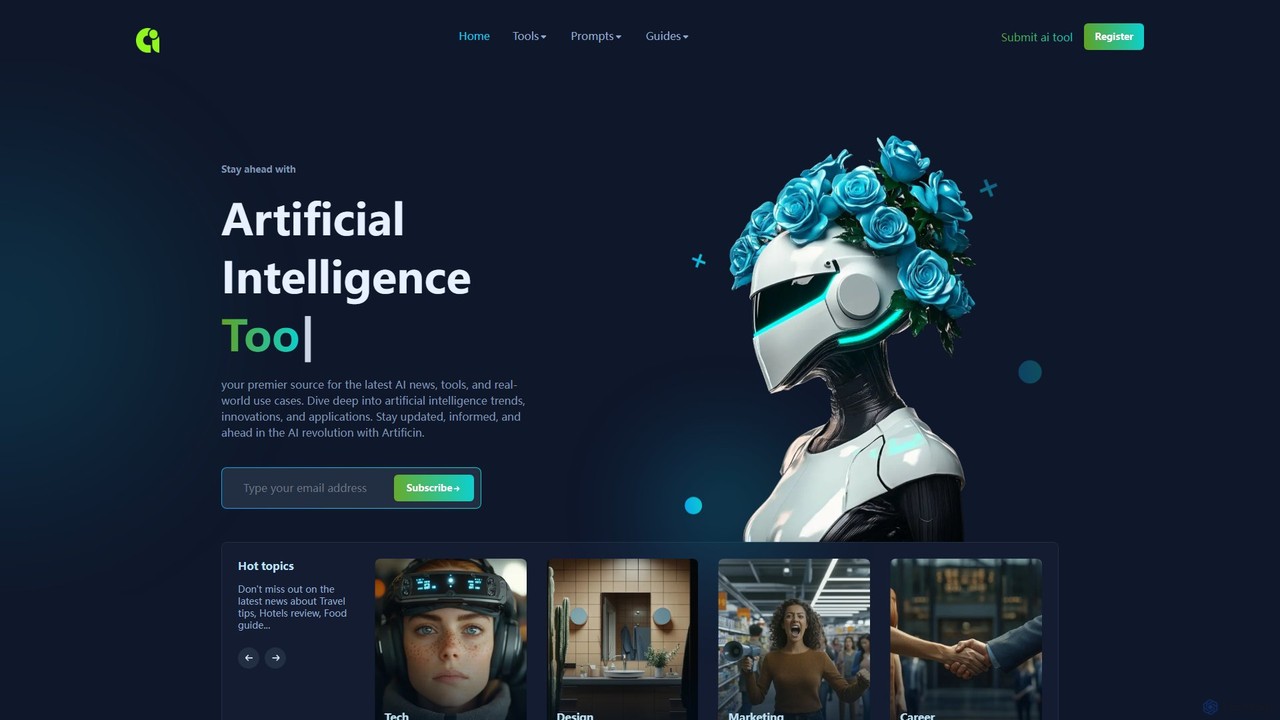
Artificin is a comprehensive platform and directory for discovering the latest AI tools, trends, and innovations. It serves as a premier source for users to stay updated on the AI revolution, offering curated lists of tools across categories like marketing, productivity, and design. The platform also provides in-depth guides and articles to help users understand and leverage artificial intelligence effectively.

Learning Platform
Visits 188.1KFavorites 166Likes 159

About Ai Trends

AI Trends platforms are specialized resources dedicated to tracking, analyzing, and reporting on the evolution of the artificial intelligence industry. These platforms go beyond daily news by synthesizing data from various sources to identify significant patterns, emerging technologies, and market shifts. They provide users with curated insights, data-driven analysis, and expert forecasts to understand the current state and future direction of AI. This helps professionals and enthusiasts make informed decisions based on comprehensive market intelligence.

Core Features

  • Data-Driven Analysis: Provides quantitative insights into market size, adoption rates, and performance benchmarks, often supported by charts and graphs.
  • Emerging Technology Tracking: Monitors and reports on breakthrough research, novel AI models, and innovative applications before they become mainstream.
  • Expert Commentary & Forecasting: Features articles and reports from industry experts that offer predictive analysis on future AI developments.
  • Curated Content Feeds: Aggregates and filters the most important AI news and research, saving users time in staying informed.

Applicable Scenarios

These platforms are essential for business strategists, venture capitalists, product managers, and market researchers who need to make strategic decisions. They are also valuable for journalists, academics, and developers seeking to stay at the forefront of AI innovation and understand its broader impact.

Selection Criteria

When choosing an AI Trends platform, consider its area of focus (e.g., generative AI, enterprise AI), the transparency of its data sources and methodology, the frequency of updates (daily, weekly, monthly), and the depth of its analysis—distinguishing between simple news aggregation and in-depth, original research.

Ai Trends use cases

1

Strategic Planning for Enterprise AI Adoption

A Chief Technology Officer (CTO) at a large retail company uses an AI Trends platform to inform their three-year technology roadmap. They analyze reports on AI adoption in logistics and customer service to identify proven technologies. By reviewing forecasts on emerging AI hardware and model efficiency, they can budget for future infrastructure upgrades and avoid investing in soon-to-be-obsolete solutions. The platform's data helps them build a compelling business case for the board, justifying a multi-million dollar investment in AI-powered inventory management systems.

2

Venture Capital Investment Sourcing

An analyst at a venture capital firm specializing in deep tech subscribes to several AI Trends services. They use the platform's tracking of academic papers and seed-stage funding to spot new, disruptive technologies before they gain widespread attention. The analyst filters for trends in specific niches like 'neuromorphic computing' or 'federated learning' to find startups with unique intellectual property. This proactive research allows the firm to engage with promising founders early, giving them a competitive edge in securing investment deals.

3

AI Product Feature Roadmapping

A product manager for a SaaS application is planning the next two quarters of development. They use an AI Trends platform to monitor what new AI-powered features competitors are launching and how customers are responding. They also track developer sentiment and the popularity of new open-source models and APIs. This information helps them prioritize features that are technically feasible and meet a clear market demand, such as integrating a new, more efficient language model for their chatbot feature.

4

Academic Research on AI Ethics

A university researcher studying the societal impact of AI uses trend analysis platforms to gather data for their work. They track the global proliferation of facial recognition technology and analyze reports on regulatory changes across different countries. The platform provides aggregated data and expert commentary on AI bias and fairness, which serves as a foundational element for their research paper. This saves them hundreds of hours of manual data collection and provides a macro-level view of the ethical challenges in the industry.

5

Crafting Data-Driven Tech Journalism

A technology journalist for a major online publication needs to write a feature article on the future of generative AI. They access an AI Trends platform to find statistics on the growth of AI-generated content, investment figures in the sector, and expert predictions for the next five years. They use the platform's visualized data to create compelling infographics for their article. The expert commentary also provides them with credible sources to quote, adding authority and depth to their reporting.

6

Competitive Marketing Strategy Analysis

A marketing director at an AI startup uses a trends platform to keep a close watch on the competitive landscape. They set up alerts to track how competitors are positioning their products and what key messages they use in their marketing campaigns. By analyzing which AI trends are gaining traction in media coverage, they can tailor their own content marketing and PR efforts to align with popular search terms and topics. This ensures their marketing message is relevant and resonates with their target audience's current interests.

Ai Trends FAQ

What are AI Trends platforms?

AI Trends platforms are information services that analyze and report on the developments and trajectory of the artificial intelligence industry. Unlike standard news outlets, they focus on identifying macro-level patterns, tracking emerging technologies, and providing data-driven forecasts. They synthesize information from research papers, market data, and industry news to offer a strategic overview of where AI is headed.

How do AI Trends platforms differ from general AI news sites?

The primary difference lies in analysis versus reporting. General AI news sites typically report on specific events like product launches, funding rounds, or company news. AI Trends platforms, a specialized subset of news, focus on the bigger picture. They connect the dots between individual events to reveal overarching trends, provide quantitative market analysis, and offer forward-looking predictions, making them more strategic in nature.

Who should use AI Trends resources?

AI Trends resources are most valuable for professionals who need to make strategic decisions related to technology. This includes:

  • Business Leaders & Strategists: For planning and investment.
  • Investors & Analysts: For identifying market opportunities.
  • Product Managers & Developers: For guiding product roadmaps.
  • Researchers & Academics: For staying current with the field's direction.
  • Journalists & Marketers: For creating informed and relevant content.

What kind of information is available on AI Trends platforms?

You can typically find a mix of qualitative and quantitative information. This includes in-depth analytical reports, market size and growth forecasts, data visualizations and charts, tracking of new AI models and research papers, expert interviews and opinion pieces, and curated summaries of the most significant industry news. The focus is on synthesized intelligence rather than raw information.

How can I evaluate the credibility of an AI Trends source?

To evaluate credibility, look for several key indicators. Check for transparency in their data sources and research methodology—do they explain how they arrived at their conclusions? Assess the background and expertise of the analysts and contributors. Look for a track record of accurate forecasts and objective analysis, free from excessive hype or bias. Reputable platforms often cite their sources and are referenced by other trusted industry publications.