Audioread
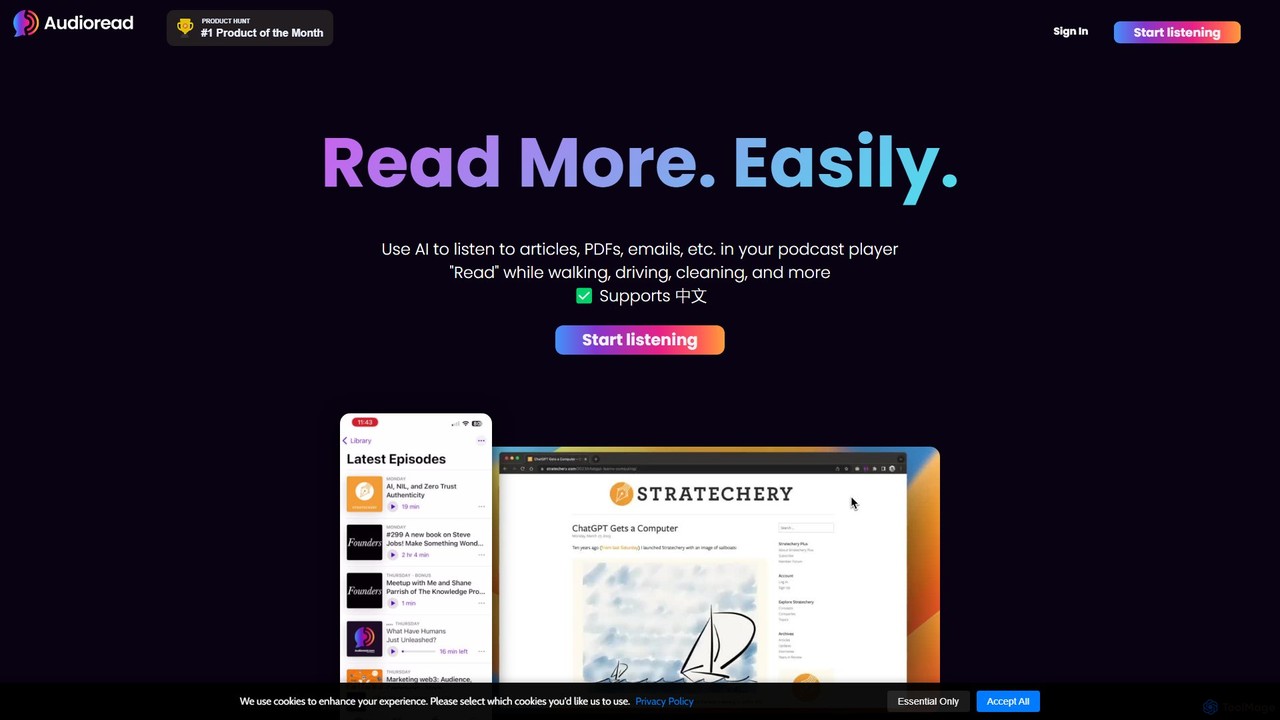
Audioread is an advanced AI text-to-speech tool that converts any text—articles, PDFs, emails, and more—into ultra-realistic, natural-sounding audio. …
Audioread is an advanced AI text-to-speech tool that converts any text—articles, PDFs, emails, and more—into ultra-realistic, natural-sounding audio. Listen on the go via your favorite podcast app, the web player, or by downloading MP3s. It's designed for long-form listening, helping busy individuals multitask and consume content efficiently.
About Content Aggregation
AI Content Aggregation tools are intelligent platforms that automatically discover, collect, and organize information from diverse online sources. Leveraging advanced AI, including natural language processing (NLP) and machine learning, these tools go beyond simple feed collection to filter, summarize, and personalize content based on user preferences or predefined criteria. They empower users to efficiently monitor industry trends, conduct research, and curate relevant information without manual sifting through vast amounts of data.
Core Features
- Automated Discovery: Continuously scans and indexes content from websites, blogs, social media, and news outlets.
- Intelligent Filtering & Curation: Uses AI to identify and prioritize content based on relevance, sentiment, and user-defined keywords or topics.
- Content Summarization: Generates concise summaries of articles, reports, or posts, saving time and highlighting key information.
- Personalized Feeds: Delivers tailored content streams to individual users or teams, adapting to evolving interests.
- Multi-source Integration: Gathers content from a wide array of sources, including RSS, APIs, social media platforms, and proprietary databases.
Use Cases
These tools are invaluable for professionals needing to stay informed across multiple domains. They enable marketing teams to track competitor activities and industry news, researchers to compile comprehensive literature reviews, and content creators to discover trending topics and source material efficiently.
How to Choose
When selecting an AI content aggregation tool, consider the breadth of sources it can integrate, the sophistication of its AI filtering and summarization capabilities, and the level of customization offered for feeds and alerts. Evaluate its real-time update frequency, integration options with existing workflows, and overall ease of use to ensure it meets your specific information needs.

Content AggregationUse Cases
Market Trend Monitoring
Marketing and business development teams use AI content aggregation to continuously track emerging industry trends, market shifts, and competitor strategies across various news outlets, blogs, and social media, ensuring they remain agile and informed for strategic decision-making.
Academic & Research Literature Review
Researchers and academics leverage these tools to automatically collect and categorize scientific papers, journals, and research articles from databases and academic publishers, significantly streamlining the process of literature review and staying updated on new findings.
Personalized News & Industry Briefings
Busy executives and professionals utilize AI aggregators to receive highly personalized daily or weekly briefings, curated from a multitude of global news sources and industry-specific publications, ensuring they only see the most relevant and critical information.
Content Curation for Social Media & Blogs
Content creators and social media managers employ these tools to discover trending topics, relevant articles, and engaging multimedia content from across the web, facilitating efficient content curation and scheduling for their audience platforms.
Competitive Intelligence Gathering
Business analysts and strategists deploy AI content aggregation to monitor competitor announcements, product launches, financial news, and public sentiment across various online channels, providing critical insights for competitive analysis and strategic planning.
Internal Knowledge & Information Hub
Enterprises use AI aggregation to build internal knowledge bases by collecting and organizing relevant industry news, regulatory updates, and internal reports, ensuring employees have easy access to up-to-date and curated information for their roles.