ToolMage
Sign in

Best 2 Audio News AI tools for News

Popular Audio News AI tools in News include Songbird and listen2, helping you work more efficiently.

Songbird
Freemium

Songbird

Songbird is an AI-powered news platform that transforms written articles into high-quality, natural-sounding audio. It aggregates news from various sources, provides concise AI-generated summaries, and allows users to create personalized audio playlists. Stay informed on the go, whether you're commuting, exercising, or multitasking.

Information Consumption
Visits 5.8KFavorites 117Likes 114
listen2
Free

listen2

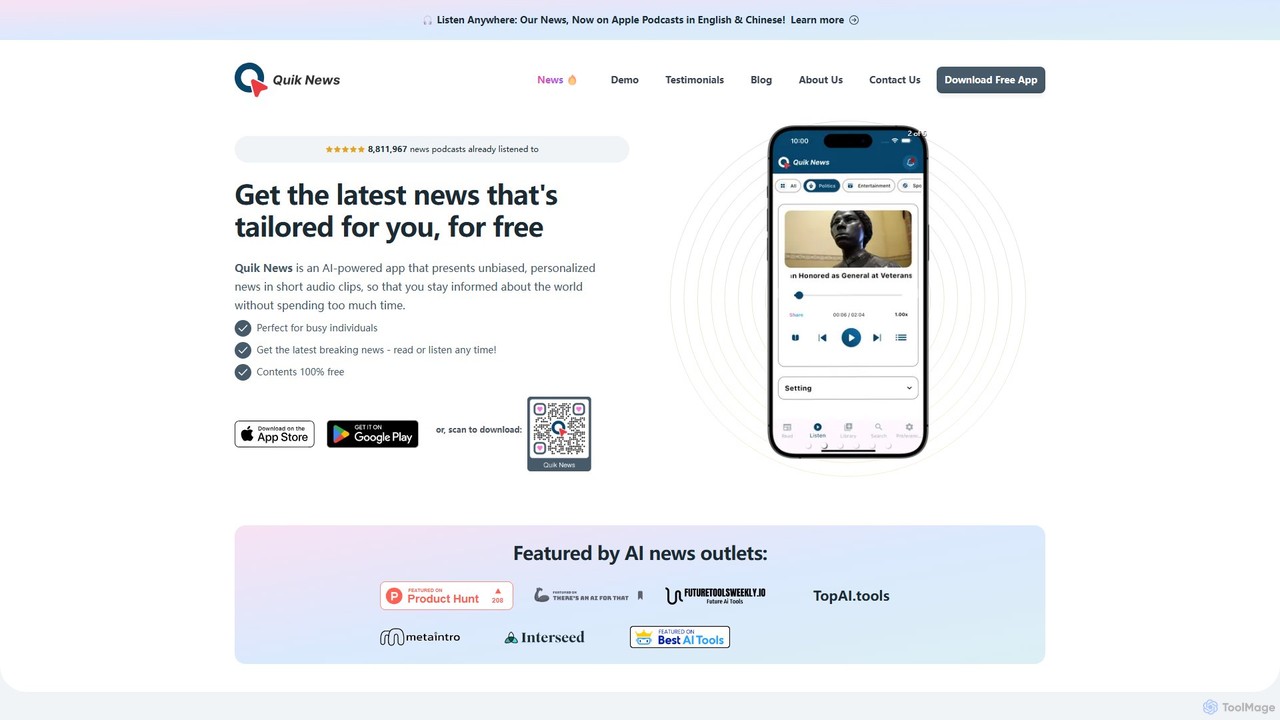
listen2 is an AI-powered news platform that delivers personalized, unbiased news in short, high-quality audio clips. Sourcing from over 80,000 global outlets, it's designed for busy individuals to stay informed while multitasking. Features include multi-language support and a unique political slider to customize the news presentation style.

Text To Speech
Visits 5.8KFavorites 115Likes 146

About Audio News

Audio News tools are a specialized category of AI applications that transform written news articles and reports into high-quality, listenable audio. Leveraging advanced text-to-speech (TTS) technology and neural voices, these tools generate natural-sounding narrations from text content. This enables users to consume news on the go, during commutes, or while multitasking, making information more accessible and convenient. They differ from standard TTS tools by often including features optimized for long-form articles, such as smart paragraph pacing and multi-voice support.

Core Features

  • Neural Voice Synthesis: Generates human-like speech with realistic intonation, emotion, and pacing.
  • Article-to-Audio Conversion: Directly processes URLs or pasted text to produce a full audio version of the content.
  • Customizable Playback: Offers options to adjust listening speed, select different voices or accents, and create playlists.
  • Multi-Language Support: Converts news from various global languages into native-sounding audio narrations.
  • Publisher Integration (API): Allows media outlets to automatically add an audio player to their online articles.

Use Cases

These tools are widely used by news publishers and media companies to increase engagement and accessibility by offering an audio version of their content. They are also invaluable for individuals who prefer auditory learning, have visual impairments, or want to catch up on news while driving, exercising, or doing chores. Language learners also use them to improve listening skills with authentic, up-to-date news content.

How to Choose

When selecting an Audio News tool, first consider the quality and variety of the voices offered—naturalness is key. Evaluate its integration capabilities, such as browser extensions for on-the-fly conversion or APIs for website embedding. Also, check the supported languages, usage limits under different pricing plans, and any additional features like article summarization before audio generation or offline listening capabilities.


Audio News use cases

1

Create Audio Versions for News Websites

A digital publisher aims to increase user engagement and time-on-page. They use an Audio News tool's API to automatically generate an audio version for every new article. An embedded player appears at the top of the article, allowing readers to listen instead of read. This strategy caters to users who are multitasking or have visual impairments, significantly increasing content accessibility and reaching a wider audience without extra manual work from the editorial team.

2

Curate a Personal Daily News Podcast

A busy professional wants to stay informed but lacks time to read. They use a browser extension or app to select several articles from their favorite news sources throughout the day. The tool compiles these articles into a single audio playlist. During their evening commute, they listen to their personalized 'daily briefing' podcast, efficiently catching up on world events, industry trends, and financial news without looking at a screen.

3

Assist Visually Impaired Users with News Consumption

An individual with a visual impairment needs an accessible way to read daily news. They use an Audio News tool that integrates with screen readers or has a simple, high-contrast interface. By pasting article links or using a browser extension, the tool reads the content aloud in a clear, natural voice. This provides them with independent and timely access to information from a wide variety of sources that would otherwise be difficult or impossible to consume.

4

Improve Language Listening Skills with Current Events

A language learner studying French wants to practice listening comprehension with relevant, up-to-date material. They find articles from French-language newspapers and use an Audio News tool to convert them into audio. They can listen to native-speed narration of current events, adjust the playback speed to catch difficult phrases, and improve their vocabulary and understanding of the language in a real-world context, making study sessions more engaging and effective.

5

Convert Research Papers and Reports into Audio for Review

A market analyst needs to review dozens of long industry reports and academic papers. To combat screen fatigue and multitask, they feed these text-heavy documents into an Audio News tool. They can then listen to the reports while organizing their notes or during a walk. This auditory review process helps them absorb large volumes of information more comfortably and efficiently, identifying key insights without being tied to a desk.

6

Generate Audio Summaries for Internal Company Briefings

A corporate communications team needs to distribute daily industry news summaries to executives. They use an AI tool that first summarizes key news articles and then converts these summaries into a short audio briefing using a professional-sounding neural voice. This audio file is emailed to the leadership team, providing a concise, easy-to-digest update they can listen to on their way to the office, ensuring they are always informed without information overload.

Audio News FAQ

What are AI Audio News tools?

AI Audio News tools are applications that use advanced text-to-speech (TTS) technology to convert written news articles, blogs, and reports into natural-sounding audio. Unlike basic screen readers, they employ neural voices that mimic human intonation and pacing, making long-form content enjoyable to listen to. Their primary purpose is to make written content accessible in an audio format, ideal for multitasking, commuting, or for users with visual impairments.

How do I choose the right Audio News tool?

When selecting an Audio News tool, consider these four key factors:

  • Voice Quality: Listen to samples. The voices should sound natural and engaging, not robotic. A wide selection of voices and accents is also a plus.
  • Integration: Look for browser extensions for easy conversion of web pages, mobile apps for on-the-go listening, or APIs if you're a publisher wanting to embed audio on your site.
  • Language Support: Ensure it supports the languages you need for your news sources with high-quality, native-sounding voices.
  • Usage Limits & Cost: Check the character or word limits on free and paid plans to ensure they meet your needs without becoming too expensive.
What's the difference between an Audio News tool and a standard Text-to-Speech (TTS) tool?

While both convert text to speech, Audio News tools are specifically optimized for long-form content like articles. They often have better pacing for paragraphs, can intelligently handle complex web page layouts to extract only the main content, and may offer features like creating playlists from multiple articles. Standard TTS tools are often more general-purpose, focusing on shorter text inputs, and may lack the specialized features needed for a smooth, enjoyable news-listening experience.

Who can benefit from using Audio News tools?

A wide range of users can benefit from Audio News tools. This includes:

  • Publishers & Bloggers: To increase content accessibility, reach a wider audience, and improve user engagement on their websites.
  • Busy Professionals: To consume news and industry reports while commuting, exercising, or multitasking.
  • Students & Researchers: To listen to academic papers and articles to reduce eye strain and aid in information retention.
  • Visually Impaired Individuals: As an essential tool for accessing written information online independently.
  • Language Learners: To practice listening comprehension with authentic, up-to-date materials in their target language.
Can these tools handle different languages and accents?

Yes, most modern Audio News tools offer support for a wide variety of languages. High-quality tools use distinct neural voice models for each language, ensuring the pronunciation and accent sound authentic and native. Many services also offer multiple voice options within a single language, allowing users to choose between different genders, speaking styles, or regional accents (e.g., American, British, or Australian English). It's always best to review a tool's list of supported languages and listen to voice samples to verify the quality for your specific needs.